In recently published work from Air Force Medical University, analysis of tumor tissues isolated from different patient-derived xenografts revealed significantly increased expression of FXYD5 in the metastatic tumors compared to the primary tumors, and analysis of patient database confirmed significantly elevated expression of FXYD5 in gastric cancer tissues compared to normal gastric tissues.
New research has uncovered a complex interplay between extracellular matrix (ECM) structure and the transcriptional responses of cancer cells, showing how they alter their gene expression to ‘escape’ from ECM.
The lung and thrombosis may play a key role in cancer and metastasis progression, according to a collaborative study led by Cornell University scientists.
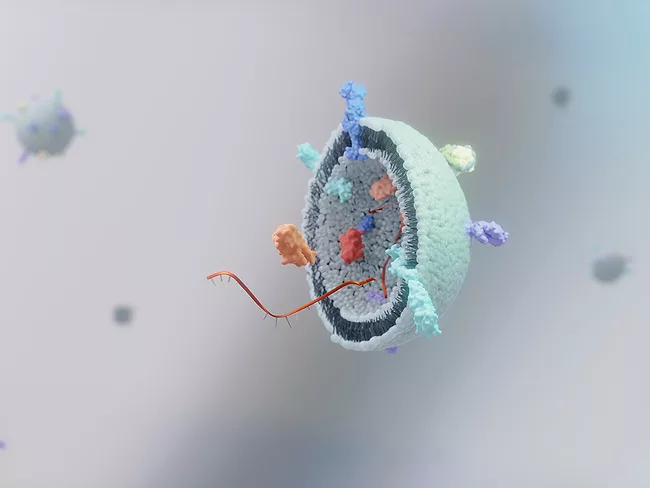
The lung and thrombosis may play a key role in cancer and metastasis progression, according to a collaborative study led by Cornell University scientists. In the nonmetastatic lung microenvironment of several cancer types, the development of a prothrombosis niche promotes metastasis formation through the release of small extracellular vesicles loaded with an integrin protein.
New research has uncovered a complex interplay between extracellular matrix (ECM) structure and the transcriptional responses of cancer cells, showing how they alter their gene expression to ‘escape’ from ECM. The findings will make it easier to identify tumors that are likely to metastasize at an early stage.
New research has uncovered a complex interplay between extracellular matrix (ECM) structure and the transcriptional responses of cancer cells, showing how they alter their gene expression to ‘escape’ from ECM. The findings will make it easier to identify tumors that are likely to metastasize at an early stage.
With positive data in hand from its phase IIb trial testing immunotherapy candidate OST-HER2 in osteosarcoma, OS Therapies Inc. anticipates a regulatory filing this year seeking accelerated approval from the U.S. FDA, putting the firm on track to receive a potentially profitable rare pediatric disease priority review voucher that could help fund further R&D work. Should OST-HER2 go on to win approval, it would mark the first new therapy in more than 40 years for osteosarcoma, an aggressive bone cancer characterized by high rates of metastases, often to the lungs, and disease recurrence.
Oncobone Ventures Ltd. and Origenis GmbH have signed a framework agreement to develop novel therapies targeting cancer bone metastasis. Origenis leverages its artificial intelligence (AI)-driven technology platform Molmind-Moresystem-Brainstorm to design innovative targeted small-molecule therapies.
The abscopal effect occurs when therapy leads to the regression of metastases distant from the target tumor. In the current study, researchers from INSERM aimed to evaluate the abscopal effect potentially inducted by the use the targeted radionuclide therapy (TRT) candidate, [131I]ICF-01012, which has been previously shown to target only pigmented metastases.
Breast cancer cells, when disseminated to other secondary organs such as the lungs, may stay in a dormant state for years, even decades. But the mechanisms that limit their expansion are not well understood. This is what researchers call a dormant mesenchymal-like phenotype before metastasis to the lungs. Now, scientists have shown in a study published Oct. 7, 2024, in Cell, that the limiting of disseminated breast cancer cells (DCCs) to metastasize in the lungs is due to alveolar macrophages, which activate signals that make DCCs stay dormant.