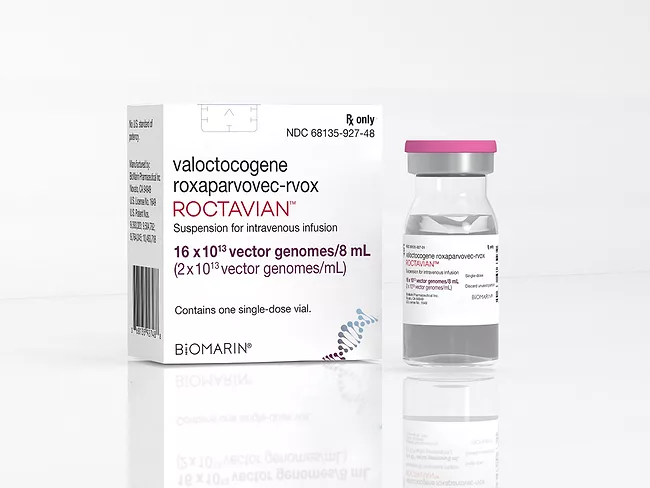
Biomarin Pharmaceutical Inc. plans to divest its pioneering gene therapy for hemophilia, Roctavian (valoctocogene roxaparvovec), and remove what had been considered a potential blockbuster from the portfolio in order to grow the company.
Although more and more gene therapies are getting the FDA stamp of approval, concerns persist about their potential long-term risks. U.S. lawmakers have proposed several pieces of legislation over the past few years to address some of the uncertainties. Now the Congressional Research Service (CRS) is suggesting other requirements Congress may want to consider to improve the regulatory landscape for gene therapies, especially those intended to treat blood disorders.
The U.S. FDA has approved the second hemophilia drug in nearly six months from Pfizer Inc. This one, Hympavzi (marstacimab), is for preventing or reducing bleeding in those age 12 and older with hemophilia A and B. Hympavzi heralds a couple of market boundary breakers: it’s the first and only anti-tissue factor pathway inhibitor approved in the U.S. for hemophilia A or B and the first hemophilia medicine approved in the U.S. to be administered using a pre-filled, auto-injector pen.
Positive data from Novo Nordisk A/S’s pivotal phase IIIa study of once-weekly and once-monthly doses of its hemophilia treatment, Mim8, are prompting the company to say it will submit the first regulatory approval request toward the end of this year. It could challenge Roche Holding AG’s Hemlibra (emicizumab), a bispecific factor IXa- and factor X-directed antibody for hemophilia A, that was approved in 2017 by the U.S. FDA.
“This is a tough business. It’s never a straight line from start to success.” Those words, from Exelixis Inc. CEO Michael Morrissey, during a presentation at the J.P. Morgan Healthcare Conference (JPM), could easily sum up any aspect of the biopharma industry. But with more biopharma firms than ever having reached commercial status, along with the introduction of new therapeutic modalities into the health care market, many are finding the toughest part comes after regulatory approval, whether it’s navigating a competitive landscape, getting payers and physicians on board, or satisfying regulators’ stringent postmarketing requirements. As industry players and observers head home after a busy week in San Francisco, BioWorld offers a brief glimpse at a few firms taking on those post-approval challenges in 2024.
Becoming the first gene therapy approved for hemophilia A, Roctavian (valoctocogene roxaparvovec) finally received the U.S. FDA’s blessing on June 29, after developer Biomarin Pharmaceutical Inc. spent nearly three years working to address issues raised in a 2020 complete response letter. The approval came a day prior to the June 30 PDUFA date.
The first gene therapy to treat severe hemophilia A was among the drugs recommended for European approval by regulators from the EMA’s CHMP at its monthly meeting. Manufactured by Biomarin Pharmaceutical Inc., Roctavian (valoctocogene roxaparvovec) was recommended for conditional marketing authorization in the EU for severe hemophilia A in adults who do not have factor VIII inhibitors and no antibodies to adeno-associated virus serotype 5.
Having unveiled more data from the ongoing, global phase III Gener8-1 study with Roctavian (valoctocogene roxaparvovec, also known as valrox), Biomarin Pharmaceutical Inc. remains on track to file a regulatory submission with the FDA in the second quarter of this year for the gene therapy to treat adults with severe hemophilia A. The EMA is already reviewing a marketing authorization application.
While U.S. lawmakers continue their debate on reducing spending for prescription drugs, government payers are exploring innovative reimbursement ideas to cover gene and cell therapies that could cost millions of dollars for a cure or a durable effect against rare diseases.
At the recent 39th J.P. Morgan Healthcare Conference, Biomarin Pharmaceutical Inc. popped the lid off top-line results from its ongoing phase III GENEr8-1 study with valoctocogene roxaparvovec – also known as valrox, now commonly called Roctavian. Data, though encouraging, may not have quelled controversy around the prospect.