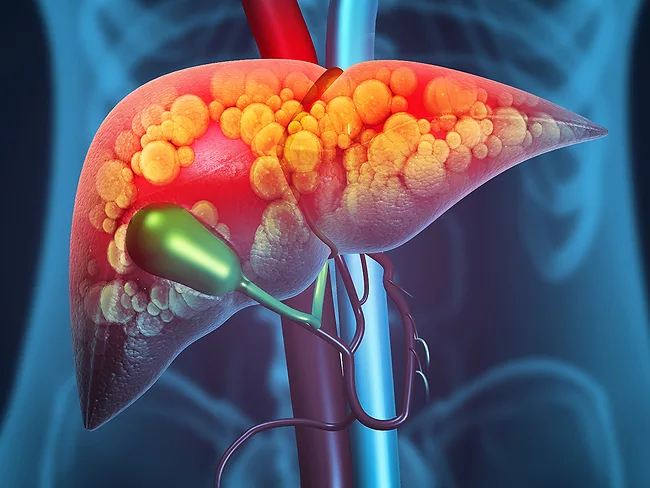
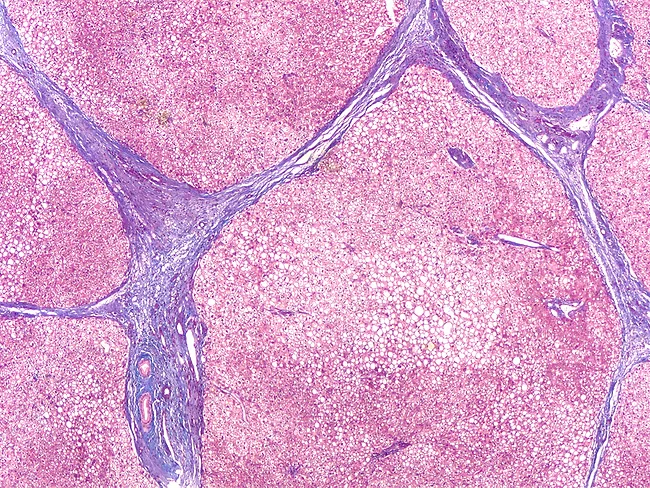
Liver fibrosis in the course of metabolic dysfunction-associated steatohepatitis could be significantly reduced using CAR T-cells generated in vivo. Scientists at the Icahn School of Medicine at Mount Sinai have developed an experimental cell therapy that eliminates only one type of liver cell, the stellate cells that express fibroblast activation protein alpha. This strategy not only reduced fibrosis but also reversed liver damage.
Liver fibrosis in the course of metabolic dysfunction-associated steatohepatitis (MASH) could be significantly reduced using CAR T-cells generated in vivo. Scientists at the Icahn School of Medicine at Mount Sinai have developed an experimental cell therapy that eliminates only one type of liver cell, the stellate cells that express fibroblast activation protein alpha (FAP). This strategy not only reduced fibrosis but also reversed liver damage.
Researchers from Shanghai Institute of Nutrition and Health and Guangming Advanced Research Institute (China) proposed a new strategy based on a circular RNA (circRNA) encoding human relaxin-2 (cRLN2). circRNAs, thanks to their high stability and low immunogenicity, have been proposed as promising new drugs for several applications.
A hallmark of liver fibrosis is the differentiation of hepatic stellate cells (HSCs) into myofibroblast-like cells, which are responsible for excessive extracellular matrix deposition. Among the key mediators of HSC activation, transforming growth factor-beta 1 (TGF-β1) is considered the most potent pro-fibrotic cytokine.
Olix Pharmaceuticals Inc. walked the talk in realizing a new $630 million licensing deal with Eli Lilly and Co. for its cardiovascular and metabolic disease asset, OLX-702A (OLX-75016), rallying stock by 30% after it had largely recovered from a terminated deal with France’s Théa Open Innovation last year.
Olix Pharmaceuticals Inc. walked the talk in realizing a new $630 million licensing deal with Eli Lilly and Co. for its cardiovascular and metabolic disease asset, OLX-702A (OLX-75016), rallying stock by 30% after it had largely recovered from a terminated deal with France’s Théa Open Innovation last year.
Antibody Therapeutics Inc. has disclosed integrin receptor antagonists reported to be useful for the treatment of pulmonary fibrosis, renal fibrosis and hepatic fibrosis.
Astrazeneca plc has developed a potent oral fibroblast activation protein (FAP) inhibitor, AZD-2389, that avoids the cleavage of FGF21 and α2-AP. AZD-2389 was tested in cynomolgus monkeys with diet-induced MASH.
The activation of hepatic stellate cells (HSCs) is a key process in the pathogenesis of liver fibrosis, but the molecular mechanisms behind it are not fully understood. By combining the analysis of differentially expressed gene screening of HSC transcriptome and weighted gene coexpression network analysis of liver tissue, researchers searched for transcription factors involved in liver fibrosis.
Liver fibrosis still lacks effective therapy; hepatic stellate cells (HSCs) are the primary fibrogenic cell type activated during liver injury. To date, almost half of the drugs used for liver treatment are natural product derivatives.