The U.K. government will unveil its 10-year health plan to transform the national health service (NHS) in the coming months. At the center of this transformation is expected to be the adoption of artificial intelligence, digital and medical technologies. However, challenges in the NHS around its ‘core technology’, data capture and interoperability must be addressed before the government’s ambition can be realized.
The U.K. Secretary of State for Health and Social Care, Wes Streeting, says that he wants people to see the national health service as a neighborhood health service as he works towards reimagining the health system and bringing care into people's homes. Data, he said, will be at the heart of the transformation. So too will be the deployment of science and medical technologies.
The U.K. government is partnering with Oxford Nanopore Technologies plc to use its sequencing technology to create the world’s-first ‘early warning system’ for future pandemics. The partnership includes the development of a pathogen-agnostic biosurveillance system across the national health service (NHS).
The U.K. Medicines and Healthcare products Agency has become the third to approve Eli Lilly and Co.’s Kisunla (donanemab), but the drug’s spending watchdog has simultaneously ruled the Alzheimer’s disease treatment is not cost effective.
The U.K. National Institute for Health and Care Excellence reported that mental health professionals experienced a dramatic increase in referrals for anxiety and depression over the past decade but noted that digital therapies might help manage the caseload, representing a significant opportunity for developers of these products.
There is no evidence to support the differences in prices that the U.K.’s national health service (NHS) is paying for transcatheter heart valves from Abbott Laboratories, Boston Scientific Corp., Edwards Lifesciences Corp. and Medtronic plc, according to the National Institute for Health and Care Excellence.
A new non-invasive device which enables women to test themselves at home for signs of the cancer-causing human papillomavirus strains in menstrual blood, has been developed with support from the Venture Builder Incubator at the University of Edinburgh.
The U.K. government said it is taking active steps to ensure that the country’s health and social care system can reliably access safe, effective and innovative technologies. One year following its inaugural medical technology strategy, the government reported changes underway which have already transformed the med-tech sector and consequently patients’ lives.
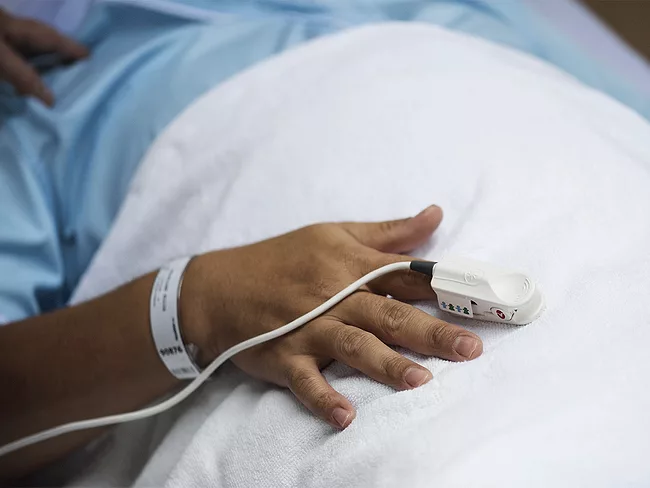
The U.K. government said it will take action to tackle potential bias in the design and use of medical devices after an independent review found that there is extensive evidence of poorer performance of certain technologies, like pulse oximeters, in patients with darker skin tones.
A U.K. national health service (NHS) hospital has begun offering Allurion Technologies Inc.’s swallowable gastric balloon to patients struggling to lose weight for surgery. The move is a boon for the company amid rising competition in the weight loss market from GLP-1 agonists.