Beam Therapeutics Inc. has released new preclinical data demonstrating the ability of its in vivo drug candidate, BEAM-302, to directly correct the PiZ mutation, the primary disease-causing mutation associated with severe α1-antitrypsin deficiency (AATD).
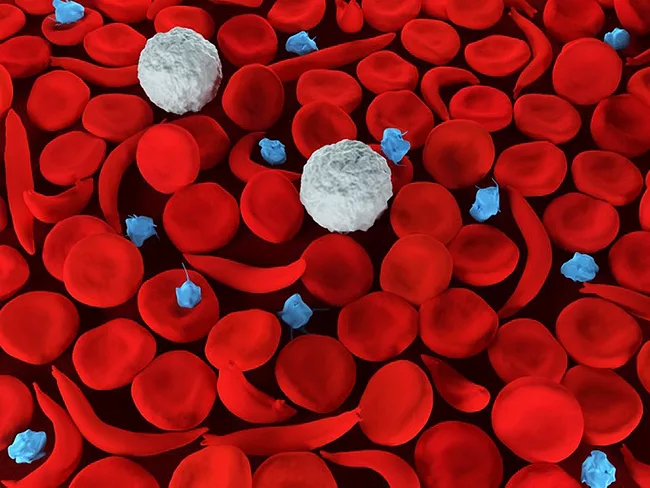
Research led by St. Jude Children’s Research Hospital and Harvard University shows base-editing approaches could be more effective than CRISPR-Cas9 gene-editing approaches for treating conditions such as sickle cell disease and β-thalassemia. Writing in the July 3, 2023, issue of Nature Genetics, the researchers compared three base-editing approaches with two CRISPR-Cas9 approaches to increasing levels of fetal hemoglobin in CD34+ hematopoietic stem and progenitor cells, and found one of the base-editing approaches was the most potent.
New research shows base and prime editing can correct some forms of phenylketonuria (PKU) in mice and human cell lines, raising the prospect that this gene-editing approach could allow children born with the inherited metabolic disorder to have a treatment that would avoid the need for dietary restrictions and medication.
In its bid to become, as Chairman and CEO David Hallal said, the “world’s most indispensable cell and gene therapy technology company,” Elevatebio LLC disclosed a $401 million series D round with support from new and existing investors. At the same time, the company’s Life Edit Therapeutics Inc. affiliate inked a potential billion-dollar collaboration focused on gene editing therapies.
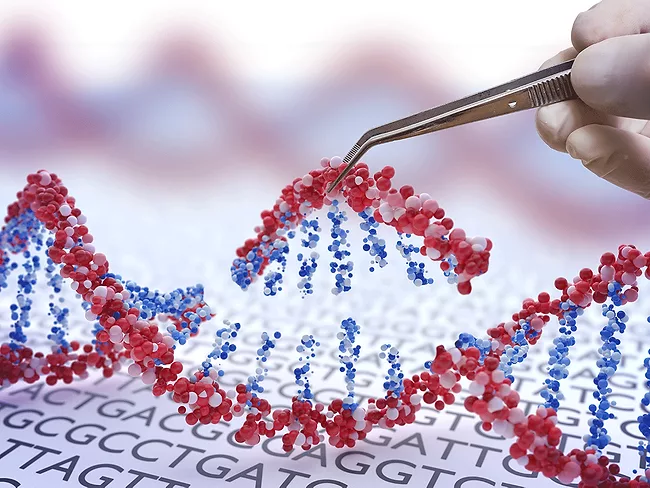
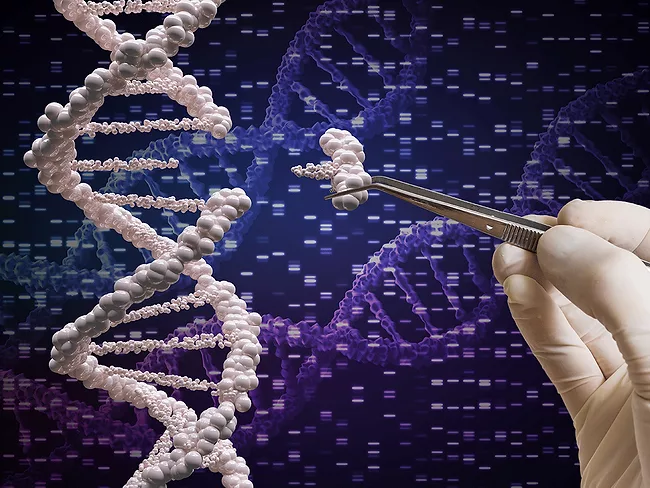
The discovery of DNA was a milestone in the history of science that led to a breakthrough in biomedical research. By associating disease and genetics, genome correction techniques were ultimately developed that are supposed to work in the same way that antibiotics and antivirals block pathogenic microorganisms: by directly attacking the causes of disease.
The discovery of DNA was a milestone in the history of science that led to a breakthrough in biomedical research. By associating disease and genetics, genome correction techniques were ultimately developed that are supposed to work in the same way that antibiotics and antivirals block pathogenic microorganisms: by directly attacking the causes of disease.
Suzhou Genassist Therapeutic Co. Ltd. has announced its pre-IND application of its first base-editing product, GEN-6050, and acceptance by the FDA. GEN-6050 is an in vivo base-editing drug that targets exon 50 skipping in the Duchenne muscular dystrophy (DMD) gene.
The editing in human cells and in mice of the survival motor neuron 1 gene (SMN1) restored the levels of SMN protein that the mutation of the SMN2 gene produces in spinal muscular atrophy. Scientists from the Broad Institute in Boston and The Ohio State University reversed the mutation using the base editing technique.
The editing in human cells and in mice of the survival motor neuron 1 gene (SMN1) restored the levels of SMN protein that the mutation of the SMN2 gene produces in spinal muscular atrophy (SMA). Scientists from the Broad Institute in Boston and The Ohio State University reversed the mutation using the base editing technique. “This base editing approach to treating SMA should be applicable to all SMA patients, regardless of the specific mutation that caused their SMN1 loss,” the lead author David Liu, a professor and director of the Merkin Institute of Transformative Technologies in Healthcare at the Broad Institute of Harvard and MIT, told BioWorld.
Base editing (BE), a technique that modifies a single nucleotide in living cells, has been successfully tested to resolve the CD3δ mutation in severe combined immunodeficiencies (SCIDs) and produce functional T cells. For now, scientists at the University of California, Los Angeles (UCLA), completed the study on patient stem cells and artificial thymic organoids, shortening the way for future clinical trials.