Nanovation Therapeutics Inc. has established a multiyear partnership with Novo Nordisk A/S to advance the development of novel genetic medicines targeting cardiometabolic and rare diseases. The partnership brings together Nanovation’s proprietary long-circulating lipid nanoparticle (lcLNP) technology for RNA delivery to cells outside of the liver, and Novo Nordisk’s expertise in cardiometabolic and rare disease R&D and clinical translation.
Ending a late 2021 deal that was potentially worth billions, Moderna Inc. and Metagenomi Inc. are going their separate ways. The two had been collaborating on gene-editing R&D to develop therapies for treating serious genetic diseases. Moderna said it agreed with Metagenomi to end the deal as “Moderna continues to strategically prioritize its research and development investments.”
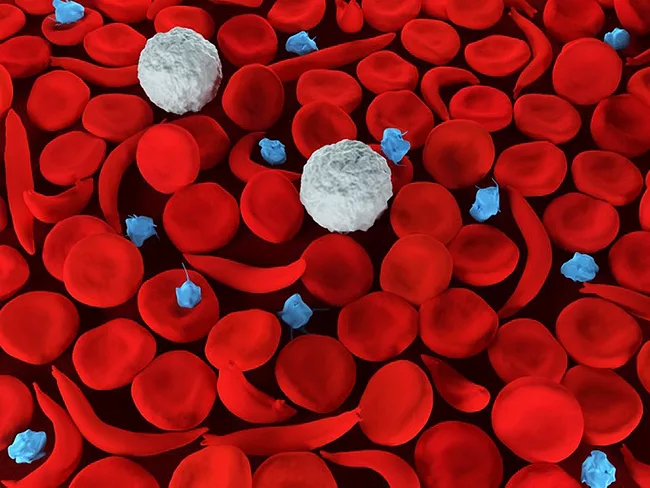
Modifying a patient’s DNA is no longer just for science fiction novels. The CRISPR gene editing technique developed by Jennifer Doudna and Emmanuelle Charpentier only took 10 years to reach the market as Casgevy (exagamglogene autotemcel/exa-cel, Vertex Pharmaceuticals Inc.), treating congenital pathologies such as β-thalassemia and severe sickle cell disease. But science does not stop.
After the initial approvals in monogenic inherited diseases, the scope of gene therapy is widening, with new delivery routes, novel vectors, cell-specific targeting and products aiming to treat chronic disorders, all making headway in 2023.
Modifying a patient’s DNA is no longer just for science fiction novels. The CRISPR gene editing technique developed by Jennifer Doudna and Emmanuelle Charpentier only took 10 years to reach the market as Casgevy (exagamglogene autotemcel/exa-cel, Vertex Pharmaceuticals Inc.), treating congenital pathologies such as β-thalassemia and severe sickle cell disease (SCD). But science does not stop.
For Verve Therapeutics Inc., the good news was the first human proof-of-concept data for a single-course in vivo base-editing treatment, presented at the American Heart Association Scientific Sessions over the weekend, showed treatment with VERVE-101 led to promising dose-dependent reductions in low-density lipoprotein cholesterol in patients with heterozygous familial hypercholesterolemia. The bad news was to be found in the safety data for the 10 patients treated to date, which included a myocardial infarction in one patient deemed potentially related to treatment.
A new method of CAR T-cell immunotherapy developed by researchers at the University of Pennsylvania Perelman School of Medicine could serve as a treatment for most blood cancers. Until now, CAR T-based immunotherapy for hematological malignancies has targeted the antigens CD19 for B cells, CD7 for T cells, BCMA for myeloma, and CD33 for AML.
Beam Therapeutics Inc. has released new preclinical data demonstrating the ability of its in vivo drug candidate, BEAM-302, to directly correct the PiZ mutation, the primary disease-causing mutation associated with severe α1-antitrypsin deficiency (AATD).
Research led by St. Jude Children’s Research Hospital and Harvard University shows base-editing approaches could be more effective than CRISPR-Cas9 gene-editing approaches for treating conditions such as sickle cell disease and β-thalassemia. Writing in the July 3, 2023, issue of Nature Genetics, the researchers compared three base-editing approaches with two CRISPR-Cas9 approaches to increasing levels of fetal hemoglobin in CD34+ hematopoietic stem and progenitor cells, and found one of the base-editing approaches was the most potent.
New research shows base and prime editing can correct some forms of phenylketonuria (PKU) in mice and human cell lines, raising the prospect that this gene-editing approach could allow children born with the inherited metabolic disorder to have a treatment that would avoid the need for dietary restrictions and medication.