BioWorld. Link to homepage.

Clarivate
  • BioWorld
  • BioWorld Science
  • BioWorld Asia
  • Data Snapshots
    • Biopharma
    • Medical technology
    • Infographics: Dynamic digital data analysis
    • Index insights
    • NME Digest
  • Special reports
    • Infographics: Dynamic digital data analysis
    • Trump administration impacts
    • Under threat: mRNA vaccine research
    • BioWorld at 35
    • Biopharma M&A scorecard
    • Bioworld 2025 review
    • BioWorld MedTech 2025 review
    • BioWorld Science 2025 review
    • Women's health
    • China's GLP-1 landscape
    • PFA re-energizes afib market
    • China CAR T
    • Alzheimer's disease
    • Coronavirus
    • More reports can be found here

BioWorld. Link to homepage.

  • Sign In
  • Sign Out
  • My Account
Subscribe
BioWorld - Tuesday, February 24, 2026
Home » cachexia

Articles Tagged with ''cachexia''

3D illustration of organoid models in a petri dish
Drug design, drug delivery & technologies

Human organoid mimics cancer-induced cachexia

Feb. 17, 2026
By Mar de Miguel
No Comments
The variety of organoids that can be developed in vitro is enabling major advances. Depending on the type of tissues and the research goals, these small 3D cell-based structures that mimic real tissue offer certain advantages over animal models. Scientists at the University of Padova in Italy have created human neuromuscular organoids to reproduce cancer-induced muscle cachexia, a condition that murine models do not accurately replicate.
Read More
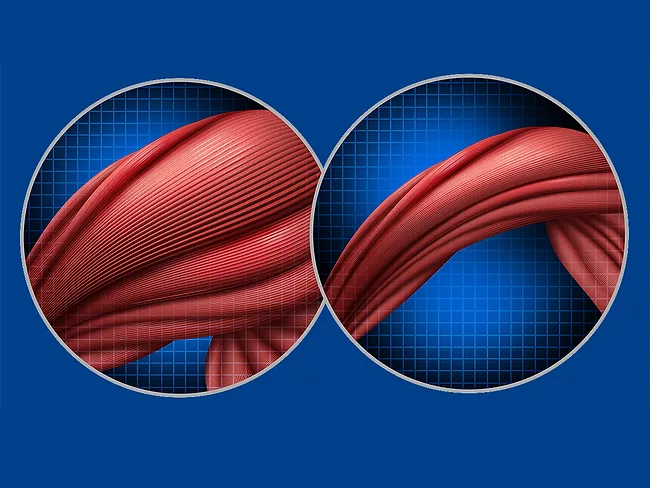
Illustration of normal muscle compared to muscle atrophy in cancer cachexia or anorexia

Tumor, immune and neural cells are involved in cancer cachexia

Feb. 13, 2026
By Mar de Miguel
No Comments
A circuit formed by tumor, immune and nervous systems triggers cancer cachexia and anorexia, the excessive loss of weight, muscle and fat experienced in some cancer types. A new study is the first showing these three actors of a triangle interaction that initiates and feeds the process.
Read More
Illustration of normal muscle compared to muscle atrophy in cancer cachexia or anorexia
Cancer

Tumor, immune and neural cells are involved in cancer cachexia

Feb. 12, 2026
By Mar de Miguel
No Comments
A circuit formed by tumor, immune and nervous systems triggers cancer cachexia and anorexia, the excessive loss of weight, muscle and fat experienced in some cancer types. A new study is the first showing these three actors of a triangle interaction that initiates and feeds the process.
Read More
Woman receiving chemotherapy
Endocrine/metabolic

Kexing’s GB-18 receives IND clearances in China and US for cancer cachexia

May 29, 2025
No Comments
Kexing Biopharm Co. Ltd. has announced IND clearances this month by China’s National Medical Products Administration (NMPA) and the U.S. FDA for GB-18, a biologic product for the treatment of cancer cachexia.
Read More
Illustration of man holding magnifying glass to human body model showing muscle anatomy
Endocrine/metabolic

TAOK1 identified as a potential therapeutic target in cancer cachexia-associated muscle atrophy

May 20, 2025
No Comments
Cancer cachexia is a devastating condition that affects up to 80% of advanced cancer patients and causes approximately 2 million deaths worldwide annually. Cancer cachexia is characterized by uncontrolled weight loss and severe muscle wasting. Despite its significant impact, effective treatments remain elusive.
Read More
Illustration of man holding magnifying glass to human body model showing muscle anatomy
Endocrine/metabolic

TAOK1 identified as a potential therapeutic target in cancer cachexia-associated muscle atrophy

May 19, 2025
No Comments
Cancer cachexia is a devastating condition that affects up to 80% of advanced cancer patients and causes approximately 2 million deaths worldwide annually. Cancer cachexia is characterized by uncontrolled weight loss and severe muscle wasting. Despite its significant impact, effective treatments remain elusive.
Read More
Cancer

DoD funding supports Kairos Pharma’s ENV-205

Feb. 19, 2025
Kairos Pharma Ltd. has announced that through its academic partnership with Cedars-Sinai Medical Center, Cedars-Sinai has received $600,000 in funding from the Department of Defense lung cancer research program to advance the development of ENV-205, a new drug to treat chemotherapy drug resistance and cachexia.
Read More
Endocrine/metabolic

Kexing Biopharm highlights progress across pipeline

Jan. 24, 2025
Kexing Biopharm Co. Ltd. has outlined progress in its cachexia and autoimmune pipelines, built upon its Kx-Body antibody technology platform and Kx-Fusion fusion protein technology platform.
Read More
Musculoskeletal

GB18-06, an anti-GDF15 nanobody with promising activity in cachexia models

Oct. 22, 2024
Researchers from Kexing Biopharm Co. Ltd. have published details on the development and preclinical characterization of GB18-06, a novel nanobody, also known as variable domain of heavy-chain antibody (VHH), targeting growth differentiation factor 15 (GDF15) and being developed for the treatment of cachexia.
Read More
Musculoskeletal

Z-526 alleviates chemotherapy-induced cachexia muscle atrophy in vivo

Aug. 2, 2024
Researchers from East China Normal University and Fudan University presented the discovery of a new oral compound, Z-526, being developed as a treatment to alleviate chemotherapy-induced cachectic muscle loss.
Read More
Previous 1 2 3 Next

Popular Stories

  • Today's news in brief

    BioWorld
  • IL-22 and TL1A, a robust couple for diagnosing hidradenitis suppurativa

    BioWorld Science
    Hidradenitis suppurativa (HS) is a chronic inflammatory skin disease with strong association with psoriasis and inflammatory bowel disease (IBD). While some...
  • Illustration of head with maze that is missing parts

    Inhibiting the NLRP3 inflammasome for cognitive impairment, stroke

    BioWorld Science
    Vascular cognitive impairment and dementia (VCID) and cerebral small vessel disease are among the leading causes of dementia, where inflammation is known to play...
  • Pill in immersive interface

    New mechanism of action identified for QC-6352

    BioWorld Science
    QC-6352 is a small molecule developed to inhibit the histone demethylase 4 (KDM4) that has shown potent antitumoral activity and which has a derivative named...
  • Illustration of brain and antibodies

    VST Bio’s VB-001 is neuroprotector after stroke

    BioWorld Science
    At the recent International Stroke Conference, researchers from VST Bio Corp. and Yale University presented preclinical data regarding VB-001, a monoclonal...
  • BioWorld
    • Today's news
    • Analysis and data insight
    • Clinical
    • Data Snapshots
    • Deals and M&A
    • Financings
    • Medical technology
    • Newco news
    • Opinion
    • Regulatory
  • BioWorld Science
    • Today's news
    • Biomarkers
    • Cancer
    • Conferences
    • Endocrine/metabolic
    • Immune
    • Infection
    • Neurology/psychiatric
    • NME Digest
    • Patents
  • BioWorld Asia
    • Today's news
    • Analysis and data insight
    • Australia
    • China
    • Clinical
    • Deals and M&A
    • Financings
    • Newco news
    • Regulatory
    • Science
  • More
    • About
    • Advertise with BioWorld
    • Archives
    • Article reprints and permissions
    • Contact us
    • Cookie policy
    • Copyright notice
    • Data methodology
    • Infographics: Dynamic digital data analysis
    • Index insights
    • Podcasts
    • Privacy policy
    • Share your news with BioWorld
    • Staff
    • Terms of use
    • Topic alerts
Follow Us

Copyright ©2026. All Rights Reserved. Design, CMS, Hosting & Web Development :: ePublishing