As the July 23 PDUFA date nears for GSK plc’s Blenrep (belantamab mafodotin), the U.S. FDA’s Oncologic Drugs Advisory Committee will decide July 17 on whether available data justify the return to market of the antibody-drug conjugate as a therapy for relapsed/refractory multiple myeloma, and briefing documents made public ahead of the meeting laid out the issues.
With no U.S. CDC director in place yet, Health and Human Services Secretary Robert Kennedy recently adopted two vaccine recommendations from the April meeting of the Advisory Committee for Immunization Practices (ACIP), making them official CDC recommendations and ensuring coverage of the vaccines for the specified populations.
Despite the controversies swirling around the June meeting of the U.S. CDC’s Advisory Committee for Immunization Practices (ACIP), the reconstituted committee delivered good news to Merck & Co. Inc. when it voted 5-2 June 26 to recommend that infants younger than 8 months who are not protected by maternal vaccination get one dose of a monoclonal as they head into their first respiratory syncytial virus season.
Although the U.S. CDC’s Advisory Committee for Immunization Practices (ACIP) was scheduled to vote June 25 on recommendations for maternal and pediatric respiratory syncytial virus vaccines, it adjourned by pushing that vote to the second day of the meeting. But before leaving for the day, it got an earful of comments from pediatricians, nurses and even a retired FDA scientist urging the CDC to reinstate the 17 committee members Health and Human Services Secretary Robert Kennedy dismissed two weeks earlier and replaced with eight new members.
Barely a day before the eight new members of the U.S. CDC’s Advisory Committee for Immunization Practices (ACIP) are supposed to hold their first meeting, Sen. Bill Cassidy, R-La., called for the June 25 meeting to be postponed.
The June 25-26 meeting of the U.S. CDC’s Advisory Committee for Immunization Practices (ACIP) will be anything but business as usual. In wiping the slate clean just two weeks before the panel was to meet, Health and Human Services Secretary Robert Kennedy made sure of that.
The 17 members abruptly terminated June 9 from the U.S. CDC’s Advisory Committee for Immunization Practices are not going gently into the night. Instead, they’re raging against what could be the dying of the light.
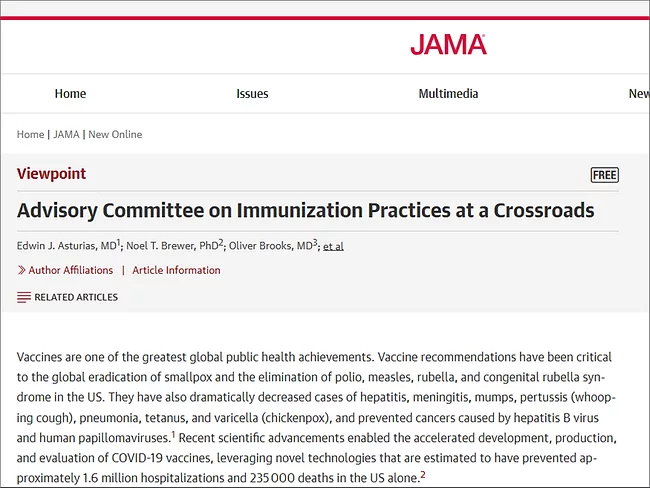
The 17 members abruptly terminated June 9 from the U.S. CDC’s Advisory Committee for Immunization Practices (ACIP) are not going gently into the night. Instead, they’re raging against what could be the dying of the light. The 17 raised their collective voices in a June 16 JAMA opinion piece to decry what’s at stake with Health and Human Services Secretary Robert Kennedy’s efforts, in his words, to “reestablish public confidence in vaccine science” by cleansing ACIP of what he claimed were conflicts due to members’ financial ties to industry.
And then there were eight. That is, eight members of the U.S. CDC’s Advisory Committee for Immunization Practices (ACIP).Two days after dismissing the 17 members of the committee, Health and Human Services Secretary Robert Kennedy named eight new members to the panel. Eight is the minimum required for a quorum, which will be necessary for the June 25-27 ACIP meeting.
Despite the June 9 gutting of the U.S. CDC’s Advisory Committee for Immunization Practices, the Department of Health and Human Services said the committee’s June 25-27 meeting will continue as scheduled. But a new panel has yet to be named, and typically ACIP members have a lot of behind-the-scenes work to do before a meeting.