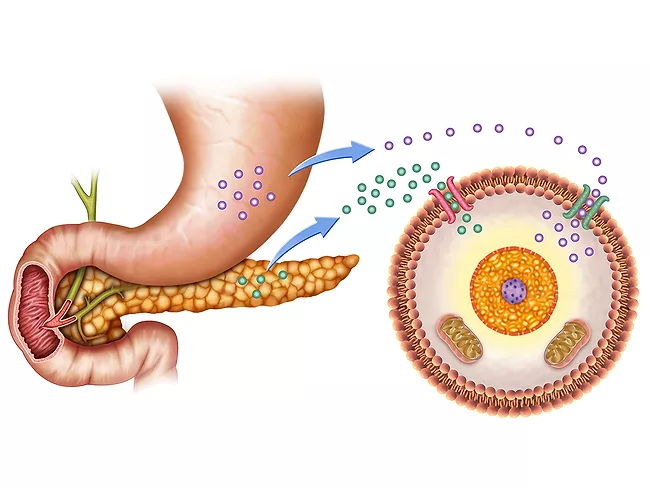
Insulin secretion by pancreatic β cells is a fundamental component of glucose homeostasis. Aldehyde dehydrogenase 1 family member A3 (ALDH1A3) is a molecule involved in pancreatic β-cell dedifferentiation, leading to cell failure, and a marker of type 2 diabetes progression.
A new epigenetic editing technique has restored the functionality of neurons in Rett syndrome (RTT), a rare neurodevelopmental disease associated with a mutation of the MECP2 gene on the X chromosome. The origin of this disorder is a heterozygous mutation of the MECP2 (methyl CpG-binding protein 2) gene. Homozygosity is lethal and as it is associated with the X chromosome; Rett mostly affects girls, inhibiting the development of their motor skills and communication.
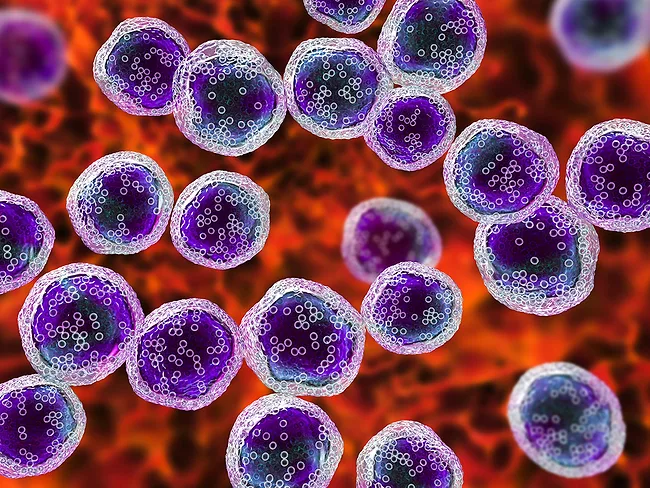
Approximately 20,000 patients diagnosed with non-Hodgkin lymphomas died in 2022 despite current treatments; 30-40% of these cases involved diffuse large B-cell lymphoma (DLBCL). Monoallelic mutations in histone acetyltransferases (HATs) occur in over 39% of germinal center DLBCLs. Activation of intact wild-type alleles offers an opportunity to overcome the mutated allele.
The positively charged nanoparticle polyamidoamine generation 3 (P-G3) can be specifically targeted to either visceral or subcutaneous fat, and affects both types of fat in different ways, researchers from Columbia University reported in two papers recently published.
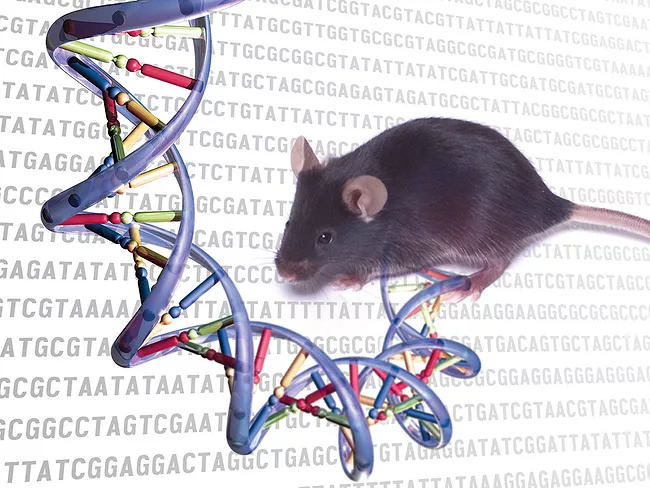
Researchers from Columbia University presented novel knock-in mouse models, designed to replicate de novo sequence variations in the HCN1 voltage-gated ion channel, p.G391D and p.M153I, which are associated with severe drug-resistant neonatal- and childhood-onset epilepsy, respectively.
The positively charged nanoparticle polyamidoamine generation 3 (P-G3) can be specifically targeted to either visceral or subcutaneous fat, and affects both types of fat in different ways, researchers from Columbia University reported in two papers recently published. The studies, published online in Nature Nanotechnology on Dec. 1, 2022, and in Biomaterials on Nov. 28, 2022, are both “a conceptual advance” and “quite amenable to translation,” co-corresponding author Kam Leong told BioWorld.
Columbia University has presented non-hallucinogenic ariadne analogues acting as 5-HT2A receptor agonists reported to be useful for the treatment of depression, among other disorders.
In the last decade, responsive neurostimulation (RNS) has become a mainstay of treatment for refractory focal epilepsy, but challenges with the technology remain. Researchers at Columbia University in New York appear to have overcome some of the major limitations through development of a compact, flexible, high performance implantable device that permits reading and manipulation of brain circuits.