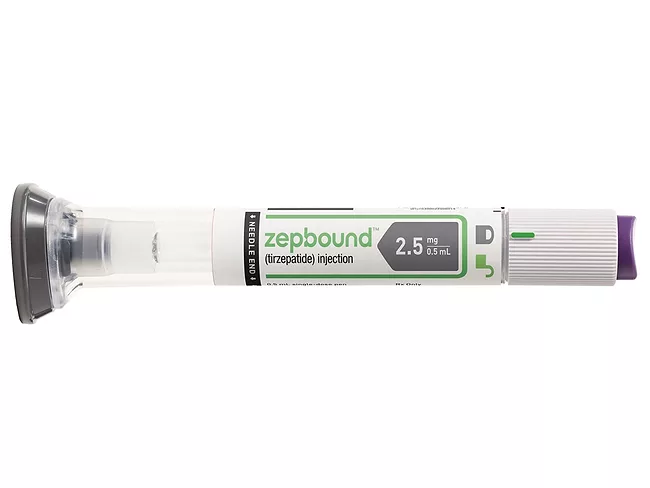
A year-and-a-half after Eli Lilly and Co.’s Mounjaro (tirzepatide) gained U.S. FDA approval for adults with type 2 diabetes, the GLP-1 and GIP dual agonist was cleared for chronic weight management in adults who are obese or overweight and who also have one related condition.
Research led by Duke University and the German Center for Diabetes Research shows the glucose-dependent insulinotropic polypeptide (GIP) receptor plays an essential role in the action of the type 2 diabetes drug Mounjaro (tirzepatide; Eli Lilly and Co.) in human pancreatic islets.
Positive phase III results from Surmount-2 of Eli Lilly and Co.’s Mounjaro (tirzepatide) showed overweight and obese type 2 diabetes patients receiving the highest dose lost up to 34.4 pounds, with the majority achieving at least a 5% decrease in overall body weight. The results will help the Indianapolis-based company complete its rolling supplemental NDA with the U.S. FDA targeting an approval for obese and overweight adults with weight-related co-morbidities.
Six weeks ahead of its June 26 PDUFA date, the U.S. FDA has approved a priority NDA for Eli Lilly and Co.’s Mounjaro (tirzepatide), an injectable treatment for adults with type 2 diabetes (T2D). The once-weekly, first-in-class medicine activates both glucose-dependent insulinotropic polypeptide (GIP) and glucagon-like peptide-1 (GLP-1) receptors, which leads to improved blood sugar control. The potential market is massive, as 462 million people across the planet have T2D. The numbers have been growing 1.4% annually as the population ages and grows more obese.
Eli Lilly and Co.'s tirzepatide, a high-profile entrant in the global anti-obesity race, hit a key milestone, becoming the first investigational medicine to deliver more than 20% weight loss on average for non-diabetics in a phase III study, said Jeff Emmick, vice president of product development at the company.
The pandemic has forced pharma and biotech to be more agile to better navigate the obstacles and still find success. Supply chain gaps are part of the problem, as are clinical trial delays. Yet the industry has successfully forged ahead in the past year to produce the seven drugs Clarivate believes in the next five years will each earn more than $1 billion annually.
Following November’s equity investment that brought it a 14% ownership in Protomer Technologies Inc., Eli Lilly and Co. has acquired the privately held company engineering protein and peptide therapeutics that sense molecular activators. If development and commercial milestones are met, the deal could be worth more than $1 billion.