Researchers at Inserm have developed a method to direct pre-existing antibodies toward new targets. Their bimodular fusion proteins could be a broadly useful method for expanding access to antibody therapy. In a study that appeared in the Feb. 11, 2022, issue of Science Advances, the teams showed that antibodies to Epstein-Barr virus (EBV), which are present in 95% of the global population, could be redirected to a target cell of their choosing by fusing an EBV antigen to a cellular targeting ligand.
Two studies published this January by separate research teams have conclusively identified Epstein-Barr virus infection as the cause of multiple sclerosis, and the mechanism by which the immune response to EBV infection triggers an attack on the myelin sheath, the insulation that enables high-speed neuronal transmission.
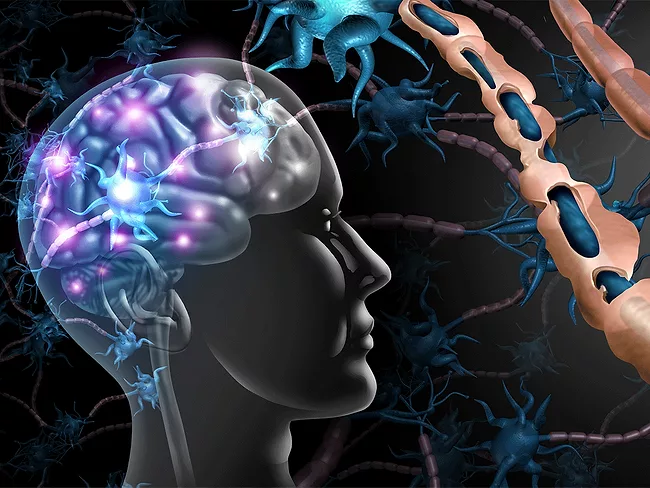
Antibodies to the EBNA1 protein of Epstein-Barr virus can cross-react with glial cell adhesion molecule (GlialCAM), a component of the myelin sheath. The findings are the first to report a mechanism for how viral infections can cause autoimmune disorders.
The enzyme poly [ADP-ribose] polymerase 1 (PARP1) is well known for its role in DNA damage repair, and multiple FDA-approved PARP inhibitors are used to treat BRCA-mutated tumors. Now, researchers at the Wistar Institute have described a role for PARP in regulating the genome of Epstein-Barr virus.