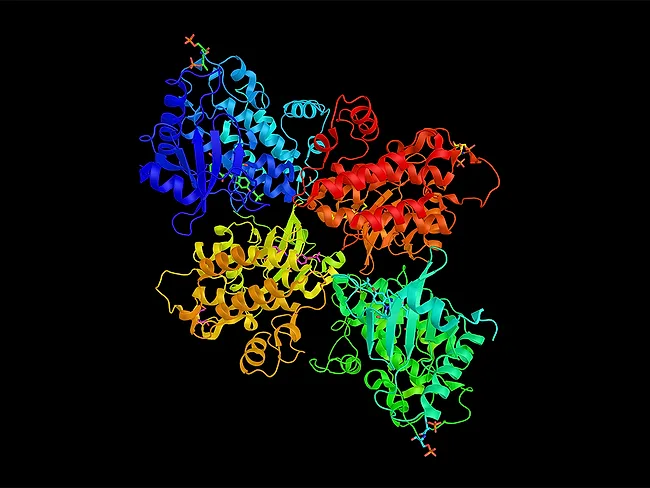
Shenzhen Targetrx Inc. has patented proteolysis targeting chimeras (PROTACs) comprising cereblon ligands coupled to a hepatocyte growth factor receptor (HGFR, MET)-targeting moiety via linker acting as HGFR degradation inducers potentially useful for the treatment of cancer.
Prelude Therapeutics Inc. has synthesized proteolysis targeting chimeras (PROTACs) comprising an E3 ubiquitin-protein ligase (CRBN)-binding moiety coupled to a histone acetyltransferase KAT6A (MOZ; MYST-3)-targeting moiety that are potentially useful for the treatment of cancer.
Inventisbio Co. Ltd. and Inventisbio LLC have disclosed new proteolysis targeting chimera (PROTAC) compounds comprising an E3 ubiquitin ligase-binding moiety coupled to a signal transducer and activator of transcription 6 (STAT6)-targeting moiety potentially useful for the treatment of cancer.
ATR is a key mediator of the cellular response to replication stress, helping maintain genome integrity during DNA replication. Inhibiting ATR compromises these protective mechanisms, creating a therapeutic vulnerability that is particularly pronounced in ATM-deficient tumors. Researchers at the Hefei Institute of Pharmaceutical Industry reported the identification of a novel series of proteolysis targeting chimeras (PROTACs) designed to induce ATR degradation.
Blueprint Medicines Corp. has identified new proteolysis targeting chimera (PROTAC) compounds comprising an E3 ubiquitin ligase binding moiety covalently linked to a cyclin-dependent kinase 4 (CDK4)-targeting moiety potentially useful for the treatment of cancer.
Chronic activation or upregulation of interleukin-1 receptor-associated kinase 4 (IRAK4) has been linked to several diseases, including systemic lupus erythematosus, rheumatoid arthritis, atopic dermatitis, Alzheimer’s disease and atherosclerosis. Researchers from the Ocean University of China aimed to address the limitations of traditional small-molecule inhibitors by designing novel proteolysis targeting chimeras (PROTACs) for IRAK4 degradation.
Researchers from Ascentage Pharma Group Corp. Ltd. and Ascentage Pharma (Suzhou) Co. Ltd. have identified proteolysis targeting chimeras (PROTACs) comprising an E3 ubiquitin ligase (such as Von Hippel-Lindau disease tumor suppressor [VHL]) coupled to a Bcl-2-like protein 1 (Bcl-xl; Bcl-X; BCL2L1)-targeting moiety via a linker acting as Bcl-xl degradation inducers reported to be useful for the treatment of cancer.