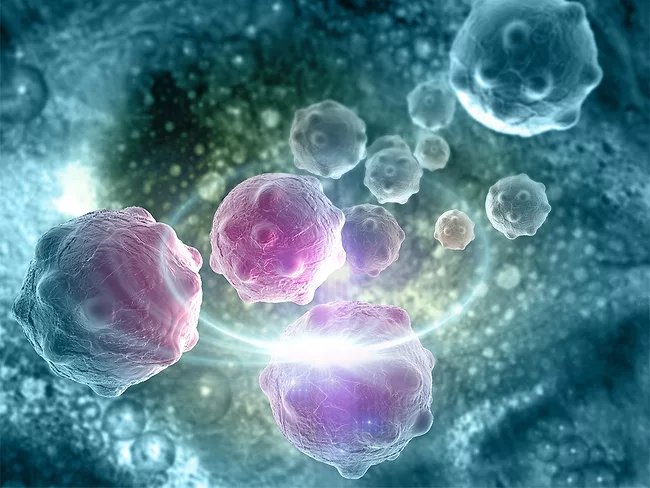
In a study reported in the online edition of Science on Aug. 10, 2023, a group of synthetic biologists from the University of California (UC) San Diego and clinicians from Australia have engineered synthetic bacteria to detect specific DNA sequences in the genomes of colorectal cancer (CRC) cells and organoids. This living cell sensor capable of detecting cancer in the colons of mice has the potential to steer the way to new biosensors capable of identifying various infections, cancers and other diseases.
In a study reported in the online edition of Science on Aug. 10, 2023, a group of synthetic biologists from the University of California (UC) San Diego and clinicians from Australia have engineered synthetic bacteria to detect specific DNA sequences in the genomes of colorectal cancer (CRC) cells and organoids. This living cell sensor capable of detecting cancer in the colons of mice has the potential to steer the way to new biosensors capable of identifying various infections, cancers and other diseases.
Giardia lamblia is a protozoan pathogen that colonizes the gastrointestinal tract and results in giardiasis. Recently, researchers from the University of California San Diego aimed to identify potent proteasome inhibitors that selectively target G. lamblia, as potential antigiardiasis therapeutics with low toxicity.
They call it the world's “first fully integrated wearable” ultrasound system for evaluating cardiovascular function while you walk, run, even ride a bicycle. Built on the nanoengineering research at the University of California San Diego (UCSD) the wearable ultrasonic system-on-patch (USoP) employs machine learning to interpret deep tissue vital signs data and track subjects in motion.
Cells of Saccharomyces cerevisiae, a yeast used as a model for human mitosis, age in two ways. Both genomic instability and the decline of mitochondria cause cells to degenerate and die. The choice of one type or another depends on a network of genes that can be adjusted by bioengineering.
Induction of immunogenic cell death (ICD) in cancer has been proposed as a promising strategy to elicit potent adaptive immune responses against tumor-associated antigens, potentially overcoming the limited efficacy of immunotherapy in some patients and tumor types. Since type I interferon (IFN) is a key modulator of ICD in antitumor responses, researchers at the University of California, San Diego are investigating how to expand the IFN effect to promote ICD responses in cancer cells.
Pancreatic cancer is an exceptionally lethal cancer that is notoriously treatment resistant, in part due to poor vascularization in the tumor microenvironment. Investigators working at the Moores Cancer Center at the University of California, San Diego (UCSD), reported in the Jan. 16, 2023, issue of Nature Cell Biology on the discovery of a pathway that was initiated by isolation stresses (e.g., hypoxia, nutrient deprivation, and/or lack of extracellular matrix, ECM) leading to this cellular transformation in the tumor-initiating pancreatic cancer cell.
A research team based at the University of California, San Diego presented data from a study that evaluated the novel cyclophilin D (CypD) inhibitor CC-2055 in preclinical models of epilepsy.