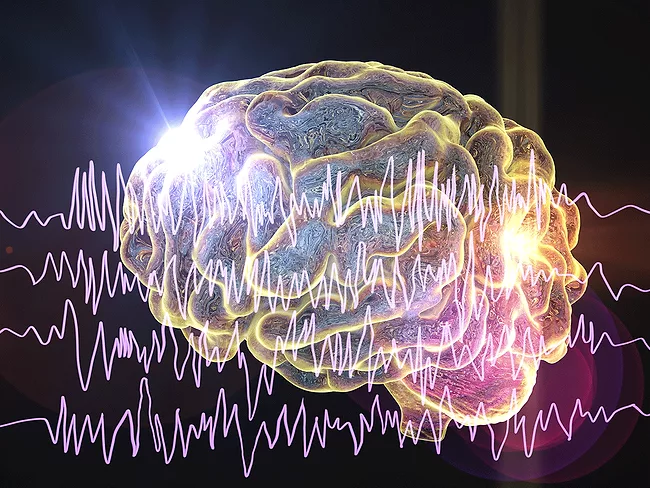
Investigators at the University of Copenhagen and affiliated organizations presented data from a study that aimed to validate differentially expressed genes (DEGs) in mesial temporal lobe epilepsy (mTLE) as potential new targets.
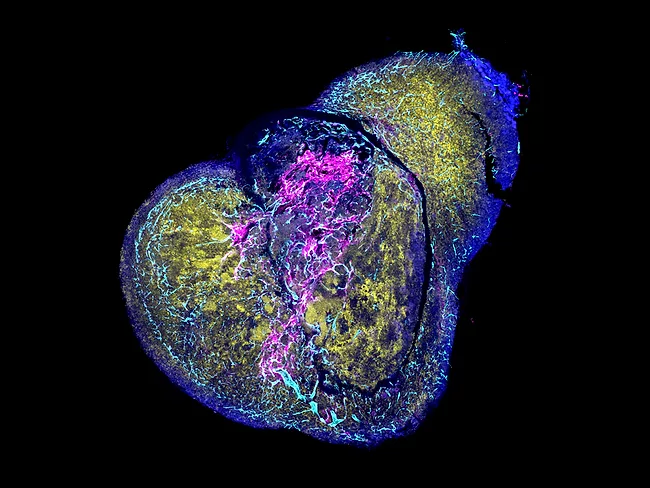
Investigators from the University of Copenhagen, Denmark have developed a cell line engineered to express bone morphogenetic protein 2 (BMP-2) and key extracellular matrix genes and critical factors that regulate and support human hematopoiesis. The findings were reported in the Oct. 12, 2022, issue of Science Translational Medicine. One of the clinical applications that the research team is interested in involves exploiting the MSOD-B hOss as a tumor model for bone colonization in the context of various cancers.
The 2022 Nobel Prize in chemistry was awarded to Carolyn Bertozzi of Stanford University, to Morten Meldal of the University of Copenhagen, and – for the second time – to Barry Sharpless of The Scripps Research Institute “for the development of click chemistry and bioorthogonal
chemistry.”
Click chemistry, the Nobel Committee’s Olof Ramström told reporters while announcing the prize, “is almost like it sounds – it’s all about linking different molecules.”
He likened click chemistry to a seatbelt buckle, whose interlocking parts can be attached to many different materials, linking them by snapping the two parts of the buckle together.
“The problem was to find good chemical buckles,” Ramström said – chemicals that “will easily snap together, and importantly, they won’t snap with anything else.”