Hidradenitis suppurativa (HS) is an inflammatory skin disease with significant diagnostic delay. Type XXII collagen is a fibrillar collagen located in the skin epidermis. Reliable biomarkers to aid in the diagnosis of HS and monitor the severity of disease are needed.
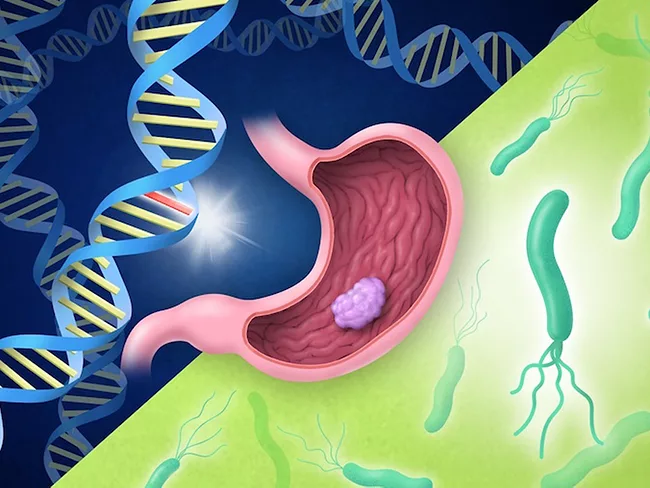
Infection with Helicobacter pylori is a risk factor for the development of gastric cancer. H. pylori initiates a chronic inflammatory response that can lead to the production of excessive radical oxygen species (ROS), which in turn can activate oncogenic signaling pathways leading to gastric cancer development. SUMOylation is a post-translational modification mechanism in cells in response to reactions to stress. A team at The First Affiliated Hospital of Nanchang University hence set out to study the role of SUMO-activating enzyme subunit 1 (SAE1) in gastric cancer, since it is a SUMO-activating effector protein.
Bone morphogenetic protein 9 (BMP-9), also known as growth/differentiation factor 2, is a member of the transforming growth factor-β family of cytokines, which exerts its biological effects through binding to a complex formed by ALK1 and BMPR2.
Increasing evidence exists suggesting plasma exosomal microRNAs (miRNAs) are involved in tumor progression, but their role in breast cancer is still unknown. Plasma exosome miRNA sequencing revealed that elevated levels of miR-361-3p were significantly correlated with malignant breast cancer progression in patients.
There is increasing interest in studying exosome molecules, and particularly long non-coding RNAs (lncRNAs), in the diagnosis of gastric cancer. Microarray analysis was performed from samples obtained from patients with gastric cancer who underwent endoscopic resection.
Researchers from China have elucidated the prognostic role of aberrant expression of RNA binding motif protein, X chromosome (RBMX) in several cancer types using samples from cancer patients.
From previous reports, there is evidence that cancer cells overexpress inositol 1,4,5-trisphosphate receptor-interacting protein-like 1 (ITPRIPL1) to evade the immune system and promote tumor growth. Tissue samples from patients with non-small-cell lung cancer (NSCLC) were collected and used for studying the expression (intensity and extent) patterns of ITPRIPL1 and its diagnostic and prognostic value in this cancer type.
University of Oxford scientists have presented data from deep proteomics of cerebrospinal fluid (CSF) in search of proteins with diagnostic or prognostic value in amyotrophic lateral sclerosis (ALS). Analysis was performed using CSF samples from 40 ALS patients, 15 controls (healthy individuals) and 8 mimicking conditions.
Distant metastasis and drug resistance are the main causes of colorectal cancer (CRC)-derived mortality. Identifying the underlying mechanisms driving metastasis is key for improving its therapy. Epithelial-to-mesenchymal transition (EMT) promotes the migration and invasion of tumor cells, allowing them to metastasize distant organs. Chinese researchers put the focus on dishevelled segment polarity protein 3 (DVL3) due to its involvement in the Wnt signaling pathway.