Med tech and diagnostic companies in Europe are considering strategies to navigate the U.S. market following President Trump’s introduction of reciprocal tariffs on imports. While some companies are more exposed than others, there’s no doubt that many will feel the pain.
Precision medicine holds exciting promise for the medical device industry as it offers a range of solutions within diagnostics, digital devices and imaging, which could transform patient care, delegates heard at the LSX World Congress in London. However, there are a range of challenges ahead, including the population of clinical data, getting past the inertia of physicians and making it easier to run clinical studies.
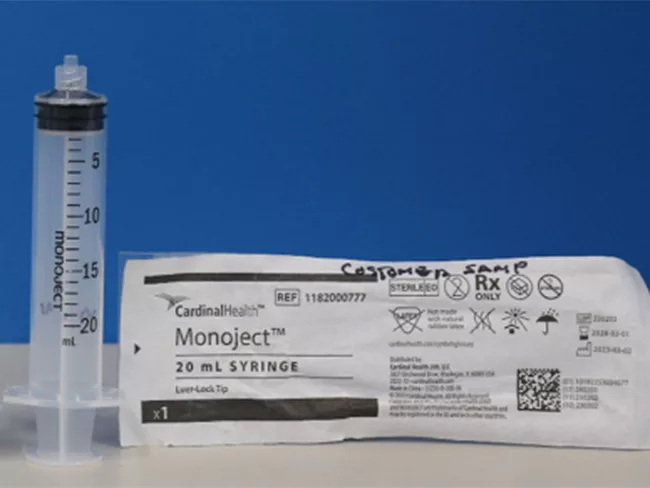
The U.S. FDA advises health care providers (HCPs) to avoid using Monoject syringes distributed by Cardinal Health with syringe pumps or patient-controlled analgesia (PCA) pumps because of incompatibilities between the Monoject interface and the pumps.
Olympus Medical Corp. instituted a class I recall of its UHI-4 high flow insufflation device due to reports that the device may over-inflate and potentially create embolisms. The recall affects more than 3,100 units distributed in the U.S. between May 2012 and August 2023, all of which should not be used until the company resolves the problem.
The mortality rate of patients with kidney failure can be significantly reduced if they are treated with high-dose hemodiafiltration compared with the more commonly used high-flux hemodialysis, according to a study recently published in the New England Journal of Medicine. The results from the CONVINCE trial pave the way for the increased adoption of hemodiafiltration as a therapeutic option to treat patients with end-stage kidney disease.
The U.S. FDA announced that it has cleared a new set of tubes used in hemodialysis machines made by Fresenius Medical Care AG & Co., of Bad Homburg, Germany, that are expected to overcome concerns about the previous tubes’ release of potentially toxic biphenyls. The agency acknowledged that it has no reports of adverse events related to the use of these chemicals in the silicone used to manufacture the tubes, stating that its action on this issue is driven solely by animal studies in the medical literature, none of which were cited in the FDA’s Oct. 28 announcement.
Davita Inc., lost a U.S. Supreme Court ruling regarding limits to the private payer coverage for outpatient dialysis services despite, a development that took a double-digit bite out of Davita’s shares. However, shares of competitor Fresenius also took a hit, suggesting that the market sees the decision as a major setback for both companies.
The U.S. FDA reported it is evaluating the potential for exposure to some chemicals associated with the use of several models of hemodialysis machines made by Fresenius Medical Care Inc., of Waltham, Mass., including units that are no longer in production.
The U.S. CMS has crafted a payment policy that covers both adjunctive and non-adjunctive continuous glucose monitors (CGMs) in the final rule for durable medical equipment (DME). Medtronic plc, of Dublin, heralded the move as “a very important benefit expansion” for the company’s customers, but the expanded coverage also pays for additional CGMs that work with Medtronic insulin pumps.