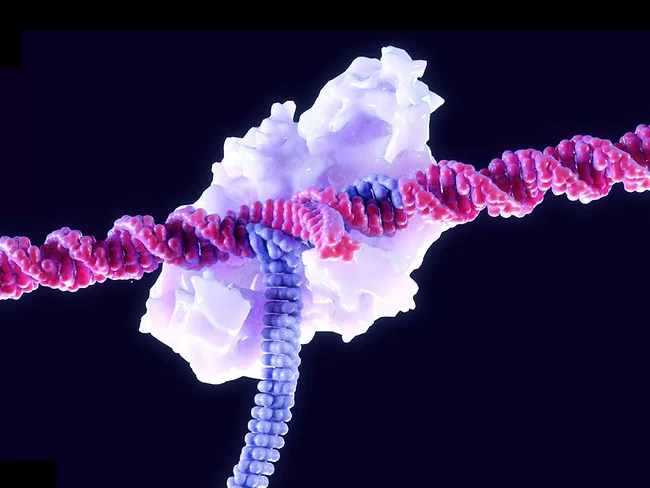
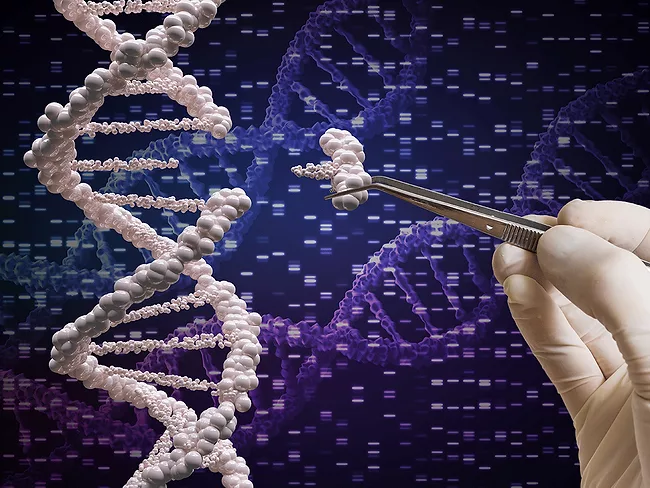
With CRISPR-Cas9 technology making its way toward clinical practice, laboratories are studying different gene-editing techniques, from base editors to prime editors, to correct mutations associated with various pathologies. Researchers at Tessera Therapeutics Inc. have been inspired by retrotransposons to develop a tool for editing DNA using RNA and reverse diseases such as phenylketonuria (PKU) or sickle cell disease (SCD).
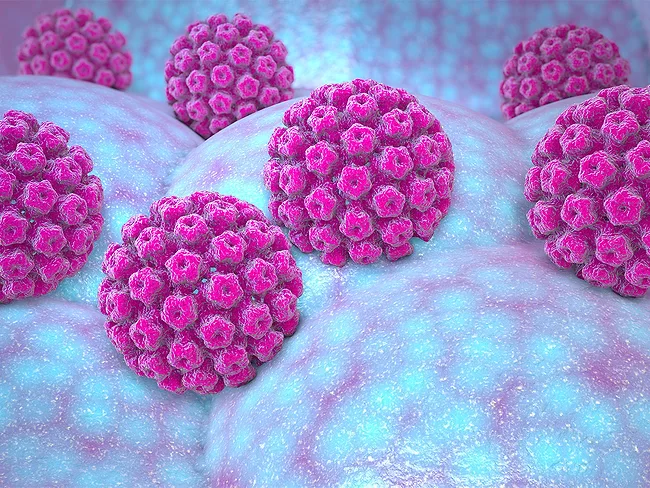
Researchers from Beijing Corregene Biotechnology Co. Ltd. presented preclinical data for CRTE7A2-01, a cell therapy candidate consisting of human T cells expressing T-cell receptors (TCRs) specific for HLA-A*02:01-restricted HPV16 E7 antigen.
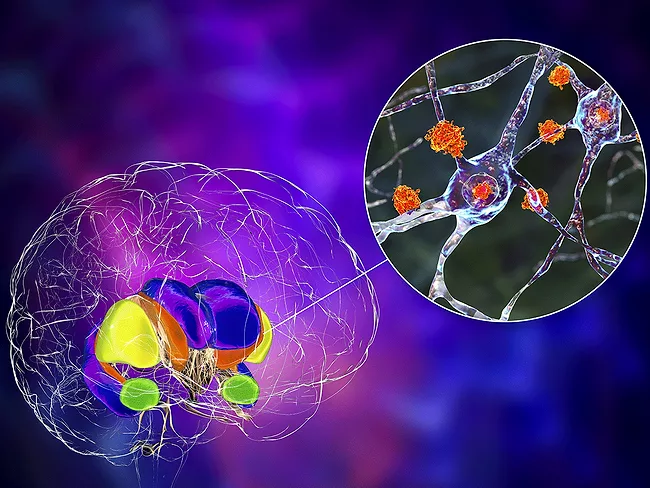
Researchers from Seelos Therapeutics Inc. presented the discovery and preclinical evaluation of a gene therapy candidate, SLS-009, for the treatment of Huntington’s disease (HD).
Bietti’s crystalline corneoretinal dystrophy (BCD) is an autosomal recessive inherited disease caused by mutations in the cytochrome P450 (CYP) family 4 subfamily V member 2 (CYP4V2) gene, which encodes a polyunsaturated fatty acid (PUFA) hydroxylase dominantly expressed in retinal pigment epithelium (RPE) cells.
Mutations in the RPGRIP1 gene are associated with rare retinal dystrophies and most commonly with Leber congenital amaurosis (LCA) type 6, which is characterized by vision loss, among other symptoms.
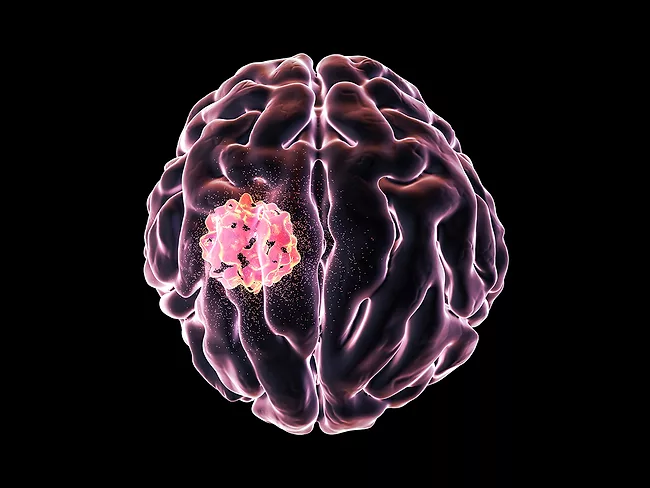
Glioblastoma multiforme (GBM) is an aggressive brain cancer with poor prognosis and survival. TNF-related apoptosis-inducing ligand (TRAIL) is a protein that induces apoptosis in cancer cells by binding death receptors type 4 and 5. Researchers at the University of North Carolina explored using hiNeuroS-TRAIL combined with the ClpP activator TR-107 as a potential treatment.
Sialidosis is a lysosomal storage disease caused by mutations in the NEU1 gene, which encodes sialidase neuraminidase 1. These mutations lead to enzyme deficiency and subsequently accumulation of oligosaccharides and sialylated glycopeptides in tissues and body fluids, which in turn lead to cell and organ dysfunction. There are no approved therapies. Three different AAV9 vectors encoding NEU1 were developed and tested by UMass Chan Medical School researchers in the preclinical setting in mice.
The targeted delivery of optimized stem cells directly into injured tissues has been used to maximize efficacy and minimize systemic exposure. Still, despite hundreds of clinical trials evaluating mesenchymal stem cell (MSC) therapy as a treatment, clinical efficacy remains highly variable. Investigators at Case Western Reserve University have developed an optimized combination of cytokines and growth factors applied to MSCs (HXB-319).
NGGT (Suzhou) Biotechnology Co. Ltd. has presented preclinical data on an AAV vector approach that expresses human PAH, rAAV8-PAH, also known as NGGT-002. NGGT-002 has liver tropism and it was codon-optimized for expressing PAH in the liver.
Researchers from Healios K.K. presented preclinical data for HLCN-061, a novel gene-engineered human induced pluripotent stem cell (iPSC)-derived NK cell product being developed for the treatment of solid tumors.