Astrazeneca plc’s Alexion rare diseases unit has taken an option to buy all remaining equity in Caelum Biosciences Inc., adding a rare disease drug to its pipeline in a deal worth $500 million. At the center of the deal is CAEL-101, a potentially first-in-class monoclonal antibody designed to tackle the toxic amyloid deposits that build up in organs of people with the rare disease light chain amyloidosis.
A potential new treatment for the rare condition Wilson disease moved a step closer to reality after Alexion Pharmaceuticals Inc., now part of Astrazeneca plc, announced positive top-line results from a phase III trial of ALXN-1840 (tiomolibdate choline). Astrazeneca’s shares (NASDAQ:AZN) ticked up following the announcement, closing Aug. 26 at $58.76, up 18 cents. From the point of view of the big U.K. pharma, it’s a good piece of news as it hopes to build a rare disease franchise from its $39 billion acquisition of Alexion, which was completed last month.
A month after Astrazeneca plc’s $39 billion takeover of Alexion Pharmaceuticals Inc. was finalized, the merged company has hit its first speed bump after the new unit discontinued a phase III rare disease trial. Alexion, of Boston, said it axed the 382-patient CHAMPION-ALS trial of its long-acting C5 complement inhibitor Ultomiris (ravulizumab) in amyotrophic lateral sclerosis (ALS).
Canada’s Federal Court of Appeal took the Patented Medicine Prices Review Board to task for ordering Alexion Pharmaceuticals Inc. to “forfeit excess revenues” generated by Soliris (eculizumab) between 2009 and 2017.
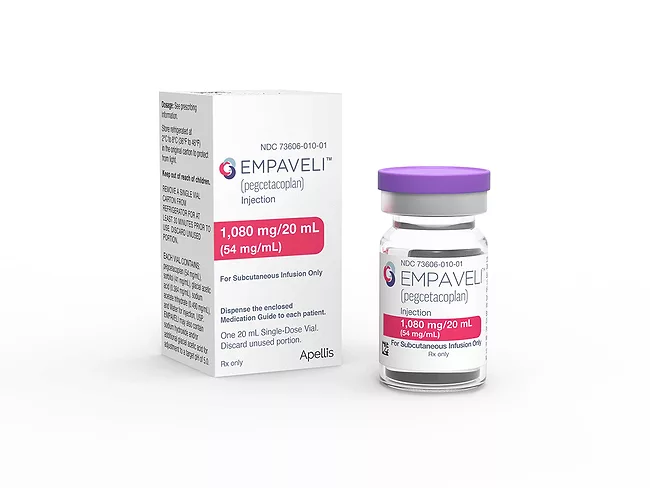
Now that Apellis Pharmaceuticals Inc.’s Empaveli pegcetacoplan has won FDA approval as the first targeted C3 therapy for treating paroxysmal nocturnal hemoglobinuria (PNH), the cost of treating the rare blood disorder is hefty.
Citing a lack of efficacy from adding its complement inhibitor Ultomiris (ravulizumab) to best supportive care for patients hospitalized with severe COVID-19, Alexion Pharmaceuticals Inc. paused further enrollment in a global phase III study of the drug. The move, recommended by the trial's independent data monitoring committee, suggested Ultomiris may soon join the list of other therapeutics once tested against COVID-19 but now no longer.
While everyone will be glad to see 2020 in their rearview mirror, the biopharmaceutical sector can count its blessings, as it emerges from a period where it has surprisingly received record public and private financings and enjoyed strong investor support. This is in sharp contrast to most of the global economy, which has been decimated by the ongoing pandemic.
With a $39 billion offer in hand, Alexion Pharmaceuticals Inc. is the target of what could be the third largest takeover to date of a pure play biotech company. At a 45% premium, the proposed transaction, which is expected to close in the third quarter of 2021, is largely applauded by analysts who point to three years of languishing stock prices despite the promise of the Boston-based company’s C5 complement franchise and a sturdy pipeline.
The share prices of blue-chip biopharmaceutical companies continued on their lackluster trajectory, which started in June and collectively lost ground last month, with the BioWorld Biopharmaceutical index slipping about 1.3% as investors took a break in order to digest the deluge of COVID-19 vaccine data released during the period and the impact on the bottom lines that the pandemic has exerted among those companies that have reported their second-quarter results.
Alexion Pharmaceuticals Inc., of Boston, will diversify its portfolio beyond its top-selling Soliris (eculizumab) and C5 inhibitor Ultomiris (ravulizumab) by acquiring Portola Pharmaceuticals Inc. for $1.4 billion. Alexion’s CEO, Ludwig Hantson, told investors May 5 that the acquisition immediately diversifies the company’s commercial-stage portfolio by adding Portola’s Andexxa (coagulation factor Xa [recombinant], inactivated-zhzo) to Alexion’s existing palette of hematology and neurology therapies. Alexion’s CEO, Ludwig Hantson, told investors May 5 that the acquisition immediately diversifies the company’s commercial-stage portfolio by adding Portola’s Andexxa (coagulation factor Xa [recombinant], inactivated-zhzo) to Alexion’s existing palette of hematology and neurology therapies. Andexxa is the only FDA-approved factor Xa inhibitor reversal agent in severe and uncontrolled bleeding.