LONDON – Cytovation AS has raised $20 million in a series A, enabling it to expand the monotherapy arm of a phase I/II trial of its tumor membrane immunotherapy, Cypep-1, and to test it in three combination arms with the checkpoint inhibitor Keytruda (pembrolizumab).
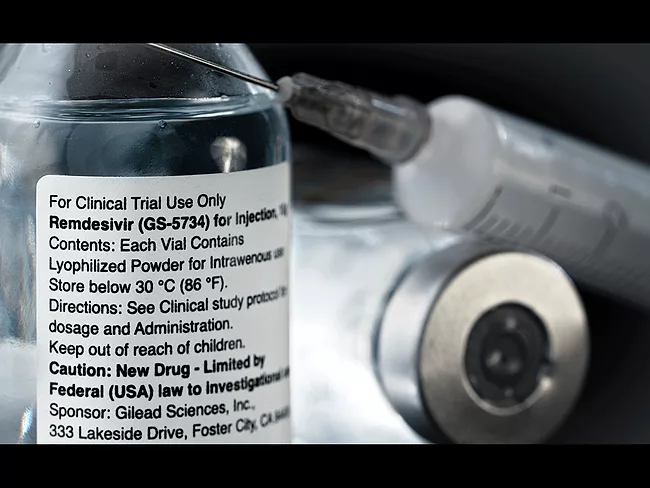
Once again, the U.S. FDA giveth and it taketh away. Just a few days after expanding its approval for Gilead Sciences Inc.’s Veklury (remdesivir) to provide access to more people infected with COVID-19, the FDA essentially shut down the use of two monoclonal antibody (mAb) treatments Jan. 24 that had been authorized to treat mild-to-moderate COVID-19 infections – Regeneron Inc.’s Regen-Cov (Ronapreve in Europe), an antibody cocktail of casirivimab and imdevimab, and Eli Lilly and Co.’s bamlanivimab and etesevimab that are administered together.
Merck & Co Inc. has had a setback with its chronic cough drug gefapixant after the FDA rejected its NDA, a decision that also briefly hit the share price of rival Bellus Health Inc. before it regained market traction late Jan. 24. The FDA had been reviewing gefapixant since March 2021, but the regulator is now asking for additional information related to measurement of efficacy in a dreaded complete response letter. Merck said the response was not related to the safety of gefapixant, a P2X3 receptor antagonist, under development for treatment of refractory chronic cough (RCC) or unexplained chronic cough in adults. Shares in Merck (NYSE:MRK) ticked down 1.4% to $78.86 while Bellus Health shares (NASDAQ:BLU) rose by 1.8% to $5.66.
Where’s the plan? That was the underlying question Jan. 11 as Biden administration health officials faced frustration and tough questions from both Democrats and Republicans on the Senate Health, Education, Labor and Pensions (HELP) Committee about how the U.S. government is responding to the surge of COVID-19 infections caused by the omicron variant.
Merck & Co. Inc., building on a year-old deal with Aligos Therapeutics Inc., has moved to in-license an early stage nonalcoholic steatohepatitis (NASH) oligonucleotide program Aligos had previously advanced independently. The amended deal also gives Merck the right to add a new NASH target to the partnership, in addition to those already part of the agreement. With Aligos eligible to receive up to $460 million in development and commercialization milestones as well as tiered royalties on net sales per target, its rewards could reach $1.38 billion.
After 25 years of research. Allschwil, Switzerland’s Idorsia Ltd. has had its first drug approved by the FDA – Quviviq (daridorexant) for adults with insomnia. The okay for Quviviq is the result of painstaking research led by the firm’s chief scientific officer, Martine Clozel, whose husband Jean-Paul Clozel is CEO.
The U.S. FDA’s emergency use authorization for two oral antivirals to be used to treat individuals at high risk of progressing to severe disease is just one hurdle cleared, as Pfizer Inc.’s Paxlovid and Merck & Co. Inc.-Ridgeback Biotherapeutics Inc.’s molnupiravir still have many more laps to run.
The FDA went from zero to two oral antivirals to treat COVID-19 in the space of two days, granting emergency use authorizations last week to Pfizer Inc.’s Paxlovid and Merck & Co. Inc.-Ridgeback Biotherapeutics Inc.’s molnupiravir. Both five-day regimens are authorized for use, within five days of COVID-19 symptom onset, in individuals at high risk of progressing to severe disease, including hospitalization and death.
Although Pfizer Inc.’s COVID-19 oral antiviral candidate, Paxlovid (PF-07321332; ritonavir), has yet to be authorized anywhere, the push for compulsory licensing of the drug has begun.
One of the biggest concerns at the Nov. 30 meeting of the FDA’s Antimicrobial Drugs Advisory Committee is that, if Merck & Co. Inc.-Ridgeback Biotherapeutics Inc.’s antiviral drug, molnupiravir, is authorized for use in treating mild to moderate COVID-19 in patients at high risk of progressing to severe disease, it might be used too broadly, given its potential risks.