The U.S. Court of Appeals for the Federal Circuit struck a blow Nov. 30 to Biogen Inc.’s blockbuster multiple sclerosis (MS) drug, Tecfidera, affirming a lower court’s determination that a patent claiming a method of treating MS was invalid for lack of written description. In two other precedential cases the next day, the appellate court opened the door for Arbutus Biopharma Corp. to seek royalties on Moderna Inc.’s COVID-19 vaccine.
The U.K. is stepping up its response to the Omicron COVID-19 variant after the country’s regulatory agency approved Xevudy (sotrovimab), the antibody therapy from Glaxosmithkline plc and Vir Biotechnology Inc. At the same time the country placed orders for 114 million more doses of COVID-19 vaccines from Pfizer Inc. and Moderna Inc., for use in 2022 and 2023.
While the world grapples for a clear picture of the Omicron variant and how to handle it, Moderna Inc., Biontech SE and Adagio Therapeutics Inc. stepped out with stock advances, building on momentum from the end of last week, while eyeing 2022 as a launch date against the variant.
The FDA amended emergency use authorizations (EUAs) for the Moderna Inc. COVID-19 vaccine as well as the shot from Pfizer Inc. and Biontech SE. A single booster dose was green-lighted for people 18 years and older at least six months after finishing the primary regimen with either of the vaccines, or at least two months after getting the Johnson & Johnson shot.
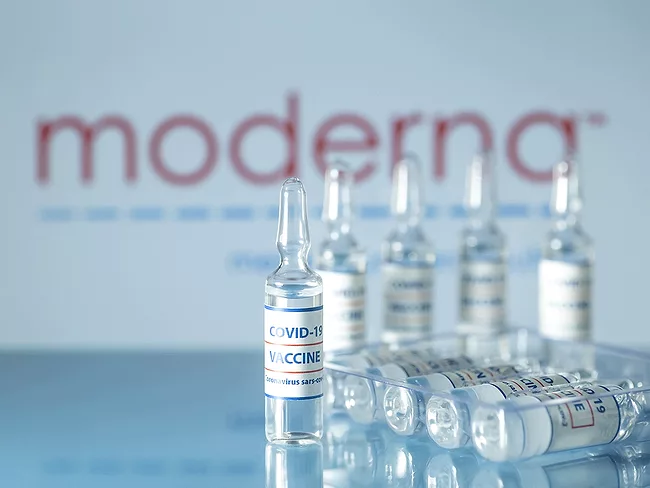
The U.S. NIH said it will go to court if necessary to defend its role in developing Moderna Inc.’s COVID-19 vaccine. NIH spokeswoman Renate Myles told BioWorld that the agency “is not giving up on our claim that NIH is a co-inventor on the mRNA technology used in the Moderna’s COVID-19 vaccine but defers to legal authorities on how this might be resolved.”
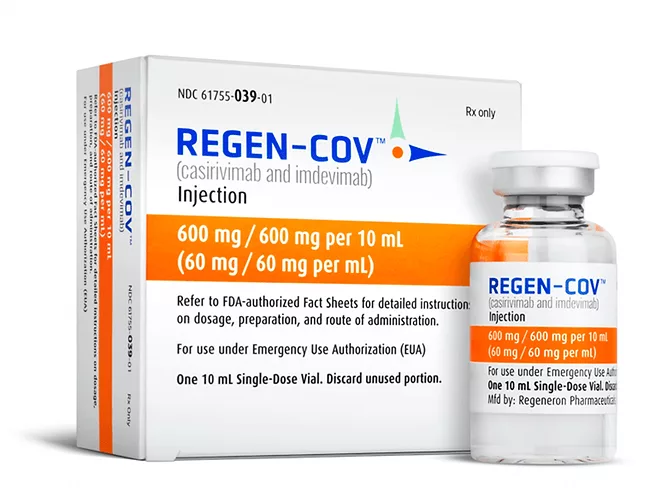
New positive phase III study results for Regeneron Pharmaceuticals Inc.’s COVID-19 monoclonal antibody cocktail show a single dose reduced the risk of contracting the virus by 81.6% during a two- to eight-month follow-up period. The strong data go along with Pfizer Inc.’s recent positive results for its oral antiviral, Paxlovid, hinting that COVID-19 therapeutics could begin cutting into powerful mRNA vaccine margins from Pfizer Inc.-Biontech SE and Moderna Inc.
An ongoing evaluation of heart muscle inflammation risk, a key concern with mRNA COVID-19 vaccines globally, could delay through January 2022 completion of an FDA review of Moderna Inc.'s vaccine in adolescents 12 to 17 years of age. The side effect, called myocarditis, has been a particular concern with regulators, especially for adolescents and young men.
The FDA’s Vaccines and Related Biological Products Advisory Committee (VRBPAC) voted 17-0, with one abstention, that the benefits of Pfizer Inc.-Biontech SE pediatric formulation of its two-dose COVID-19 vaccine outweigh its risks for children ages 5 through 11. Many of those votes came with caveats, as the VRBPAC members struggled with the unknowns of the vaccine and the fear that schools would mandate its use, even though it would still be considered experimental if the FDA grants it an emergency use authorization.
Interim data from a phase II/III study of Moderna Inc.’s COVID-19 vaccine show a robust antibody response in children ages 6 through 11, stronger than the one the company found in adolescents. Two 50-mcg doses given 28 days apart also produced a favorable safety profile that nearly mirrored that of adolescents and adults.
Pfizer Inc. said that, in children aged 5 through 11, the COVID-19 vaccine it co-developed with Biontech SE showed 90.7% efficacy against all variants of concern following two doses. The data were included in briefing documents filed ahead of a full discussion at the FDA’s Vaccines and Related Biological Products advisory committee meeting set for Oct. 26.