As the Biden administration continues to play musical chairs with key U.S. federal health leadership positions, its latest move is naming Francis Collins to serve as science adviser to the president and co-chair of the President’s Council of Advisers on Science and Technology.
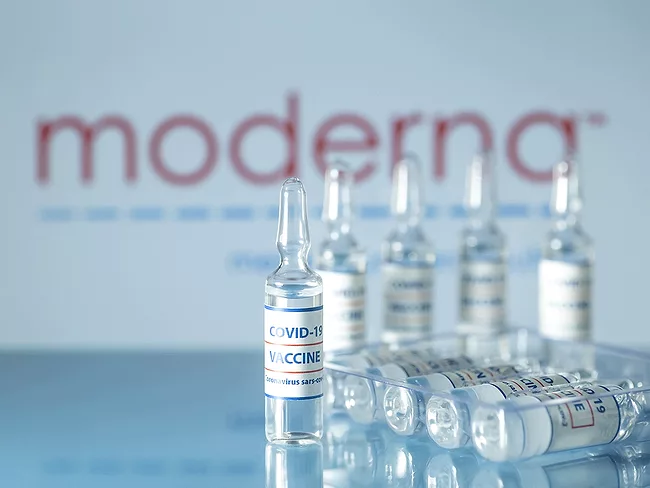
The CDC’s Advisory Committee on Immunization Practices (ACIP) has unanimously recommended the agency endorse administering Moderna Inc.'s COVID-19 vaccine, Spikevax (elasomeran), to adults. The vote was a strong echo of the FDA’s full approval of the vaccine for adults only a few days earlier, on Jan. 31. After hearing safety and efficacy data from Moderna and an internal analysis of that data from the CDC, ACIP recommended by a vote of 13-0 that the CDC endorse the vaccine’s use for people 18 years and older.
Amid pressure to get a COVID-19 vaccine authorized for infants and toddlers sooner than later, Pfizer Inc. and Biontech SE initiated a rolling submission seeking to amend the U.S. FDA’s emergency use authorization for their mRNA vaccine to include children 6 months through 4 years of age.
Moderna Inc. reached a milestone of sorts Jan. 31 as the U.S. FDA fully approved its COVID-19 vaccine, Spikevax (elasomeran), for use in adults. Meanwhile, the Moderna and Pfizer Inc.-Biontech SE vaccines are in the sights of the U.S. Congressional Progressive Caucus, which is pushing the Biden administration to do more to ensure global vaccination.
Should the U.S. government be in the business of manufacturing COVID-19 vaccines? Several prominent Democratic senators and representatives would say yes.
Once the CDC accepts the recommendation of its Advisory Committee on Immunization Practices (ACIP), the COVID-19 vaccine regimen, at least for the Pfizer Inc.-Biontech SE vaccine, will include a booster dose for everyone 12 and older. ACIP voted 13-1 at a Jan. 5 emergency meeting to recommend the booster dose for 12- to 17-year-olds at least five months after a primary series of the Pfizer vaccine.
With Omicron spreading rapidly, U.S. COVID-19 vaccine producers are facing increasing pressure to up their production and to do more to ensure their vaccines are accessible globally.
Aridis Pharmaceuticals Inc. is one of two companies posting COVID-19 data just days before Christmas. Its fully human monoclonal antibody cocktail, AR-701, was shown to be broadly reactive against COVID-19 variants, including Omicron, in preclinical research. Moderna Inc. also posted new data that showed preliminary neutralizing data against Omicron following 50-mg doses of its vaccine, which is currently authorized, and 100-mg dose boosters, which increased neutralizing antibody levels 83-fold from the pre-boost levels.
The U.S. Court of Appeals for the Federal Circuit struck a blow Nov. 30 to Biogen Inc.’s blockbuster multiple sclerosis (MS) drug, Tecfidera, affirming a lower court’s determination that a patent claiming a method of treating MS was invalid for lack of written description. In two other precedential cases the next day, the appellate court opened the door for Arbutus Biopharma Corp. to seek royalties on Moderna Inc.’s COVID-19 vaccine.
The U.K. is stepping up its response to the Omicron COVID-19 variant after the country’s regulatory agency approved Xevudy (sotrovimab), the antibody therapy from Glaxosmithkline plc and Vir Biotechnology Inc. At the same time the country placed orders for 114 million more doses of COVID-19 vaccines from Pfizer Inc. and Moderna Inc., for use in 2022 and 2023.