China’s National Medical Products Administration (NMPA) approved the country’s first injectable teprotumumab biosimilar from Innovent Biologics Inc. under the brand name of Sycume (teprotumumab N-01) to treat thyroid eye disease on March 14. The NMPA on March 15 accepted Simcere Pharmaceutical Group Ltd.’s NDA of deunoxavir marboxil (ADC-189) tablets, a product originally developed by Jiaxing Andicon Biotech Co. Ltd. to treat influenza A and B.
Celltrion Inc. is on a biosimilar roll with the U.S. FDA this month, having gained clearance of Stoboclo and Osenvelt as products referencing Amgen Inc.’s biologic, denosumab (Prolia, Xgeva), along with Omlyclo becoming the first and only interchangeable biosimilar to omalizumab (Xolair, Genentech Inc. and Novartis AG).
While the U.S. has historically led the global pharmaceutical industry by pursuing both continual innovation and high quality, those strengths could become areas of weakness in times of political uncertainty, according to PA Consulting expert Andy Prinz.
Analysts were pleasantly surprised by the positive phase III data reported for Kyowa Kirin Co. Ltd./Amgen Inc.’s rocatinlimab, a T-cell rebalancing therapy, in moderate to severe atopic dermatitis.
While the U.S. has historically led the global pharmaceutical industry by pursuing both continual innovation and high quality, those strengths could become areas of weakness in times of political uncertainty, according to PA Consulting expert Andy Prinz.
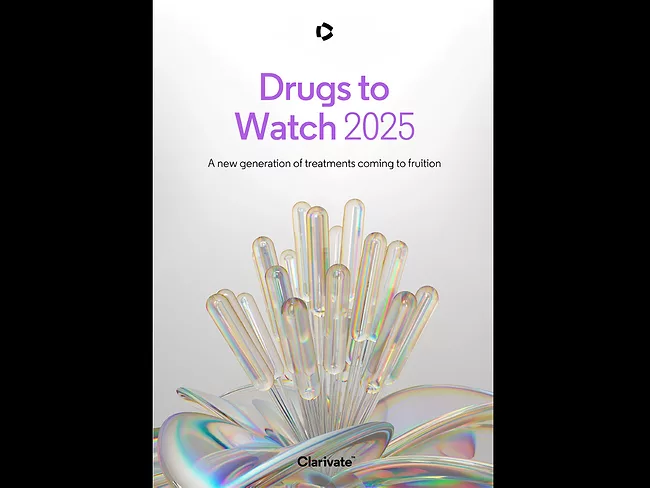
The 2025 edition of Clarivate’s Drugs to Watch features 11 candidates or approved therapeutics that may well revolutionize treatments or become blockbusters. The 12th annual report has a strong track record. Twelve of the 13 drugs from the 2024 Drugs to Watch report have been approved and launched.
It’s taken nearly a decade for the U.S. FDA to go from zero to 60 in approving biosimilars. Currently, 63 biosimilars have been approved in the U.S., thanks to 18 new approvals in 2024 that stretched the number of biologics referenced by biosimilars from 14 to 17. That’s an all-time record, CDER Director Patrizia Cavazzoni said, as she released the drug center’s annual approval report for 2024.
The 2025 edition of Clarivate’s Drugs to Watch features 11 candidates or approved therapeutics that may well revolutionize treatments or become blockbusters. The 12th annual report has a strong track record. Twelve of the 13 drugs from the 2024 Drugs to Watch report have been approved and launched.
The BioWorld Biopharmaceutical Index (BBI) closed November with a modest 3.58% gain for the year, a sharp decline from its 16.92% rise in September and peak of 25.19% in August. The BBI has now fallen behind the Nasdaq Biotechnology Index, which posted a 6.27% year-to-date gain, and the Dow Jones Industrial Average, up 19.16% at the end of the month.
Amgen Inc. has reported new 5,6- and 6,6-fused bicyclic alcohols and ethers acting as 15-hydroxyprostaglandin dehydrogenase (15-PGDH) inhibitors. They are reported to be useful for the treatment of gastrointestinal disorders.