Since more than 40% of U.S. coronavirus deaths have links to U.S. long-term care facilities, Eli Lilly and Co. is getting on the road with a clinical trial design that takes researchers directly to outbreaks.
The share prices of blue-chip biopharmaceutical companies continued on their lackluster trajectory, which started in June and collectively lost ground last month, with the BioWorld Biopharmaceutical index slipping about 1.3% as investors took a break in order to digest the deluge of COVID-19 vaccine data released during the period and the impact on the bottom lines that the pandemic has exerted among those companies that have reported their second-quarter results.
HONG KONG – Chinese biotech giant Beigene Ltd. launched a $2.08 billion registered direct offering this week, the largest offering of its kind ever recorded globally. Beigene executives said net proceeds will primarily be used for general corporate purposes such as R&D for existing or new drugs in the pipeline.
Biosimilars referencing Amgen Inc.’s rheumatoid arthritis drug, Enbrel (etanercept), could remain sidelined in the U.S. for nearly another decade, following a Federal Circuit decision Wednesday affirming the validity of two patents protecting etanercept and its manufacturing methods.
CYBERSPACE – At a series of new drugs on the horizon sessions at the 2020 American Association for Cancer Research (AACR) Virtual Annual Meeting I, a variety of companies presented preclinical and clinical data for promising early stage oncology products.
It’s all hands on deck as government agencies, researchers, startups, biopharma giants, health care workers and payers combine their resources to develop proven COVID-19 therapies that can be ready for market by fall when the pandemic is expected to pick up steam again in the U.S. and other northern reaches of the world.
The first wave of biosimilars began lapping at U.S. shores five years ago when the FDA approved Sandoz Inc.’s Zarxio on March 6, 2015, giving it a label identical to that of its reference biologic, Amgen Inc.’s Neupogen (filgrastim). But the tsunami of biosimilars, and the multibillion dollars of savings they were expected to bring, has yet to wash ashore.
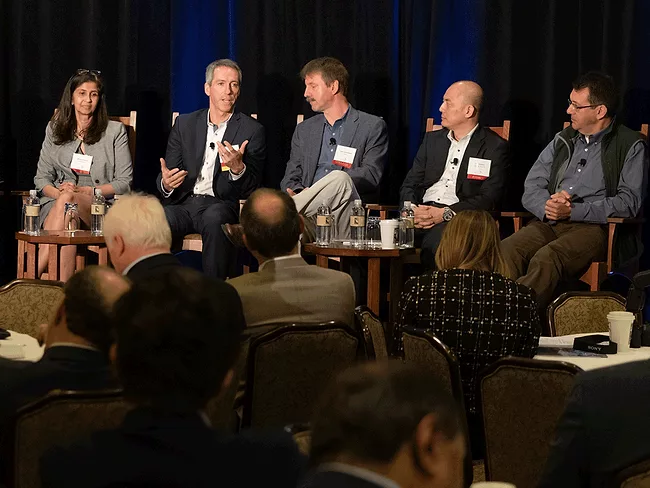
SAN DIEGO – At the Biocom 10th Annual Global Life Sciences Partnering Conference, panels of pharma executives highlighted what they're looking for to supplement their pipelines and offered advice that ran the gamut from company formation to the courting process to strategies for partnering pipeline drugs and platforms.
The Association for Accessible Medicines (AAM) is garnering support in its Ninth Circuit challenge to a new California law that seemingly thumbs its nose at a 2013 U.S. Supreme Court ruling on so-called pay-for-delay patent settlements.
Biotech investors had every reason to feel bullish heading into the new decade. The sector had turned around in 2019 and was riding a wave of a very strong fourth-quarter performance, with the BioWorld Biopharmaceutical Index closing up 14% for the year after being underwater from April through to September. Unfortunately, those great expectations were quickly erased during J.P. Morgan Healthcare conference week (Jan. 10 – Jan. 17), which turned out to be a very low-key affair absent of any blockbuster M&A revelations. As a result, confidence has now given way to concerns about the prospects for biopharmaceutical companies going forward, particularly as unfavorable political rhetoric on drug pricing will certainly be dialed up during this election year.