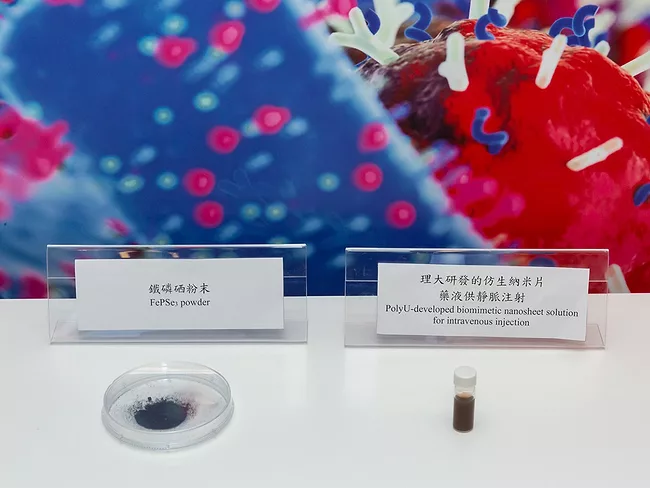
Researchers from The Hong Kong Polytechnic University (PolyU) said they have used two-dimensional nanosheets (FePSe3) to develop a biomimetic nanosheet that can monitor tumor development, treat tumors and monitor the treatment progress in real-time. With positive results from mice, the team hopes to further test it on larger animals, then move on to clinical studies.
A new 3D printing technique has allowed University of Nottingham researchers to tailor-make artificial body parts and other medical devices that are both implantable and bacteria-resistant. The multi-materials manufactured in the study were also adapted to 3D printing technology that is able to offer devices that can better meet the need of the patient and minimize the surgeries led by device failure that increase the risk of infections.
Researchers at the University of Washington reported in the May 31, 2021, issue of Nature Medicine that artificial intelligence (AI) algorithms meant to recognize COVID-19 infections based on chest X-rays picked up on confounders, selecting “shortcuts” such as patient age or positioning in the X-ray as a basis for their predictions.
Data on the prevalence of diabetes in the U.S. show that non-Hispanic white people are least likely to suffer from the disease. Yet to date most genetic studies of the glycemic traits that are used to diagnose and monitor type 2 diabetes and cardiometabolic health have focused on individuals of European ancestry.
LONDON – New guidelines for stem cell research open the door to extending the legal limit on human embryo research beyond the current 14-day maximum set down 40 years ago.
With the support of the NIH’s National Institute of Child Health and Human Development and the National Institute of Mental Health, researchers at Duke University’s Center for Autism and Brain Development have developed a mobile app that can quickly screen toddlers for autism spectrum disorder without the need for specialized skills.
Collectively, lysosomal storage disorders (LSDs) are caused by malfunctions in metabolic enzymes in the lysosome system. Depending on which enzyme is missing, toxic metabolites accumulate. While the LSDs are highly heterogenous – even within one disease, presentation can vary widely – neurodegeneration is a common feature in these disorders.
In the last decade, responsive neurostimulation (RNS) has become a mainstay of treatment for refractory focal epilepsy, but challenges with the technology remain. Researchers at Columbia University in New York appear to have overcome some of the major limitations through development of a compact, flexible, high performance implantable device that permits reading and manipulation of brain circuits.
The discovery of synthetic lethality between BRCA mutations and PARP inhibitors ranks has led to major advances in the treatment of BRCA-mutated cancers. Mutations in BRCA1 and BRCA2 can leave cells with a deficiency in homologous repair (HR). And that deficiency can make them vulnerable to PARP inhibitors, which block alternate DNA repair pathways, as well as platinum-based treatment, which induces DNA mutations that BRCA-deficient cells are unable to cope with.
Using advanced intravital microscopy to visualize immune cell movement within the tissues, investigators at the Peter Doherty Institute for Infection and Immunity, Melbourne have discovered that the neurotransmitter noradrenaline produced by the sympathetic nervous system causes a dramatic paralysis of immune cell movement.
 RSS
RSS