BioWorld. Link to homepage.

Clarivate
  • BioWorld
  • BioWorld Science
  • BioWorld Asia
  • Data Snapshots
    • Biopharma
    • Medical technology
    • Infographics: Dynamic digital data analysis
    • Index insights
    • NME Digest
  • Special reports
    • Infographics: Dynamic digital data analysis
    • Trump administration impacts
    • Med-tech outlook 2026
    • Under threat: mRNA vaccine research
    • BioWorld at 35
    • Biopharma M&A scorecard
    • Bioworld 2025 review
    • BioWorld MedTech 2025 review
    • BioWorld Science 2025 review
    • Women's health
    • China's GLP-1 landscape
    • PFA re-energizes afib market
    • China CAR T
    • Alzheimer's disease
    • Coronavirus
    • More reports can be found here

BioWorld. Link to homepage.

  • Sign In
  • Sign Out
  • My Account
Subscribe
BioWorld - Monday, April 13, 2026
Home » Topics » Science, Medical technology

Science, Medical technology
Science, Medical technology RSS Feed RSS

Illustration of ECG use (multilead and unilead) in training and testing the deep CNN models up to the prediction of a risk score and evaluation by the physician.

Deep learning ECG analysis may predict risk of drug-induced arrhythmia

Oct. 15, 2021
By Bernard Banga
PARIS – Teams from the Pitié-Salpêtrière hospital, the Institute for Research in Development, Sorbonne University and the National Institute of Health and Medical Research are proposing a new technique that uses artificial intelligence (AI) to identify the risk of developing a type of cardiac arrhythmia called Torsades de pointes (TdP) associated with taking certain drugs.
Read More
Doctor and patient consultation

Pandemic learnings could lead to more inclusive clinical trials

Oct. 12, 2021
By Anette Breindl
On the last day of this year’s Molecular Targets meeting, an annual joint conference of the American Association for Cancer Research, the National Cancer Institute and the European Organization for the Research and Treatment of Cancer, the final plenary went from molecular to macro in a lively discussion of the biggest roadblock in cancer drug development, and what can be done to improve it.
Read More
Iron oxide nanoparticles

Magnetic nanoparticles found to be a key factor for reducing toxicity in cancer cells

Oct. 8, 2021
By Bernard Banga
PARIS – A Russian research consortium has discovered that coating magnetic nanoparticles with a non-magnetic silica shell significantly decreased the viability of cancer cells in a low frequency alternating magnetic field. This discovery may augur new therapeutic prospects for nanotechnology combined with medical imaging.
Read More
Scientists in lab

IDH1 mutations affect antitumor immunity in glioma

Oct. 1, 2021
By Anette Breindl
Low-grade gliomas with mutated isocitrate dehydrogenase-1 (IDH1) produced and secreted higher levels of the cytokine granulocyte colony-stimulating factor (G-CSF) than other glioma types, which improved their antitumor immune response in animal models.
Read More
Science-James-Naismith-9-22

Inhaled antibodies brought to SARS-CoV fight

Sep. 23, 2021
By Anette Breindl
Trimers of nanobodies, a simpler form of antibody made by some animal species, were effective at preventing and treating COVID-19 in preclinical studies, researchers reported in the Sept. 22, 2021, issue of Nature Communications. The findings, along with others, could form the basis of an inhaled biologics treatment for COVID-19 and, ultimately, other respiratory diseases.
Read More
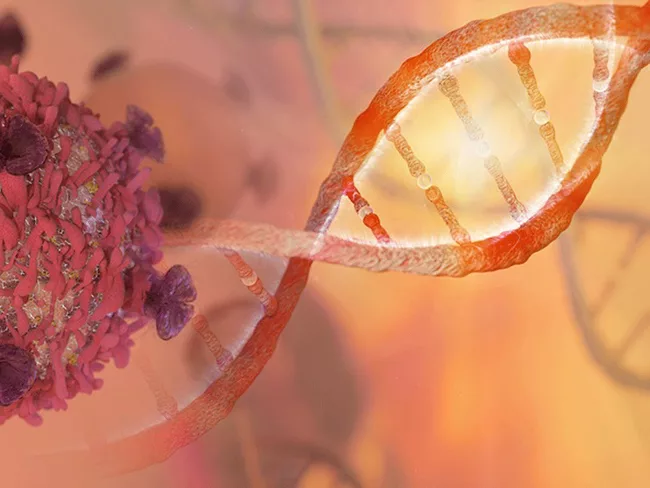
Cancer cell and DNA

Mouse models, MOS models, organoids can make personalized predictions

Sep. 21, 2021
By Anette Breindl
Although targeted therapies are prescribed on the basis of a patient's molecular makeup, they do not work every time. And in those instances where they do work, they basically stop working every time. In response, researchers have developed a number of systems whose goal it is to predict which drugs will be effective for an individual patients.
Read More
Fingerprints in shape of lungs with magnifying glass and DNA

As targeted options expand, making the best match, and the most matches

Sep. 20, 2021
By Anette Breindl
Researchers have retrospectively divided more than 16,000 non-small-cell lung cancer (NSCLC) patients with EGFR mutations into four structure-based subgroups, and looked at how the members of each subgroup fared depending on which EGFR inhibitor they were given.
Read More
E-health patch on skin

Austro-Japanese team developing e-health patches that can monitor pulse and blood pressure

Sep. 14, 2021
By Bernard Banga
PARIS – Researchers at the Institute for Surface Technologies and Photonics in Weiz, Austria, and the Institute of Scientific and Industrial Research Osaka University, Japan, have invented new ultra-flexible health monitoring patches that use harvested bio-mechanical energy. “These new devices represent a wireless e-health patch for accurate pulse and blood pressure monitoring,” Andreas Petritz, from the Institute for Surface Technologies and Photonics (the materials research unit of Joanneum Research FmbH), told BioWorld.
Read More
Elderly hands holding broken brain structure

Metabolomics study reveals dementia-linked metabolites

Sep. 13, 2021
By John Fox
A comprehensive nontargeted metabolomics analysis has revealed previously unknown classes of disease-linked metabolites in whole blood samples from dementia patients, which may have significant therapeutic implications for managing the untreatable common cognitive disorder.
Read More
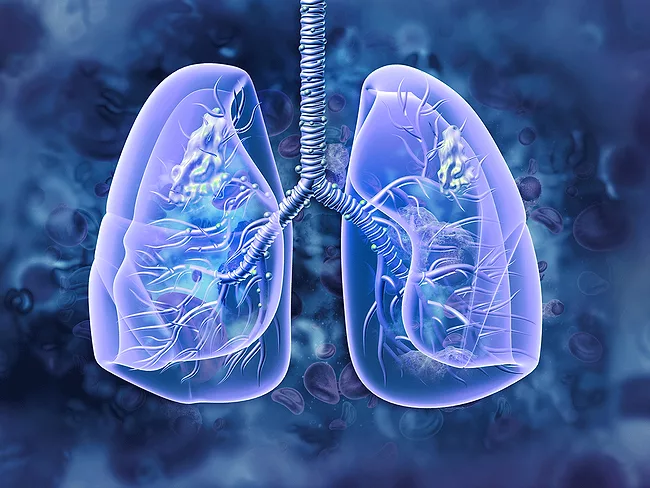
Lung cancer illustration

At WCLC, early steps toward success against SCLC

Sep. 10, 2021
By Anette Breindl
Driven by advances in scientific understanding, the treatment of non-small-cell lung cancer (NSCLC) has begun to see successes one subtype at a time. At the 2021 World Conference on Lung Cancer (WCLC), which is currently being held in virtual format, researchers were optimistic that the same path would be possible for small-cell lung cancer (SCLC).
Read More
Previous 1 2 … 11 12 13 14 15 16 17 18 19 … 69 70 Next

Popular Stories

  • Today's news in brief

    BioWorld
    BioWorld briefs for April 10, 2026.
  • News in brief

    BioWorld Asia
    BioWorld Asia briefs for April 7, 2026
  • MMP inhibitors divulged in Accure Therapeutics patent

    BioWorld Science
    Accure Therapeutics has reported new oligopeptide derivatives acting as matrix metalloproteinase-2 (MMP-2) and MMP-9 inhibitors. As such, they are described as...
  • MSD discloses new HCN1/2 blockers

    BioWorld Science
    Merck Sharp & Dohme LLC (MSD) has synthesized new indazole derivatives acting as potassium/sodium hyperpolarization-activated cyclic nucleotide-gated channel 1...
  • Orexin OX2 receptor agonists disclosed in Vertex Pharmaceuticals patent

    BioWorld Science
    Vertex Pharmaceuticals Inc. has patented new macrocyclic sulfonamide orexin OX2 receptor agonists potentially useful for the treatment of amyotrophic lateral...
  • BioWorld
    • Today's news
    • Analysis and data insight
    • Clinical
    • Data Snapshots
    • Deals and M&A
    • Financings
    • Medical technology
    • Newco news
    • Opinion
    • Regulatory
  • BioWorld Science
    • Today's news
    • Biomarkers
    • Cancer
    • Conferences
    • Endocrine/metabolic
    • Immune
    • Infection
    • Neurology/psychiatric
    • NME Digest
    • Patents
  • BioWorld Asia
    • Today's news
    • Analysis and data insight
    • Australia
    • China
    • Clinical
    • Deals and M&A
    • Financings
    • Newco news
    • Regulatory
    • Science
  • More
    • About
    • Advertise with BioWorld
    • Archives
    • Article reprints and permissions
    • Contact us
    • Cookie policy
    • Copyright notice
    • Data methodology
    • Infographics: Dynamic digital data analysis
    • Index insights
    • Podcasts
    • Privacy policy
    • Share your news with BioWorld
    • Staff
    • Terms of use
    • Topic alerts
Follow Us

Copyright ©2026. All Rights Reserved. Design, CMS, Hosting & Web Development :: ePublishing