Biomunex Pharmaceuticals SAS has entered into strategic collaborations with two AI-specialized companies – Gordion Bioscience Inc. and Tangramed Biotech SAS – as part of its strategy to integrate AI into its R&D activities and support the development of next-generation immunotherapies in oncology.
Fathom Therapeutics, formerly Atommap Corp., has raised $47 million in an oversubscribed series A financing to advance its work using physics-based simulations and AI to model protein motion and interactions at atomic resolution.
New Approach Methodologies (NAMs) for drug development are transforming biomedical research by replacing or complementing animal models. More than 90% of experimental compounds fail in clinical trials, underscoring the need for strategies that better capture human biology. Many of these techniques were showcased at the 2026 American Association for Cancer Research (AACR) annual meeting.
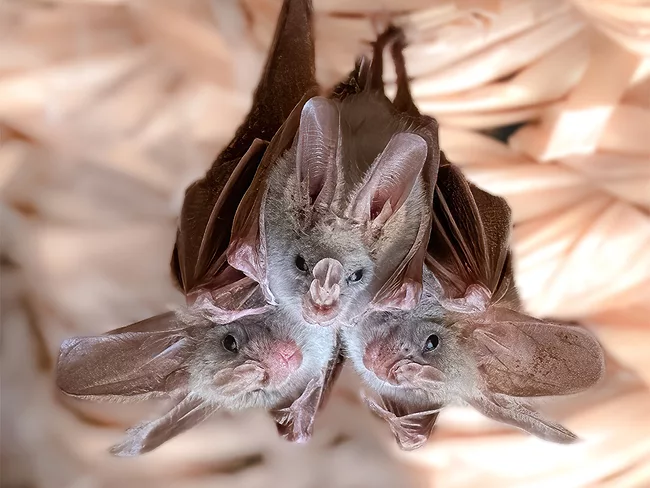
Researchers in the U.K. have developed an AI-driven method of identifying viruses in wild animals with the potential to spillover into humans. The technique makes it possible to use the genome sequences of the spike proteins by which viruses enter host cells to assess the potential to infect humans without having to isolate an individual virus and tests its infectivity in the lab.
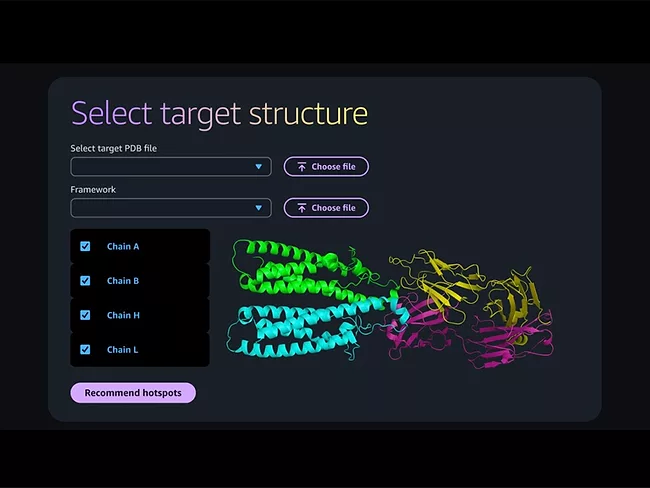
Amazon is extending the reach of its “everything store” into drug R&D with the launch of an artificial intelligence-powered Bio Discovery business. The company has compiled a catalogue of 40-plus foundation models that have been trained on extensive biology datasets and are able to generate and evaluate drug molecules in silico. For now, this covers antibodies only, but it is intended to move into other modalities.
Insilico Medicine Cayman Topco has established a strategic research collaboration with Aska Pharmaceutical Co. Ltd. to identify novel therapeutic targets for challenging gynecological conditions, including endometriosis, uterine fibroids and adenomyosis.
Rybodyn Inc. has announced the initial close of a $10 million seed financing to support its work decoding the dark proteome using an AI-powered novel sequencing and discovery platform. The financing will accelerate the company’s transition from foundational discovery into scaled platform execution and progress early-stage programs into IND-enabling studies.
PerturbAI has emerged from stealth mode with the release of the world’s largest in vivo CRISPR atlas as described in a preprint on Biorxiv. The study profiled over 7.7 million cells from the brains of 74 mice with different cellular knockouts of 1,947 disease-associated genes. The San Francisco-based company’s Perturb-seq platform combines CRISPR perturbations with single nucleus RNA sequencing to look at gene expression.
Zelluna ASA has established a collaboration with Etcembly Ltd. that will focus on the engineering of high-affinity, tumor-specific T-cell receptors targeting KKLC1.
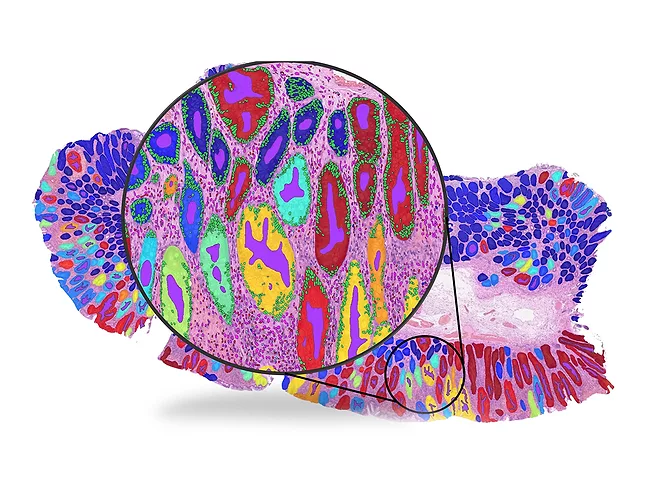
Computational pathology, which assesses molecular-level features of diseases directly from tissue images (rather than testing the tissue via methods such as staining or sequencing) is making rapid strides.
 RSS
RSS