Lee Dae-hong founded Aivis Inc. in January 2021 as an AI-powered pathology software company, having led the development of the world’s first commercial under-display fingerprint recognition algorithm that was later incorporated into the Galaxy S10 and Galaxy A series of smartphones of Samsung Electronics Co. Ltd.
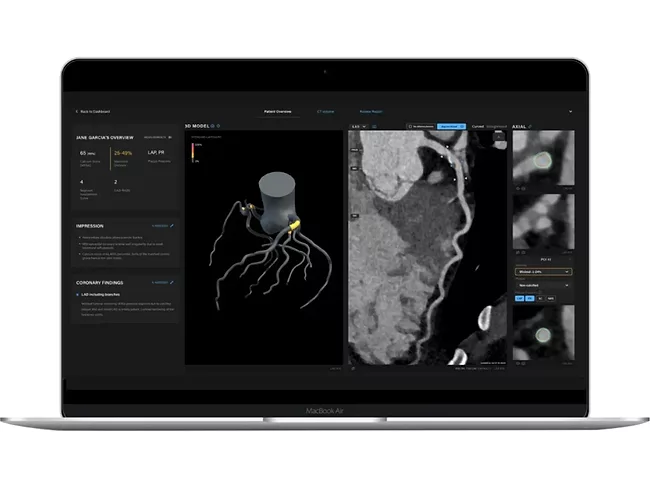
The U.S. FDA has cleared Artrya Ltd.’s 510(k) for its Salix coronary plaque (SCP) module that is a bolt-on module to the company’s Salix coronary anatomy platform.
Researchers at the Massachusetts Institute of Technology have developed a generative AI model that was able to generate novel antibiotic structures from either chemical fragments or de novo, starting from ammonia, methane, water or no starting point at all. In a study that was published online in Cell, the team tested two dozen of more than 10 million structures that were proposed as potential antibiotics by the model.
Researchers at the Massachusetts Institute of Technology have developed a generative AI model that was able to generate novel antibiotic structures from either chemical fragments or de novo, starting from ammonia, methane, water or no starting point at all. In a study that was published online in Cell, the team tested two dozen of more than 10 million structures that were proposed as potential antibiotics by the model.
Researchers at the Massachusetts Institute of Technology have developed a generative AI model that was able to generate novel antibiotic structures from either chemical fragments or de novo, starting from ammonia, methane, water or no starting point at all. In a study that was published online in Cell, the team tested two dozen of more than 10 million structures that were proposed as potential antibiotics by the model.
Australia’s Therapeutic Goods Administration recently reported that it has concerns about the use of digital scribes, stating that any such software that analyzes or interprets clinical conversations may qualify as a regulated medical product.
AI and machine learning products have proven complicated for regulatory authorities across the globe, but entities in the business of conducting health technology assessments also have their hands full according to several sources.
Deep learning tools for protein design can also be used to create molecules that bind to them. Certain peptides, such as intrinsically disordered proteins (IDPs), are challenging to target due to their variable nature. However, scientists from the lab of Nobel laureate David Baker have developed a method to generate binders for IDPs by searching the world’s largest protein database with their AI-powered tool RFdiffusion.
Deep learning tools for protein design can also be used to create molecules that bind to them. Certain peptides, such as intrinsically disordered proteins (IDPs), are challenging to target due to their variable nature. However, scientists from the lab of Nobel laureate David Baker have developed a method to generate binders for IDPs by searching the world’s largest protein database with their AI-powered tool RFdiffusion.
Rakovina Therapeutics Inc. has reported progress in its AI-driven KT-5000AI program, advancing the development of precision ATR (ataxia telangiectasia and Rad3-related) inhibitors designed to disrupt the DNA damage response (DDR) pathway in cancer cells. Through its collaboration with Variational AI Inc., Rakovina has evaluated a vast chemical space of potential molecular structures using Variational’s AI Enki platform to identify novel compounds
 RSS
RSS