The Medicare Wasteful and Inappropriate Service Reduction (WISeR) proposal is designed to tamp down on waste, fraud and abuse in the Medicare program, but Jeff Wurzberg, a partner at Norton Rose Fulbright LLP, told BioWorld that the contractors developing these AI models have incentives to return non-covered determinations for services.
A team of five members of the U.S. FDA staff published a review of the use of AI in health care and concluded that while hallucinations in AI systems can be minimized, the trade-off is that efforts to minimize hallucinations tend to diminish the AI’s performance.
South Korean researchers led by Lee In-suk of Yonsei University have reported the most complete oral microbiome catalog to date, with more than 72,000 genomes. Detailed in Cell Host & Microbe on Nov. 12, 2025, the database is expected to serve as a universal platform for academia and enable “precision microbiome medicine” for the industry, Lee told BioWorld.
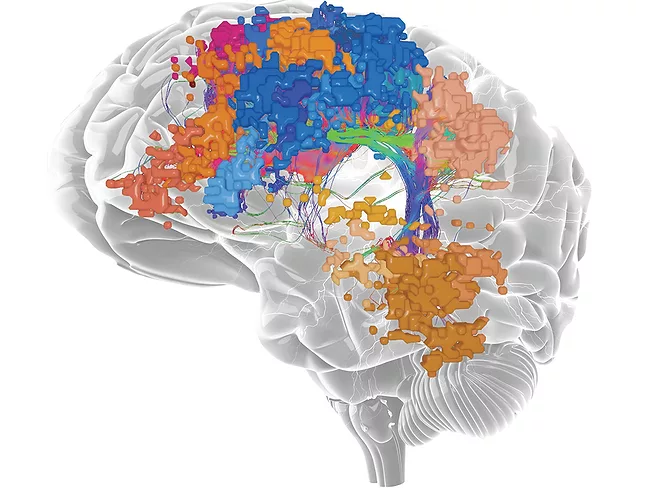
UNESCO has adopted the first set of global standards on the ethics of neurotechnology amid the rapid advancement in the development of the technologies and increasing investor interest. These standards, which take effect on Nov. 12, 2025, establish safeguards to ensure that neurotechnology improves the lives of those who need it the most without compromising human rights.
The U.S. Patent and Trademark Office (PTO) has resurrected a previous policy that requires parties to a proceeding at the Patent Trial and Appeals Board to disclose all the parties of interest in the proceeding. PTO said this shift is driven in part by national security considerations, but the reversal forces participants in PTAB proceedings to disclose the identity of any affiliates that may have an interest in the outcome lest the petition for an administrative hearing be denied.
In San Francisco, the first day of Transcatheter Cardiovascular Therapeutics 2025 annual meeting offered presentations on the future of the convergence of devices, drugs and AI. The takeaway from the session seems to be that while the future is bright, it will become the present only when payers can find an economic argument to pay for the advances formed by this convergence.
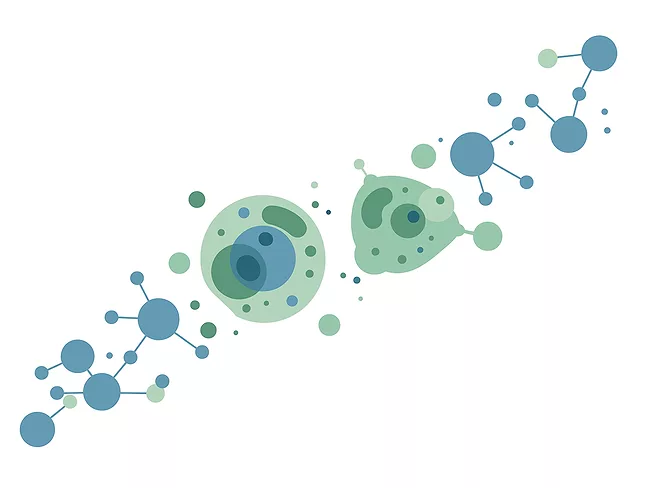
A technology that combines transcriptomic data and AI enables a novel approach to drug discovery based on the state of cells, how they behave and which genes they express. The Drugreflector model, developed by scientists at Cellarity Inc., learns from gene expression profiles and predicts which compounds could induce beneficial changes in that cellular state to develop a treatment.
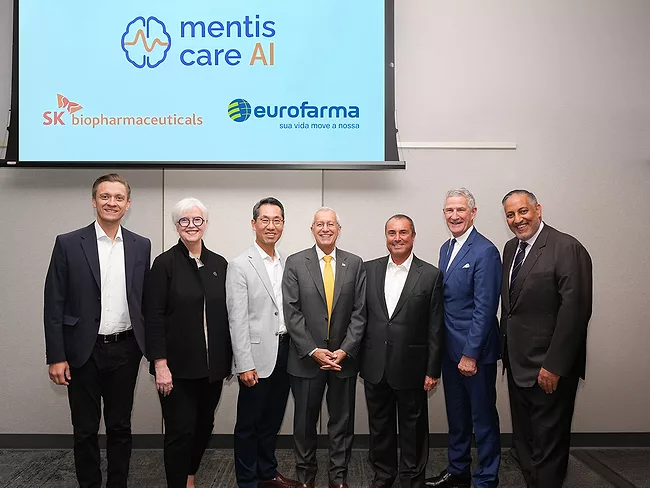
SK Biopharmaceuticals Co. Ltd. and Eurofarma Laboratórios SA launched a new joint venture (JV) called Mentis Care Inc. Oct. 21, dedicated to developing an AI-powered platform for epilepsy management.
John Squires, the recently anointed director of the U.S. Patent and Trademark Office, has determined that a machine learning (ML) patent application met the standard for patent subject matter eligibility, an outcome that seems to bode well for ML-based patent applications going forward.
SK Biopharmaceuticals Co. Ltd. and Eurofarma Laboratórios SA launched a new joint venture called Mentis Care Inc. Oct. 21, dedicated to developing an AI-powered platform for epilepsy management.
 RSS
RSS