Illumina Inc. presented at the J.P. Morgan 2026 Healthcare Conference on Jan. 13 and introduced what it said is the world's largest genome-wide genetic perturbation dataset, being built to accelerate drug discovery through AI across the pharmaceutical ecosystem. This is a move away from its core focus on DNA sequencing technology.
Depending on who you ask, AI will take over the world and save it; or ruin it. Certainly, it is changing it. Science magazine dedicated its first editorial of 2026 to AI. Despite its title – “Resisting AI slop“ – editor-in-chief Holden Thorp gave the sort of nuanced review that is typical of him. “Like many tools, AI will allow the scientific community to do more if it picks the right ways to use it,” he wrote. “The community needs to be careful and not be swept up by the hype surrounding every AI product.”
Generative AI has largely escaped the U.S. FDA’s regulatory purview up to now, but OpenAI seems poised to create a new source of regulatory angst for the agency. The company unveiled its ChatGPT Health Jan. 7, a large language model that when used professionally could land the company in the FDA’s regulatory crosshairs.
Depending on who you ask, AI will take over the world and save it; or ruin it. Certainly, it is changing it. Science magazine dedicated its first editorial of 2026 to AI. Despite its title – “Resisting AI slop“ – editor-in-chief Holden Thorp gave the sort of nuanced review that is typical of him. “Like many tools, AI will allow the scientific community to do more if it picks the right ways to use it,” he wrote. “The community needs to be careful and not be swept up by the hype surrounding every AI product.”
It doesn’t take a meteorologist to see the storm clouds of uncertainty that will continue to roll in on health care across the globe this year. While the prospects for the medical device industry may be sunnier than for other aspects of health care, some high pressure areas likely will present challenges.
Software as a service has typically been less susceptible to liability than products, but that may soon come to an end if the AI LEAD Act, sponsored by a bipartisan pair of members of the Senate, gains sufficient traction.
Insilico Medicine Cayman Topco has announced a multiyear research and development collaboration with Laboratoires Servier SAS focused on identifying and developing novel therapeutics for challenging targets in oncology by leveraging Insilico’s proprietary AI platform, Pharma.AI.
Bayosthiti AI Pvt Ltd. aims to make RNA sequencing and AI-based preventive health care affordable and accessible for the Indian market, leveraging intellectual property from its parent company, Biostate AI Inc.
The U.S. FDA’s final rule for regulation of lab-developed tests was destined to be controversial at best and exceptionally susceptible to legal challenge according to more than one legal opinion. The inevitable legal challenge succeeded wildly in a decision rendered in district court in March 2025, marking one of the rare instances in which the courts thwarted FDA rulemaking and thus is easily the regulatory story of the year for 2025. Attempts to regulate AI in the U.S. and Europe also dominated the regulatory landscape.
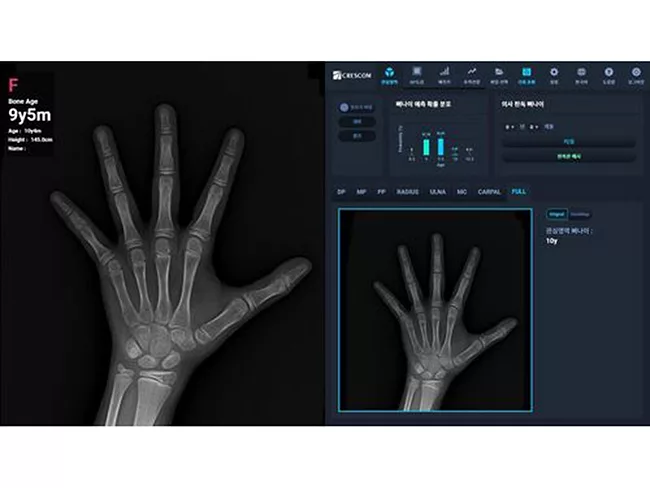
Crescom Co. Ltd., an AI musculoskeletal imaging company, gained U.S. FDA 510(k) clearance Dec. 24 for MediAI-BA, its AI-powered pediatric and adolescent bone age analysis software.
Classified as a class II medical device, MediAI-BA evaluates bone age and suggests predicted adult height based on growth plate status assessed by hand and wrist X-ray imaging. Prior clinical trial results demonstrated MediAI-BA had specialist-level accuracy, recording a mean absolute deviation (MAD) of 0.39 years.

 RSS
RSS