Researchers in Japan were able to transfer genes from jellyfish into common fruit flies and discovered that the transferred gene suppressed an age-related intestinal issue in the flies. The findings suggest that studying genes specific to animals with high regenerative capability like jellyfish may uncover new mechanisms for rejuvenating stem cell function and extending the healthy lifespan of unrelated organisms.
Researchers in Japan were able to transfer genes from jellyfish into common fruit flies and discovered that the transferred gene suppressed an age-related intestinal issue in the flies. The findings suggest that studying genes specific to animals with high regenerative capability like jellyfish may uncover new mechanisms for rejuvenating stem cell function and extending the healthy lifespan of unrelated organisms.
The word “niche” implies a specialized environment. But to Fiona Doetsch, the stem cell niche is anything but. For brain stem cells, “the whole organism is the niche,” Doetsch told the audience at the third plenary session of the International Society for Stem Cell Research (ISSCR) annual meeting in Hamburg this week.
The word “niche” implies a specialized environment. But to Fiona Doetsch, the stem cell niche is anything but. For brain stem cells, “the whole organism is the niche,” Doetsch told the audience at the third plenary session of the International Society for Stem Cell Research (ISSCR) annual meeting in Hamburg this week. It’s a surprising idea at first, given the brain’s protection from many circulating substances via a series of barriers, including the blood-brain barrier and the blood-cerebrospinal fluid barrier.
The big advantage of cell culture to model diseases is its throughput. “You can play the disease over and over again in the dish,” Clive Svendsen told the audience at the International Society of Stem Cell Research (ISSCR) Annual Meeting held in Hamburg last week. That high throughput, however, is not particularly useful if the cell lines themselves do not accurately model the disease. Cancer cell lines are used in many cell culture experiments far beyond cancer for their ability to grow. But they are “highly abnormal,” Bill Skarnes told the audience at an innovation showcase, as well as quite unstable. “I don’t think the [HEK-293] cell line is the same in your lab as it is in the lab next door,” Skarnes said.
The word “niche” implies a specialized environment. But to Fiona Doetsch, the stem cell niche is anything but. For brain stem cells, “the whole organism is the niche,” Doetsch told the audience at the third plenary session of the International Society for Stem Cell Research (ISSCR) annual meeting in Hamburg this week. It’s a surprising idea at first, given the brain’s protection from many circulating substances via a series of barriers, including the blood-brain barrier and the blood-cerebrospinal fluid barrier.
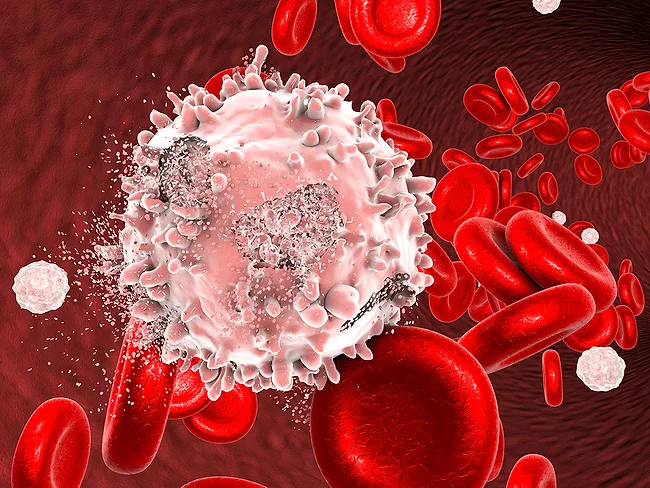
A group of scientists from Basel University Hospital have designed an antibody-drug conjugate (ADC) that eliminated blood cancer cells without attacking healthy hematopoietic stem cells (HSCs), which they modified by base editing and transplanted to renew an altered blood system. They achieved this by focusing on the panhematopoietic marker CD45.
Japanese researchers have transplanted human induced pluripotent stem cells (iPSCs) in a primate model of myocardial infarction and were able to restore heart muscle and function in monkeys. Developed by Tokyo-based Heartseed Inc., the grafted iPSCs consist of clusters of purified heart muscle cells (cardiomyocyte spheroids) that are injected into the myocardial layer of the heart. Published in Circulation on April 26, 2024, the study showed that the cardiomyocyte spheroids survived long term and showed improved contractile function with low occurrence of post-transplant arrhythmias.
Japanese researchers have transplanted human induced pluripotent stem cells (iPSCs) in a primate model of myocardial infarction and were able to restore heart muscle and function in monkeys. Developed by Tokyo-based Heartseed Inc., the grafted iPSCs consist of clusters of purified heart muscle cells (cardiomyocyte spheroids) that are injected into the myocardial layer of the heart. Published in Circulation on April 26, 2024, the study showed that the cardiomyocyte spheroids survived long term and showed improved contractile function with low occurrence of post-transplant arrhythmias.
Iron regulates the metabolism of hematopoietic stem cells (HSCs) and acts as a genetic control of their fate, preserving their identity and regenerative capacity during tissue maintenance and repair. A group of scientists at Albert Einstein College of Medicine has described the key components of a molecular pathway that iron regulates. “What we are proposing here with this mechanism is that iron serves like a switchboard and a sensor,” senior author Britta Will told BioWorld. Will is at the Department of Oncology, the Cell Biology Department, and the Ruth and David Gottesman Institute for Stem Cell Research and Regenerative Medicine at Albert Einstein College of Medicine.
 RSS
RSS