As the PDUFA date looms for Bristol Myers Squibb Co. with its candidate, deucravacitinib, for psoriasis, others – notably Dice Therapeutics Inc. – strive for new solutions to the skin disease, which has remained problematic for many patients despite approvals of multiple drugs in various classes.
Nuvectis Pharma Inc. has been in business for barely two years, but thanks to a business model involving in-licensing promising late preclinical drug candidates, it has already begun a trial with a molecule targeting a little-known pathway that cancer cells depend on for protection. The firm is also close to the clinic with a drug that could give a new twist to tyrosine kinase inhibition after a $16 million financing round in early August.
Additional deaths believed to be associated with one of Foghorn Therapeutics Inc.'s lead candidates led the U.S. FDA to put a full clinical hold on its phase I study in relapsed and/or refractory acute myelogenous leukemia and myelodysplastic syndrome.
Likely to garner attention at the upcoming European Society of Medical Oncology meeting are the MAGE-A4 and PRAME antigens which, although well-known and validated, have proved evasive for drug developers – a situation that may soon change.
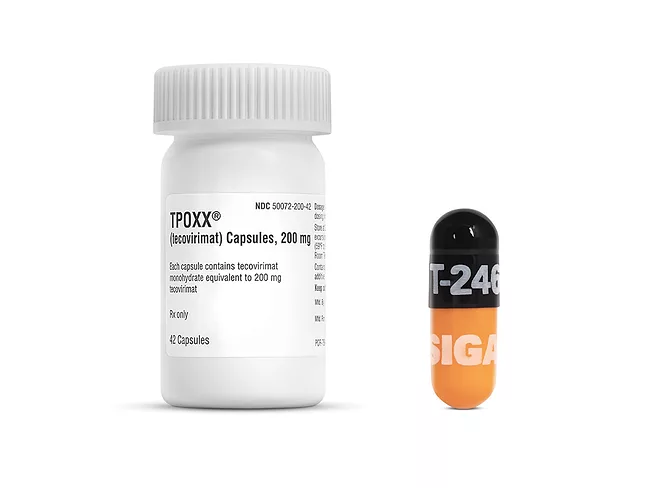
The first randomized placebo-controlled trial assessing the effectiveness of the antiviral drug Tpoxx (tecovirimat) in treating monkeypox has begun in the U.K., with the first patients enrolled on Aug. 21.
Alterity Therapeutics Ltd. has begun phase II trials with its lead candidate, ATH-434, in multiple system atrophy, a rare and highly debilitating Parkinsonian disorder.
Shares of Pharvaris NV (NASDAQ:PHVS) fell 34% Aug. 22 to close at $12.15 after the company reported the U.S. FDA placed a clinical hold on PHA-121, its oral bradykinin B2-receptor antagonist for hereditary angioedema (HAE), citing a review of nonclinical data. PHA-121, which goes after the same target as well-established injectable HAE drug Firazyr (icatibant, Takeda Pharmaceutical Co. Ltd.), is the active ingredient in Pharvaris’ two lead programs: PHVS-416, a softgel capsule formulation, and PHVS-719, an extended-release tablet formulation.
Kyowa Kirin Co. Ltd.’s decision, disclosed July 26, to quit development of the adenosine A2a receptor antagonist KW-6356 for Parkinson’s disease (PD) didn’t do much to flatten interest in the target, still under investigation by other firms in cancer.
The Project to Accelerate New Treatments for Tuberculosis is progressing two investigational tuberculosis combination treatment regimens into phase II trials under a joint development agreement.
Ryvu Therapeutics SA aims to move its lead drug candidate RVU-120 into three phase III trials in the first half of next year, to evaluate its potential in acute myeloid leukemia and high-risk myelodysplastic syndrome, in low-risk MDS, and in a number of solid-tumor indications.
 RSS
RSS