An analysis of real-world data pulled from Truveta’s electronic health records of 30 U.S. health care systems found that patients treated for pulmonary embolism (PE) using Boston Scientific Corp.’s Ekos endovascular system had lower rates of adverse events, particularly intracerebral hemorrhage, than those treated with Inari Medical Inc.’s Flowtriever system.
Anteris Technologies Ltd. presented multiple sessions at the Transcatheter Cardiovascular Therapeutics (TCT) 2023 annual meeting in San Francisco this week on its novel Duravr biomimetic heart valve, a balloon-expandable, single-piece transcatheter aortic valve designed to closely replicate the shape and performance of a human aortic valve. The device was used for the first time earlier this year in a valve-in-valve replacement procedure and began its early feasibility study, both of which were reviewed at the cardiology meeting.
No matter how you look at it, guiding percutaneous coronary interventions to treat complex lesions with optical coherence tomography (OCT) or intravascular ultrasound (IVUS) produces similar results in patients with complex lesions, a study presented Oct. 23 at the Transcatheter Cardiovascular Therapeutics (TCT) annual meeting in San Francisco indicated.
Artificial intelligence (AI) is in full development, and advances are already used in many fields, including medicine. In oncology, these tools can identify a tumor in an image with 99% accuracy. But they can also miss it if the algorithm was not developed with the right data or the correct decisions. The 2023 European Society for Medical Oncology (ESMO) Congress brought together in Madrid doctors and deep learning experts to discuss the challenges and advances of AI in this area. And what’s better than asking an AI what its trainer has told it about AI?
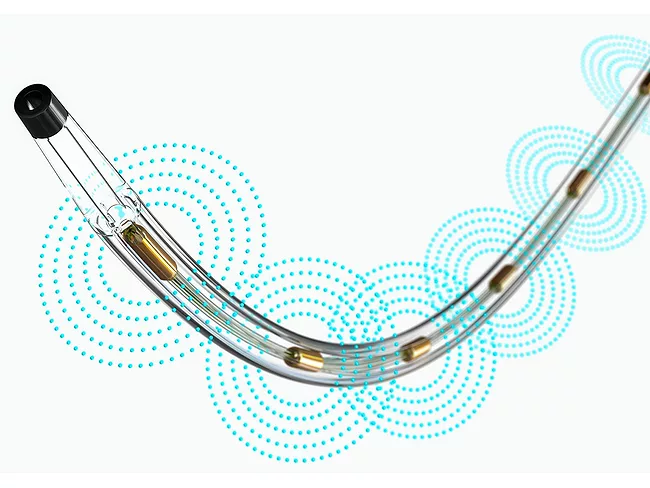
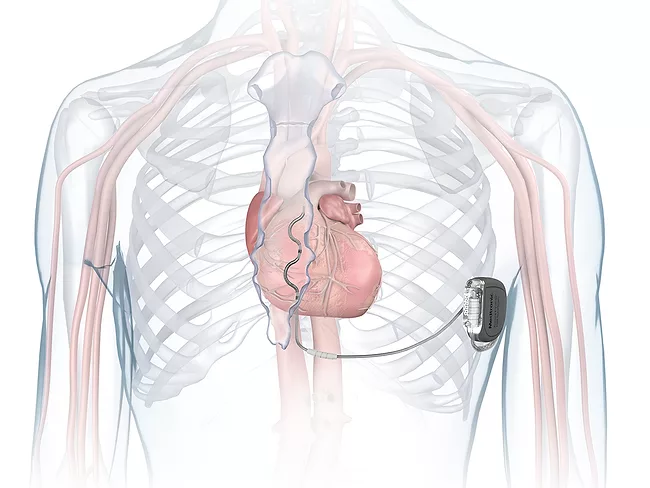
Medtronic plc got a jump on its cardiology competitors with big news ahead of the Transcatheter Cardiovascular Therapeutics (TCT) conference that starts on Oct 24 in San Francisco, with U.S. FDA approval of its Aurora extravascular implantable cardioverter-defibrillator (EV-ICD). The system delivers defibrillation and heart pacing without placing wires in the heart or vasculature. That puts it in direct competition with Boston Scientific Corp.’s Emblem S-ICD, currently the only player in the market.
The North American Spine Society Annual Meeting provided a positive view of one area in orthopedics that may be immune from the effects of widespread use of GLP-1 medications. Recent data indicates volumes and seasonality have finally recovered from pandemic impacts. Major trends discussed at the conference included expanded use of robotic systems, increased customization and adoption of augmented reality technology.
The U.S. FDA’s draft guidance for predetermined change control plans (PCCPs) is one of the more innovative regulatory proposals in recent memory, although the FDA is not statutorily required to limit this policy to artificial intelligence (AI) and machine learning (ML) products. Nonetheless, the PCCP concept is starting to show signs of being consumed by the debate over AI and ML medical software, so much so that industry may be losing sight of the opportunities the PCCP concept offers in other types of medical technologies.
The U.S. FDA’s draft rule for regulation of lab-developed tests (LDTs) was a long time in coming, much longer than any legislative proposals to overhaul the agency’s regulatory mechanisms for these tests. Nonetheless, Scott Whitaker, president and CEO of the Advanced Medical Technology Association (Advamed), believes that the FDA draft rule is likely to prompt Congress to pass the Verifying Accurate, Leading-edge IVCT development (VALID) Act, a development that would truncate an FDA final rule that would almost certainly face litigation.
For individuals who develop an unexpected psychosis, there is something to be said for testing them for autoimmune antibodies. And something against. At the 36th Congress of the European College of Neuropsychopharmacology (ECNP) this week, the topic was worth a controversy session, where speakers presented the pros and cons of the approach. Currently used tests have a specificity of 99%. But as Ester Coutinho, consultant neurologist at the University of Coimbra, pointed out, the validity of diagnostic tests depends on the prevalence of the disorder one is looking for as well. Coutinho estimated that autoimmune psychoses account for 1% of psychoses overall.
Unlocking the future of drug development often means removing obstacles that currently stand in the way. Reimbursement is one of those obstacles, as is keeping humans deeply involved as innovators and patients even as artificial intelligence (AI) increases its role. A panel of developers spoke about what they anticipate will be the biggest changes in the coming 10 to 20 years at the BioFuture 2023 conference in New York on Oct. 5. A common theme was reforming the structure of reimbursements, which has traditionally been a problem in the digital therapeutic realm, according to Eric Elenko, chief innovation and strategy officer at Puretech Health plc.
 RSS
RSS