Biogen Inc. presented new data showing how applying artificial intelligence (AI), machine learning (ML) and radiomics can produce actionable insights on multiple sclerosis (MS) disease progression. The results, released at this week’s European Committee for Treatment and Research in Multiple Sclerosis (ECTRIMS) Congress, could help to advance new digital health tools to improve monitoring and quality of life of MS patients.
Circuit dysfunction is clearly recognized as a driver of neuropsychiatric disease, and some neurodegenerative diseases such as Parkinson’s disease. And at the European Committee for Treatment and Research in Multiple Sclerosis (ECTRIMS) 2022 Congress, researchers made an argument that the same is true in multiple sclerosis (MS). Such a lens could explain the radiological-clinical paradox between the amount of structural damage and clinical severity.
At the Saturday, Oct. 22 session, ‘Basic Science: Correlates of protection, immune response and the host-microbe interaction,’ of the IDWeek 2022 infectious disease conference, moderator Luiz Bermudez, professor at Oregon State University, introduced the latest advances to prevent infections with Treponema pallidum during neurosyphilis (NS), Staphylococcus aureus and osteomyelitis, and Mycobacterium tuberculosis during influenza.
The annual North American Spine Society (NASS) Conference wraps up in Chicago on Oct. 15 and management discussions and analysts make it clear that the sector is not yet back to normal. While September showed an uptick in procedures, spinal surgery continues to lag the recovery seen elsewhere in orthopedics. As the challenges of the past two years recede, two players have posted notable gains in market share and revenue—Globus Medical Inc. and Alphatec Holdings Inc.—perhaps indicating a competitive advantage for smaller, more agile companies.
Boston Scientific Corp. and Abbott Laboratories continue to parry over clinical trials comparing the latter’s Amplatzer Amulet with Boston Scientific’s Watchman in sealing the heart’s left atrial appendage (LAA) to prevent ischemic stroke in patients with atrial fibrillation (Afib). In one of five presentations at the 34th Transcatheter Cardiovascular Therapeutics annual scientific symposium in Boston in mid-September, Abbott said device-related thrombosis or peri-device leak more frequently preceded strokes in patients with Watchman compared to those with Abbott’s Amplatzer Amulet device.
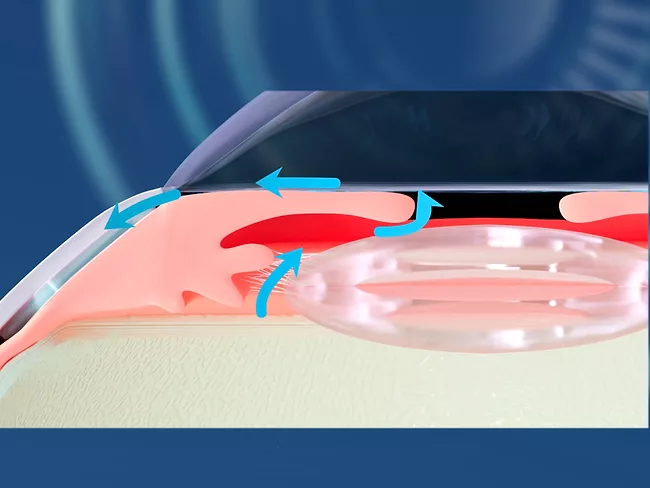
A new technique may allow reduction of intraocular pressure (IOP) associated with glaucoma without opening the anterior eye chamber, eliminating much of the risk associated with current glaucoma procedures. The cilio-scleral inter-position device (CID) facilitates outflow without creating an artificial egress using a thin one-piece implant.
The 2022 Transcatheter Cardiovascular Therapeutics annual meeting highlighted mostly positive outcomes from major trials conducted by nearly all the big players in the cardiac device market. Here’s our round-up of the meeting’s high points, with updates from Abbott Laboratories, Abiomed Inc., Boston Scientific Corp., Edwards Lifesciences Corp., Inari Medical Inc., Medtronic plc and Recor Medical Inc.
Transcatheter aortic valve replacement (TAVR) continues to grow, so it is little surprise that the 2022 Transcatheter Cardiovascular Therapeutics (TCT) annual meeting featured multiple presentations about TAVR-related devices and outcomes. The American College of Cardiology/American Heart Association’s latest guidelines recommends TAVR for patients over age 80 and surgery for those under age 65. Those in the middle can go either way, depending on comorbidities and patient preferences.
Abiomed Inc., has worked the ventricular assist device (VAD) space for a number of years with its Impella series of VADs, and a study coming out of Japan seems to affirm investors’ confidence in these devices. This registry study demonstrated that the combination of Impella devices and extracorporeal membrane oxygenation (ECMO) provides a 30-day survival rate of more than three in four patients with cardiogenic shock, an outcome that is said to support the notion that the native heart tissue can recover from myocarditis, an especially salient consideration for those who contracted the SARS-CoV-2 virus.
In an unexpected turn of events, Medtronic plc presented results from the Symplicity HTN-3 trial at year 3 showed sustained reductions in blood pressure with radiofrequency renal denervation (RDN) for resistant hypertension, contrary to the trial’s results at the six-month mark—and it wasn’t alone in showing positive results for the procedure.

 RSS
RSS