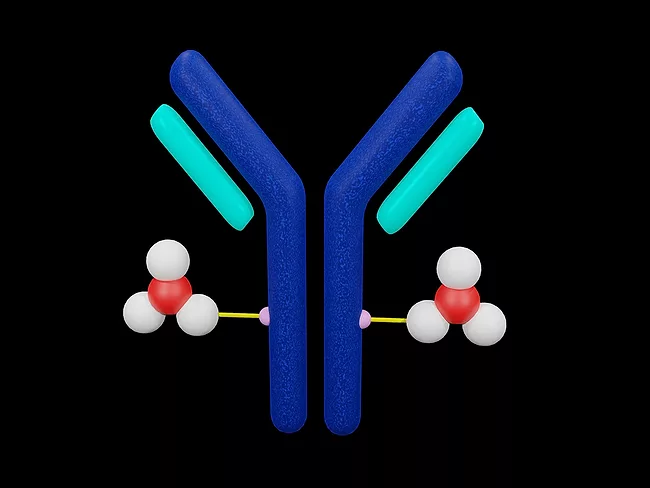
ADAM9 (a disintegrin and metalloproteinase 9) is overexpressed in several gastrointestinal cancers, with expression levels correlating with suppressive tumor microenvironment, metastasis and poor prognosis. DB-1317, under development at Duality Biologics (Suzhou) Co. Ltd., is an ADAM9-targeting antibody-drug conjugate including a topoisomerase inhibitor payload P1003 at a drug-antibody ratio of 8.
Alterations in HER2 are known oncogenic drivers in several solid tumors, including breast, lung and gastric cancers, among others. VRN-101099 is an oral and HER2-selective tyrosine kinase inhibitor developed by Voronoi Inc. that had demonstrated brain permeability and preclinical safety.
KIF18A is a kinesin motor protein that moves toward the plus-end of spindle microtubules during mitosis. Inhibition of KIF18A disrupts spindle microtubule dynamics and chromosome alignment, selectively inducing mitotic catastrophe in chromosomally unstable cancer cells while sparing normal cells.
KRAS acts as a key molecular switch in cell signaling, activated by the guanine nucleotide exchange factor SOS1. Mutant KRAS drives many cancers, yet has been difficult to target directly. SOS/pan-KRAS modulators represent a new approach that blocks the SOS1-KRAS interaction, preventing KRAS activation and suppressing oncogenic signaling across multiple KRAS variants.
Loss of FOCAD in cells impairs normal mRNA surveillance, creating a dependency on the HBS1L/PELO complex for ribosome rescue and identifying HBS1L as a potential synthetic lethal target and therapeutic vulnerability.
At the AACR-NCI-ORTC conference, researchers from Dewpoint Therapeutics Inc. presented advances in targeting MYC condensates, revealing a potential breakthrough strategy for treating cancers driven by MYC – a well-established oncogenic driver that is frequently overexpressed or amplified across a range of human cancers.
ALX Oncology Inc. has developed ALX-2004, an antibody-drug conjugate (ADC) targeting epidermal growth factor receptor (EGFR) with a topoisomerase I inhibitor payload, for treating EGFR+ cancer solid tumors.
Cyclin-dependent kinases (CDKs) are interesting targets in metastatic cancers. Oncobone Therapeutics Ltd. recently presented data on a new CDK9/13 dual inhibitor – OBP-004 – as a potential approach for treating metastatic cancers.
CDR-609 is a T-cell engager therapeutic from CDR-Life Inc. that targets Leucine-rich repeat-containing G protein-coupled receptor 5 (LGR5) with potential for treating colorectal cancer.
Leading advances in cancer research, the 2025 AACR-NCI-EORTC International Conference on Molecular Targets and Cancer Therapeutics highlighted some of the field’s most promising innovations. Parabilis Medicines Inc. and Tango Therapeutics Inc. presented their work on potential therapeutic targets that may signal significant shifts in the future of cancer treatment.
 RSS
RSS