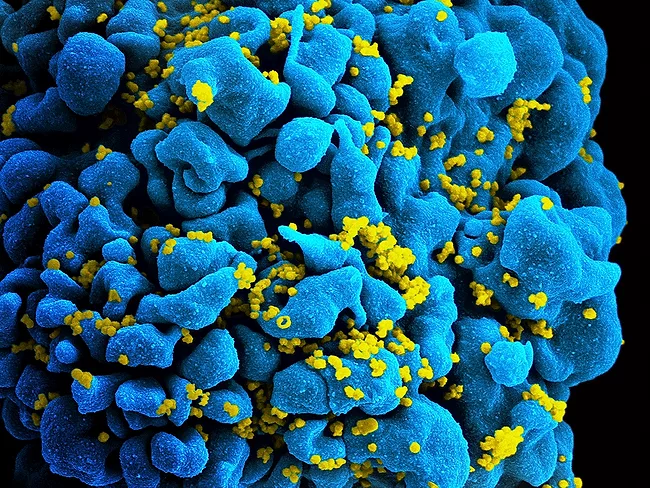
The availability of effective antiretroviral therapy has lowered the risk, and the severity, of neural sequelae of HIV infection. “Early in the HIV pandemic, approximately 15% of people with HIV had dementia and or encephalitis,” Howard Fox told his audience. “Fortunately, with treatment, the prevalence of these severe disorders has been greatly lowered. But there is persistence of what are called more minor disorders – which are not minor if you have them.”
It was previously demonstrated that the HIV-1 integrase (IN)-interacting host factor INI1/SMARCB1 binds to HIV-1 IN through its Rpt1 domain of INI1 (INI1-Rpt1) and plays a key role in assembly and particle production.
In 2020, the Conference on Retroviruses and Opportunistic Infections (CROI) was the first scientific conference to move from in-person to virtual due to the COVID-19 pandemic. On the fifth anniversary of the virtual conference, and the pandemic, some of those earliest COVID-19 patients have still not recovered.
At the 2025 meeting of the Conference on Retroviruses and Opportunistic Infections (CROI) it was the best of times, it was the worst of times. On the first full day of the conference, reports from the first HIV cure trial conducted in Africa, the RIO trial and others showed that perhaps, a broadly useful cure is on the horizon.
At the 2025 meeting of the Conference on Retroviruses and Opportunistic Infections (CROI) it was the best of times, it was the worst of times. On the first full day of the conference, reports from the first HIV cure trial conducted in Africa, the RIO trial and others showed that perhaps, a broadly useful cure is on the horizon.
Researchers from Viiv Healthcare Ltd. presented preclinical data for the next-generation maturation inhibitor (MI) VH-3739937 (VH-937, zegruvirimat), currently in clinical testing for the treatment of HIV.
The use of latency reversing agents is useful for reducing the HIV reservoir, but their effect on infected cells isolated from untreated people with HIV is still unknown.
Retinoids are derivatives of vitamin A that target the retinoid receptors and induce antiproliferative effects and cell death. George Washington University has tested a series of different retinoids, including alitretinoin, tazarotene and AM-80, also known as tamibarotene, for their efficacy against HIV-infected CD4+ T cells regarding their ability to enhance the cytotoxic effect of NK cells.
Several presentations at the 31st Conference on Retroviruses and Opportunistic Infections (CROI 2024) held in Denver from March 3 to 6, 2024, focused on childhood HIV and highlighted the lack of pediatric data. The epicenter of this pandemic in the youngest is in the southern region of the African continent. However, there are few studies for children with HIV, mostly for the northern hemisphere.
Overall, the story of HIV is one of astounding success. But to declare victory, it will be necessary to develop a vaccine. The opening session of the 31st Conference on Retroviruses and Opportunistic Infections (CROI) 2024 looked back to the failures but also the advances in research, all the steps that over the years brought the basic science knowledge that could bring an HIV vaccine in the future. This year, the former director of the Viral Pathogenesis Laboratory at the NIAID Vaccine Research Center, Barney Graham, was named for the Bernard Field Lecture, where he presented “Modern vaccinology: a legacy of HIV research.”
 RSS
RSS