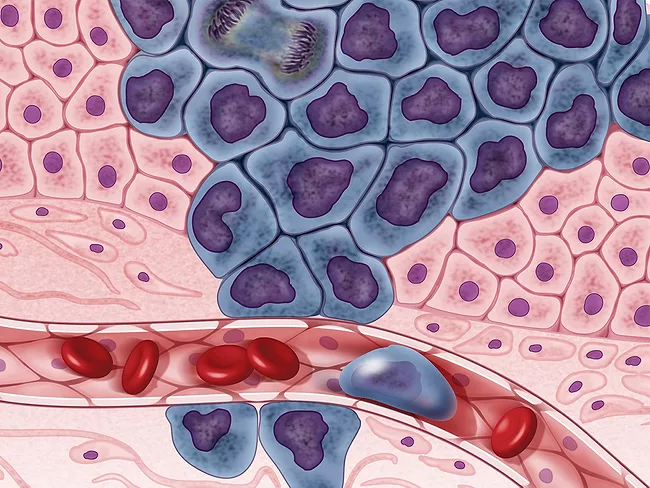
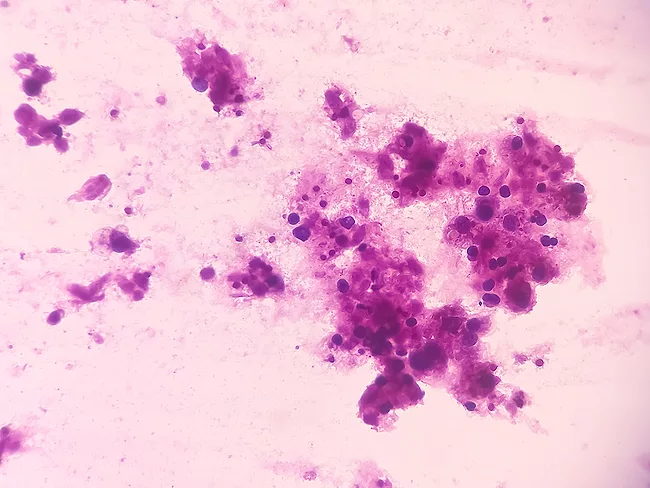
In the current landscape of cancer research, much attention is focused on the tumor microenvironment (TME) at both the primary site and established metastases. However, the early micrometastatic niche remains poorly understood. Researchers from the Hospital del Mar Research Institute (HMRI) have pinpointed T cell immunoglobulin and mucin domain 3 (TIM3) as a key vulnerability in tumor micrometastasis, revealing a new target to halt metastatic progression at its origin.
Compounds acting as histone acetyltransferase KAT6A (MOZ; MYST-3) and KAT7 (HBO-1; MYST-2) inhibitors are reported in an Ideaya Biosciences Inc. patent as potentially useful for the treatment of cancer.
Deciphera Pharmaceuticals LLC has described new dual serine/threonine-protein kinase B-Raf (BRAF) and/or RAF proto-oncogene serine/threonine-protein kinase (RAF1; c-Raf) and microtubule destabilizers (tubulin polymerization inhibitors) potentially useful for the treatment of cancer.
Malignant gliomas, which include glioblastomas, are the most frequent primary brain cancer and are associated with extremely poor prognosis. They nearly always recur after treatment, rapidly leading to death.
Lung cancer is the most frequent cause of cancer-related death in both men and women worldwide. Current treatments can fail because of variable responses in different types of patients, drug resistance, poor tumor penetration and systemic toxicity, prompting the continuing search for better therapeutics.
Splicing is a process necessary for the correct synthesis of proteins and an essential step in gene expression. An impaired minor splicing may lead to aberrant pre-mRNA transcripts and exon skipping, leading to premature stop codons and truncated synthesized proteins, resulting in severe consequences.
In a recent study published in Nature Genetics, a team of scientists used CRISPR-Cas9 gene editing to systematically analyze genetic weaknesses in uveal melanoma cells and comprehensively map monogenic and digenic dependencies.
Rhabdomyosarcoma is the most frequent cancer affecting soft tissues in children, and existing therapies often fail to stop relapse or prolong survival. Researchers in Germany and the U.K. have developed a potential new therapy based on natural killer cells expressing a chimeric antigen receptor against epidermal growth factor receptor (EGFR-CAR).
A recent Merck Sharp & Dohme LLC patent details new substituted isoquinoline derivatives acting as tyrosine-protein phosphatase non-receptor type 1 (PTPN1; PTP-1B) and/or PTPN2 (TCPTP) inhibitors potentially useful for the treatment of cancer.
 RSS
RSS