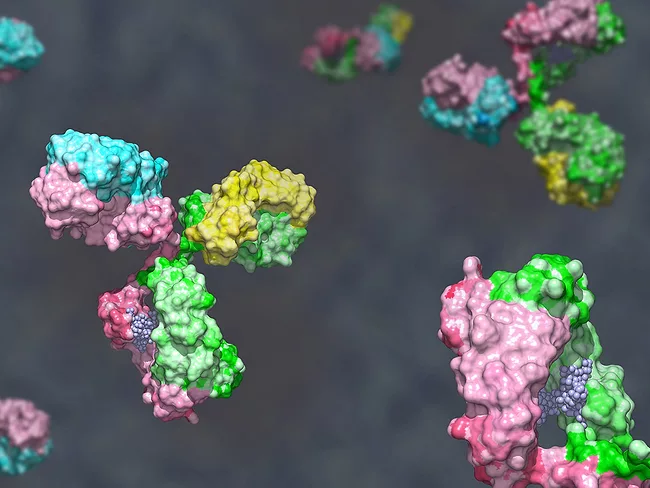
The University of Michigan has synthesized proteolysis targeting chimeras (PROTACs) comprising a von Hippel-Lindau disease tumor suppressor (VHL)-binding moiety coupled to a signal transducer and activator of transcription 3 (STAT3)-targeting moiety via a linker.
Researchers from Oxford Biomedica (UK) Ltd. have published findings from their work aiming to identify antigens that could represent novel targets for CAR T-cell therapies against acute myeloid leukemia (AML).
Colorectal cancer remains the third most common malignancy worldwide, with advanced stages presenting significant challenges for treatment. A recently published study highlights the potential of combining the antiangiogenic peptide TB-01 (PEP-06), a drug in phase II studies in China, with the approved cytotoxic drug trifluridine/tipiracil (TAS-102) as a treatment for colorectal cancer.
Cancer immunotherapy has represented a significant advancement in cancer treatment; however, many patients experience relapse or develop resistance to this treatment. Bispecific antibodies that selectively engage T-cell costimulatory molecules have emerged as a novel therapeutic strategy to overcome the limitations of immunotherapy.
Son of sevenless homolog 1 (SOS1) is an essential guanine nucleotide exchange factor (GEF) in KRAS-driven tumors, and it also functions as a downstream node protein of BCR-ABL, suggesting its critical role in the pathogenesis of chronic myeloid leukemia (CML). Investigators at Shanghaitech University have reported the discovery and preclinical characterization of a novel potent SOS1 proteolysis targeting chimera (PROTAC) – SIAIS-562055 – being developed as an anticancer agent.
Chia Tai Tianqing Pharmaceutical Group Co. Ltd. has synthesized kinesin-like protein KIF18A inhibitors reported to be useful for the treatment of cancer.
City of Hope conducted RNAseq analysis of patient samples with B-cell acute lymphoblastic leukemia (B-ALL), which revealed that among the m6A machinery genes, YTHDF2, which encodes YTH N6-methyladenosine RNA binding protein F2, was the most significantly overexpressed gene.
Researchers from the National Health Research Institutes of Taiwan described the efficacy of BPR1J481, a multitarget tyrosine kinase inhibitor in PDX-derived colorectal cancer cells, which retain the original PDX tumor characteristics.
[68Ga]/[177Lu]DOTA-2P(FAPI)2 is a novel dimeric FAP-targeting radiopharmaceutical that has demonstrated increased tumor uptake and prolonged retention in different types of cancer models.

 RSS
RSS