TORONTO – Koios Medical Inc. has received Health Canada approval for its DS Smart Ultrasound decision support software, which the company said accurately interprets breast ultrasound examinations. Company CEO Chad McClennan told BioWorld greater accuracy will provide early cancer detection rates, while reducing costly false positives and unnecessary biopsies.
GE Healthcare Ltd. is expanding its cancer technology capabilities through new alliances with artificial intelligence (AI) companies and researchers. The company said it is teaming up with U.K.-based Optellum Ltd. to advance lung cancer diagnostics, as well as collaborating with the University of Cambridge to develop an AI application that integrates cancer patient data from multiple sources into a single interface.
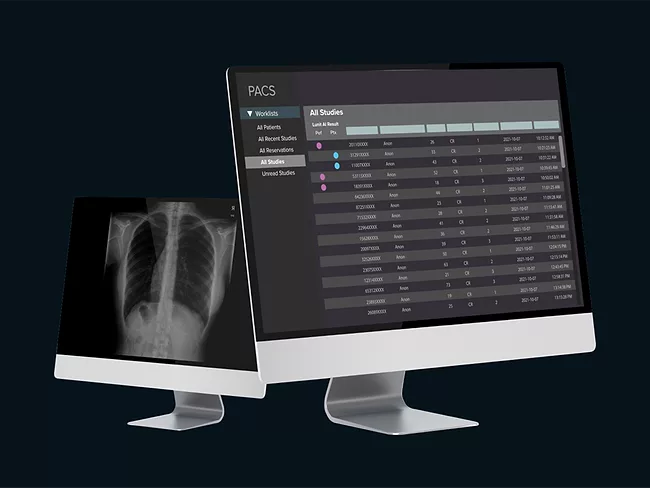
Lunit Inc. has won FDA approvals for the company’s breast cancer detection product Lunit Insight MMG and the triage and notification software Lunit Insight CXR Triage, only days apart. Lunit Insight MMG is an artificial intelligence (AI) product for breast cancer detection from mammography images. Lunit’s second approval is for Lunit Insight CXR Triage, its AI-powered chest X-ray triaging product.
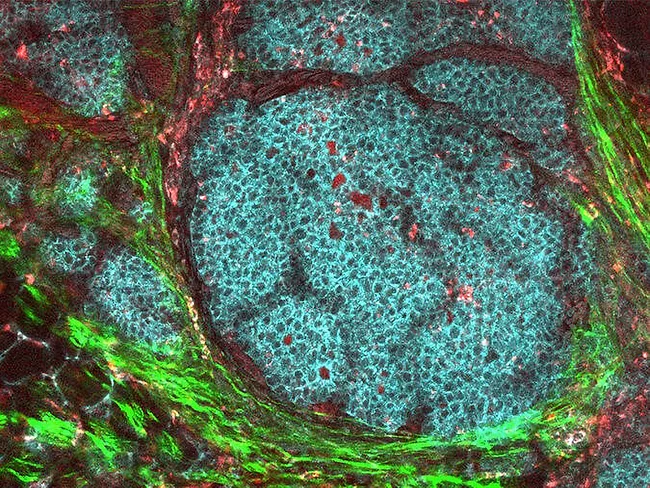
Aquyre Biosciences Inc., formerly known as Lltech, raised $19,945,534 in a series A2 preferred stock financing round to fund commercialization of its Celtivity system for on-site adequacy assessments of tissue biopsies. Ceros Financial Services acted as placement agent for more than $17.14 million of the funds raised in this round as part of its recently announced commitment to raise $100 million in the next 12 months for investment in early-stage medical technology and medical device companies.
TORONTO – Oncocyte Corp. launched Determaio, an immunotherapy response prediction test it said is “the first to comprehensively assess the tumor microenvironment.” This is important because of how smart cancer cells are in that microenvironment, Oncocyte CEO Ronnie Andrews told BioWorld, commandeering natural tissue repair biology and condensing immunological T cells so they back off attacking cancerous tissue.
For brain surgeons, the shift is the sticking point. When a surgeon opens the cranium to remove a tumor, the brain moves as much as 1 cm, making much of the pre-operative mapping of the tumor essentially useless. While the bulk of a lesion can be identified by its density, the tendrils blend into the surrounding tissue – and taking excess margins means more brain damage. Designs for Vision Inc.’s bright idea, a headlamp that illuminates a fluorescing tumor with a laser light, makes brain surgery quicker, safer and more accurate.
My Life Technologies Corp. has raised $4 million from investors to fund production and clinical trials for its microneedle technology. Based in Leiden, Netherlands, the company is developing a ceramic patch that can deliver vaccines or drugs through the skin. The technology could prove to be an attractive alternative to standard vaccine injections due to what the company says is its simple and painless delivery.
With its agreement to buy Atos Medical Inc., Coloplast A/S is consolidating its position as a global leader in the chronic care market. Founded in Sweden in 1986, Atos Medical is the largest player for laryngectomy devices, holding a market share of more than 80%. It’s a bold move from the Humlebaek, Denmark-based company as it offers to pay $2.5 billion to acquire the Nottingham, U.K-based company from private equity firm Pai Partners.
Geninus Inc. endured a difficult debut on Korea Exchange’s Kosdaq board, but still raised ₩40 billion (US$33.83 million) through its listing. The 2 million shares on offer tumbled 25.56% at ₩13,400 (US$11.33) at the close of trading on Nov. 8, after Geninus priced them at ₩20,000.
PERTH, Australia – Australia’s Therapeutic Goods Administration (TGA) has approved Telix Pharmaceuticals Ltd.’s lead prostate cancer imaging agent, Illuccix. Illuccix (TLX591-CDx) is a Gallium-based PSMA imaging agent and cold kit for developing radiopharmaceutical products and diagnostic agents. Telix’s prostate cancer program consists of a companion diagnostic imaging agent (TLX591-CDx) and a therapeutic (TLX-591) to improve the detection and treatment of prostate cancer.
 RSS
RSS