Alpha Tau Ltd. has secured a second breakthrough device designation for its Alpha Dart radiation treatment for solid cancer tumors. The FDA has granted the Jerusalem-based company’s technology a designation for the treatment of patients with recurrent glioblastoma multiforme (GBM), an aggressive malignant brain tumor. GBM has an average five-year survival rate of less than 10% and is the most common malignant tumor of the brain or central nervous system. According to the designation, the Alpha Dart system can be used to treat recurrent GBM as an adjunct to standard medical therapies or as a standalone therapy after standard medical therapies have been exhausted.
A pan-cancer liquid biopsy solution that was developed by Twist Bioscience Corp. and Anchordx Medical Co. Ltd. has been launched globally. The companies will market the Twist Alliance Pan-Cancer Methylation Panel (Pan-Cancer Panel) jointly. The Pan-Cancer Panel is a solution for pan-cancer study including DNA methylation library preparation and targeted enrichment for next-generation sequencing (NGS).
On the last day of this year’s Molecular Targets meeting, an annual joint conference of the American Association for Cancer Research, the National Cancer Institute and the European Organization for the Research and Treatment of Cancer, the final plenary went from molecular to macro in a lively discussion of the biggest roadblock in cancer drug development, and what can be done to improve it.
PARIS – A Russian research consortium has discovered that coating magnetic nanoparticles with a non-magnetic silica shell significantly decreased the viability of cancer cells in a low frequency alternating magnetic field. This discovery may augur new therapeutic prospects for nanotechnology combined with medical imaging.
TORONTO – Radialis Medical Inc. has submitted FDA premarket notification for a positron emission tomography system (PET) that targets specific organs for low dose imaging and may be flexible enough to assess many different diseases. The Radialis PET camera is under clinical investigation at Toronto’s University Health Network and Princess Margaret Cancer Center for its ability to assess anomalies in breast cancer.
Low-grade gliomas with mutated isocitrate dehydrogenase-1 (IDH1) produced and secreted higher levels of the cytokine granulocyte colony-stimulating factor (G-CSF) than other glioma types, which improved their antitumor immune response in animal models.
Shanghai Wision AI Co. Ltd. (Wision AI) has shared positive data from a first-of-its-kind study on the use of artificial intelligence (AI) computer-aided polyp detection (CADe) system during colorectal cancer screening in a U.S. patient population. Published in the journal Clinical Gastroenterology and Hepatology, it marks the world’s first external independent randomized controlled trial of AI in the medical field conducted in the U.S.
Nonagen Bioscience Corp. received FDA breakthrough device designation for its liquid biopsy assay designed to predict response to treatment for bladder cancer. The test, Oncuria, measures 10 protein biomarkers in a urine sample and uses an algorithm to predict whether patients will respond to Bacillus Calmette-Guerin (BCG), the first-line treatment for bladder cancer, or should proceed to another treatment option.
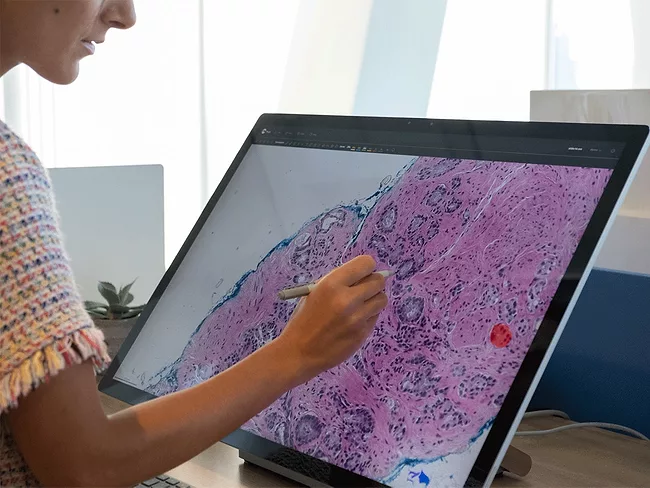
The FDA granted de novo marketing authorization for Paige Prostate, artificial intelligence (AI)-driven software that improves detection of prostate cancer. The clinical study submitted to the FDA demonstrated that using Paige Prostate resulted in a 7% improvement in sensitivity in correctly diagnosing cancer, increasing from 89.5% to 96.8%.
Although targeted therapies are prescribed on the basis of a patient's molecular makeup, they do not work every time. And in those instances where they do work, they basically stop working every time. In response, researchers have developed a number of systems whose goal it is to predict which drugs will be effective for an individual patients.
 RSS
RSS