Twenty years after the first, exclusively white human genomes were fully sequenced, science finds itself in the same position as the rest of society: with the uncomfortable realization that old inequalities are often morphing, rather than disappearing. Vocal racists – scientists of the stripe of a James Watson – are by no means a thing of the past. But they are only the tip of the iceberg.
Castle Biosciences Inc. deepened the moat around its position in melanoma diagnostics with the acquisition of Myriad Mypath LLC from Myriad Genetics Inc. The acquisition gives Castle (NASDAQ:CSTL) the Myriad Mypath Laboratory in Salt Lake City where the Mypath Melanoma 23-gene expression profile (GEP) test is owned and offered. Mypath Melanoma joins Castle's Decisiondx Diffdx-Melanoma, enabling Castle to provide comprehensive molecular testing for difficult-to-diagnose melanocytic lesions.
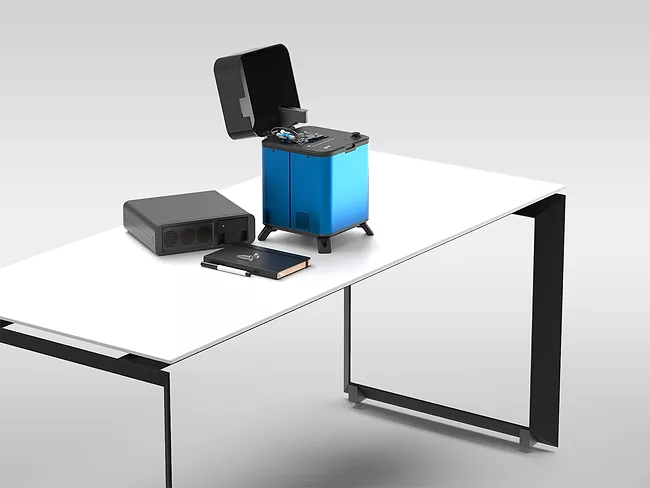
TORONTO – Breath analytics technology developed by Picomole Inc. and University of New Brunswick (UNB) researchers promises to identify lung cancer long before it reaches the most advanced stages of the disease. Machine learning sits at the heart of the system, evaluating raw spectral data from a patient’s breath for early diagnosis of lung cancer, Steve Graham, CEO of Moncton, New Brunswick-based Picomole, told BioWorld.
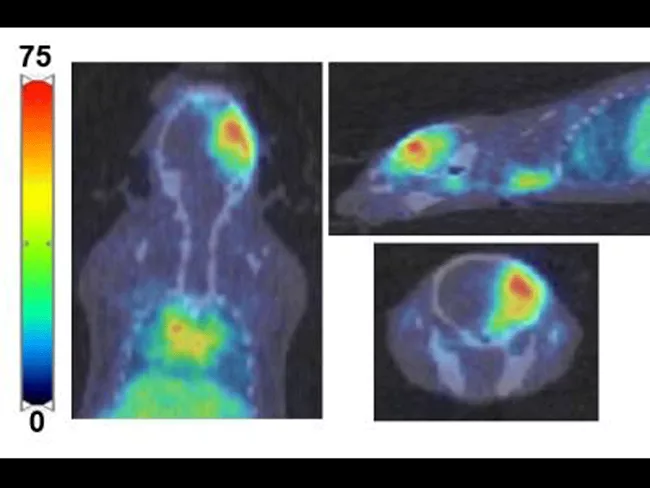
A study led by Chinese radiologists at Peking University in Beijing has shown that positron emission tomography imaging of intercellular adhesion molecule-1 (ICAM-1) expression is a predictor for the abscopal effect, whereby nonirradiated cancers respond to radiotherapy.
The FDA has approved Roche AG’s Ventana MMR Rxdx panel for patients with advanced or recurrent endometrial cancer. The companion diagnostic is the first to identify patients who are eligible for treatment with Glaxosmithkline plc’s (GSK’s) Jemperli (dostarlimab-gxly) monotherapy. The PD-1 antibody immunotherapy received FDA approval on Thursday.
TORONTO – Perimeter Medical Imaging Inc. has been awarded an FDA breakthrough device designation for a machine learning medical platform it said drives ultra-high-resolution, real-time imaging of breast cancer. Data collected from multiple pathology labs in Texas this past year were fed through the optical coherence tomography (OCT) imaging system which now is at the stage where its Imgassist artificial intelligence (AI)-based algorithms can be tested.
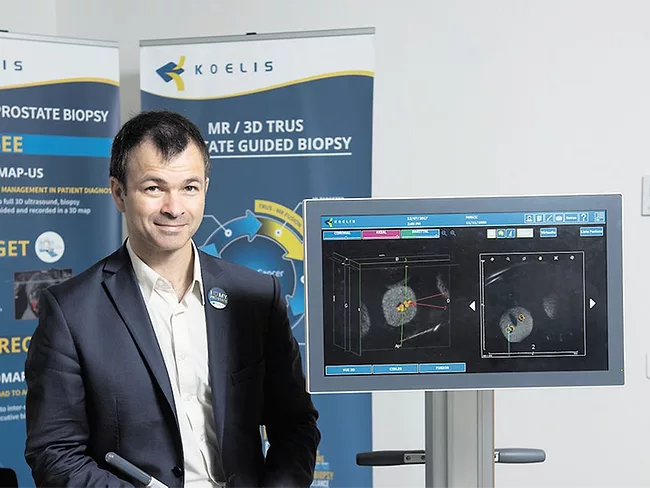
Koelis SAS reported the first successful procedures for its platform in 3D fusion imaging-guided focal ablation of prostate cancer at the Clinique Nantes Atlantis in Saint-Herblain, France. These first procedures take place against the background of a multicenter prospective clinical trial starting on the Koelis platform. This includes eight European urology centers, of which six are in France, with data being stored in a dedicated registry.
Lumicks BV raised $93 million in a series D financing led by new investors Farallon Capital Management and Lauxera Capital Partners. The proceeds are earmarked for expansion of the Lumicks’ product pipeline and for commercialization of its Z-Movi cell avidity analyzer.
Organoids cultured from patient-derived colorectal cancer cells have been used to demonstrate for the first time that tumors which have developed resistance to the full range of existing treatments, across chemotherapies, targeted therapies and immunotherapies, retain a requirement for Werner helicase (WRN) for survival. WRN has a key role in the maintenance of genome stability, but although loss of WRN is known to initiate synthetic lethality in DNA mismatch repair deficient colorectal cancer, studies into the effect of inhibiting that helicase have to date been limited to a handful of cell lines.
Just six weeks after receiving FDA 510(k) clearance for its optical coherence tomography (OCT) imaging system (v2.1), Perimeter Medical Imaging AI Inc. received breakthrough device designation from the FDA for its next-gen product, the OCT imaging system with integrated artificial intelligence (AI).
 RSS
RSS