The FDA has given a green light to Foundation Medicine Inc.’s Foundationone CDx as a companion diagnostic for Takeda Pharmaceutical Co. Ltd.’s Alunbrig to identify patients with anaplastic lymphoma kinase (ALK)-positive metastatic non-small-cell lung cancer (NSCLC). The approval comes as Laboratory Corp. of America Holdings (Labcorp) is launching a companion diagnostic to identify NSCLC patients with the KRAS mutation. NSCLC accounts for about 85% of all lung cancers, with an estimated 1.8 million new cases diagnosed each year worldwide. Of those, 3% to 5% carry the ALK gene mutation, which is often missed with standard testing methods.
As the first flagship action of Europe’s plan to beat cancer, the European Commission launched its Cancer Knowledge Center June 30. The new online platform will map the latest evidence on cancer, provide health care guidelines and quality assurance schemes, and monitor and project trends in cancer incidence and mortality across the EU, where cancer is the No. 1 killer for people younger than 65.
Adela snapped up $60 million in a series A financing round to commercialize its blood test for cancer detection and disease monitoring. At the same time, the company announced its name change from Dnamx Inc. The Adela system profiles all methylated DNA fragments in a blood sample, allowing it to determine the tissue of origin early in development of a malignancy and potentially simplifying screening across all cancer types.
Oncohost Ltd. has opened eight U.K. trial sites in the study assessing the ability of its artificial intelligence (AI)-driven proteomics profiling technology to single out which cancer patients will respond to treatment with immune checkpoint inhibitors. The sites will carry out proteomic analyses of blood samples from patients with late-stage melanoma or non-small-cell lung cancer (NSCLC), to predict their likely response to immunotherapy.
Onconano Medicine Inc. raised around $50 million in series B financing to accelerate the momentum of its technology designed to diagnose and treat cancer with high specificity. The biotech company’s nanosensor works by reacting to low pH and illuminates cancer like a lightbulb, distinguishing cancerous tissue from healthy tissue.
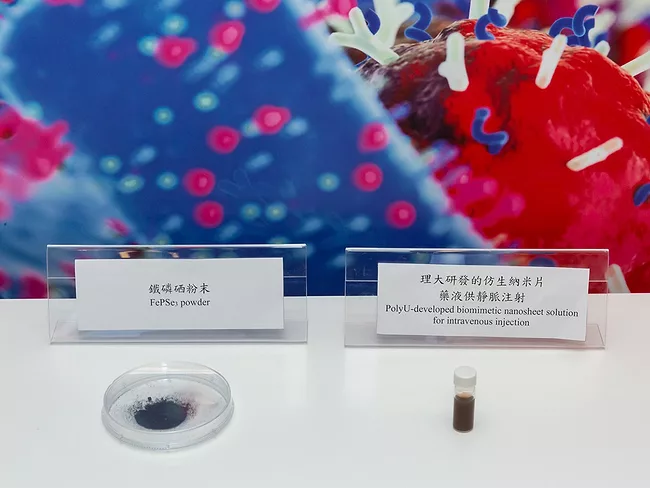
Researchers from The Hong Kong Polytechnic University (PolyU) said they have used two-dimensional nanosheets (FePSe3) to develop a biomimetic nanosheet that can monitor tumor development, treat tumors and monitor the treatment progress in real-time. With positive results from mice, the team hopes to further test it on larger animals, then move on to clinical studies.
Veracyte Inc. reported new data showing its Decipher Prostate genomic classifier can help to identify patients with nonmetastatic castration-resistant prostate cancer (nmCRPC) who are more likely to benefit from treatment with Erleada (apalutamide) in addition to androgen-deprivation therapy (ADT). The study is the first to demonstrate Decipher Prostate’s prognostic utility in men with locally advanced prostate cancer.
10x Genomics Inc. began distribution of its new Visium Spatial Gene Expression for FFPE (formalin-fixed and paraffin-embedded) assay in the U.S., giving researchers access to whole transcriptome spatial gene expression across entire FFPE tissue samples. The assay allows researchers to overcome the challenges in transcriptome analysis created by FFPE processing.
TORONTO – Nanology Labs Inc. has raised C$3 million (US$2.49 million) in seed funding to advance development of a polymer-lipid platform that transports nanoparticles into human cells where they “reprogram” hypoxic or oxygen-deprived cancer tumors.
Navigation Sciences Inc. has enrolled the initial patient in the first-in-human clinical feasibility trial of the Navisci system designed for surgeons to be able to remove probable early-stage lung tumors in minimally invasive surgery, integrating augmented reality (AR) and advanced software with surgical instruments.
 RSS
RSS