Anyone who has had a malignant tumor removed knows the anxiety that follows. Did any traces of cancer remain, and if it returns, will doctors catch it before it’s too late? To reduce the uncertainty and improve patient outcomes, C2i Genomics Inc. has raised a $100 million series B funding round led by Casdin Capital to advance software that is 100 times more sensitive in detecting residual disease than legacy technologies.
PARIS – Roche SAS, the French division of Swiss pharmaceuticals manufacturer Roche Holding AG, has signed a partnership with Unicancer that brings together all the cancer centers in France. They have created Oncodatahub (ODH), the first real-world cancer data platform in France. This makes a set of quality, longitudinal data representative of cancer patient care in France available to all those involved in the health care ecosystem.
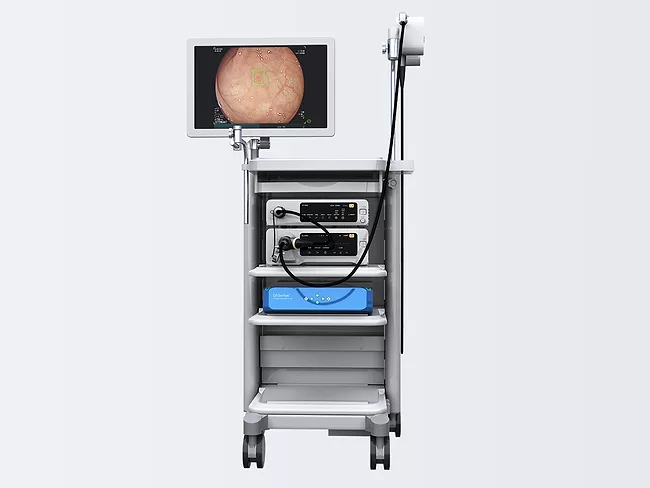
Cosmo Artificial Intelligence Ltd. received the FDA’s nod for its GI Genius intelligent endoscopy system. The device – the first of its kind, according to the agency – uses artificial intelligence (AI)-based on machine learning to improve the detection of lesions during colonoscopy. It will be rolled out in the U.S. by Medtronic plc, which has exclusive worldwide distribution rights.
HONG KONG – Coreline Soft Co. Ltd. has taken its first step into the Greater China market after receiving approval from Taiwan’s Food and Drug Administration (TFDA) on April 8 for its Aview suite of artificial intelligence (AI) medical solutions.
Bronchoscopic thermal vapor ablation (BTVA) destroyed lung tumors without significant safety issues, according to a study published in Respiration. The minimally invasive ablation procedure took 12 minutes using Uptake Medical Technology Inc.’s Intervapor system in the Vaporize study. Uptake is a subsidiary of San Jose, Calif.-based Broncus Medical Inc.
Vysioneer Inc. has won the FDA’s nod for its Vbrain artificial intelligence (AI)-powered tumor autocontouring software. The company said Vbrain is the first AI device to receive FDA clearance for tumor autocontouring in radiation therapy. Vbrain is a neural network-based AI solution, trained from clinical data.
Invitae Corp. has inked a definitive agreement to acquire Genosity Inc., a genomics company with a technology platform for next-generation sequencing (NGS) assays, for approximately $200 million in cash and stock. Separately, the medical genetic testing company reported a $1.15 billion investment, led by Softbank Group subsidiary SB Management, to support ongoing growth initiatives. San Francisco-based Invitae expects the Genosity platform to accelerate the development and launch of its oncology products, including three tests that won FDA breakthrough device designation.
TORONTO – Exact Imaging Inc. has secured C$5.1 million (US$4 million) from the Business Development Bank of Canada and federal Export Development Canada to drive adoption of its Exactvu micro-imaging platform for real-time imaging of the prostate. Company CEO Randy Aucoin said it’s been a slow process getting street cred for his prostate imager, investing “tens of millions of dollars” in a direct sales force that eventually installed 100 systems in the U.S., Europe and Canada.
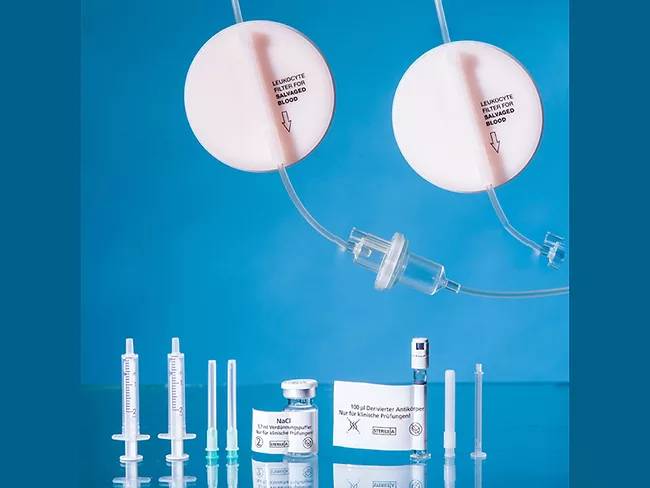
BERLIN – Lindis Blood Care GmbH launched a multicenter clinical EU certification study for Catuvab, which is used to eliminate tumor cells from surgical blood. The experiment, dubbed Remove, aims to confirm that Catuvab can reliably remove epithelial cell adhesion molecules (EPCAM)-positive tumor cells from patient blood during cancer surgery.
Pancreatic cancer is the third leading cause of cancer death in the U.S., in part because many cases aren’t diagnosed until they are advanced. Bluestar Genomics Inc. wants to change that with its epigenomics technology which can detect early pancreatic cancer from a standard blood draw by analyzing cell-free DNA in plasma. Now, the FDA has provided a bump, granting breakthrough device designation to Bluestar’s noninvasive pancreatic cancer detection test in patients with new-onset diabetes. According to the San Diego-based startup, of an estimated 60,000 patients diagnosed with pancreatic cancer in the U.S., nearly a fourth are found to have new-onset diabetes prior to receiving their cancer diagnosis.
 RSS
RSS