Thermo Fisher Scientific expanded its Globalaccess Sequencing Program to include oncology laboratories in addition to research labs working on COVID-19 studies. The company will subsidize a limited number of Genexus systems to help pathology laboratories around the world.
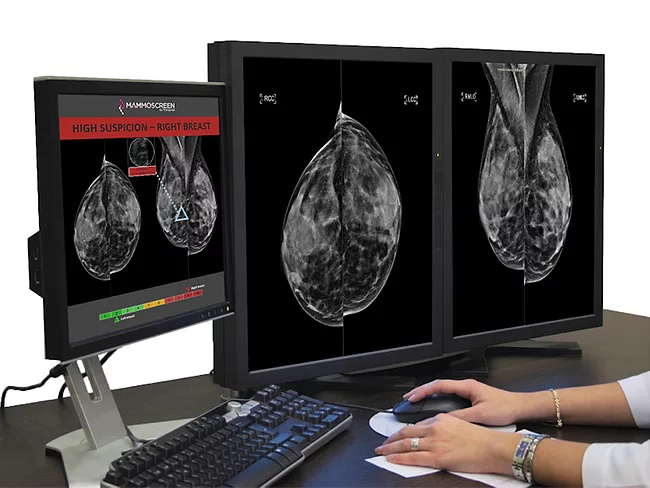
PARIS – Therapixel SA, of Nice, France, has obtained 510(k) clearance from the U.S. FDA for its Mammoscreen technology, a software platform based on artificial intelligence (AI) and used by radiologists for reading screening mammograms. “Obtaining FDA clearance is the result of working with radiologists over the past three years in order to develop a powerful tool providing relevant assistance in their day-to-day work,” Matthieu Leclerc-Chalvet, CEO of Therapixel, told BioWorld.
Becton, Dickinson and Co. (BD) has received a green light for a premarket approval supplement from the U.S. FDA for an expanded version of its BD Onclarity HPV assay. It includes the expansion for genotype reporting beyond human papilloma virus (HPV) genotypes 16, 18, and 45.
Diagnostic firm AnchorDx Medical Co. Ltd. is now working with the Lung Cancer Initiative at Johnson & Johnson in a four-year lung cancer study that aims to enable early detection and diagnosis of the disease in China. The study takes place at six hospitals in the country and is expected to be completed in December 2024.
Strata Oncology Inc. has inked an agreement with newcomer Elevation Oncology to ramp up patient identification and enrollment for the latter’s phase II CRESTONE study evaluating the use of seribantumab in patients with recurrent, locally advanced or metastatic solid tumors of any origin that have a neuregulin-1 (NRG1) gene fusion.
HONG KONG – Tokyo-based Terumo Corp. has snapped up Dutch health care startup Quirem Medical BV, which develops selective internal radiation therapy (SIRT) microspheres to treat liver cancer.
Novocure Ltd. and Merck & Co. Inc. will work together to test the use of electric fields at specific frequencies in combination with anti-PD-1 immunotherapy Keytruda (pembrolizumab) to treat non-small-cell lung cancer (NSCLC). The pair plan to start a phase II pilot study during the second half of Novocure’s Tumor Treating Fields in combination with Keytruda as a first-line treatment for intrathoracic advanced or metastatic, PD-L1 positive NSCLC.
The U.S. Preventive Services Task Force (USPSTF) may recommend a fairly dramatic expansion of the populations that would be eligible for coverage for lung cancer screening, a bit of news that might be expected to cheer makers of CT imaging systems. However, compliance with the existing recommendations is already quite low, suggesting that an expansion of eligibility is likely to exert a negligible effect at best on utilization.
Infervision Technology Co. Ltd. has received the green light from the U.S. FDA for its Inferread Lung CT.AI product. The artificial intelligence- and deep learning-based technology automatically performs lung segmentation and identifies and labels different types of lung nodules. According to the 510(k) notification, Inferread Lung CT.AI “is comprised of computer assisted reading tools designed to aid the radiologist in the detection of pulmonary nodules during the review of CT examinations of the chest on an asymptomatic population.”
The checkpoint molecule CD47 has high hopes riding on it in oncology as being the innate immune equivalent of PD-1. Multiple companies are developing blockers against CD47 and/or its ligand, SIRPa, for the treatment of various tumors.
 RSS
RSS