Novocure Ltd. and Merck & Co. Inc. will work together to test the use of electric fields at specific frequencies in combination with anti-PD-1 immunotherapy Keytruda (pembrolizumab) to treat non-small-cell lung cancer (NSCLC). The pair plan to start a phase II pilot study during the second half of Novocure’s Tumor Treating Fields in combination with Keytruda as a first-line treatment for intrathoracic advanced or metastatic, PD-L1 positive NSCLC.
The U.S. Preventive Services Task Force (USPSTF) may recommend a fairly dramatic expansion of the populations that would be eligible for coverage for lung cancer screening, a bit of news that might be expected to cheer makers of CT imaging systems. However, compliance with the existing recommendations is already quite low, suggesting that an expansion of eligibility is likely to exert a negligible effect at best on utilization.
Infervision Technology Co. Ltd. has received the green light from the U.S. FDA for its Inferread Lung CT.AI product. The artificial intelligence- and deep learning-based technology automatically performs lung segmentation and identifies and labels different types of lung nodules. According to the 510(k) notification, Inferread Lung CT.AI “is comprised of computer assisted reading tools designed to aid the radiologist in the detection of pulmonary nodules during the review of CT examinations of the chest on an asymptomatic population.”
The checkpoint molecule CD47 has high hopes riding on it in oncology as being the innate immune equivalent of PD-1. Multiple companies are developing blockers against CD47 and/or its ligand, SIRPa, for the treatment of various tumors.
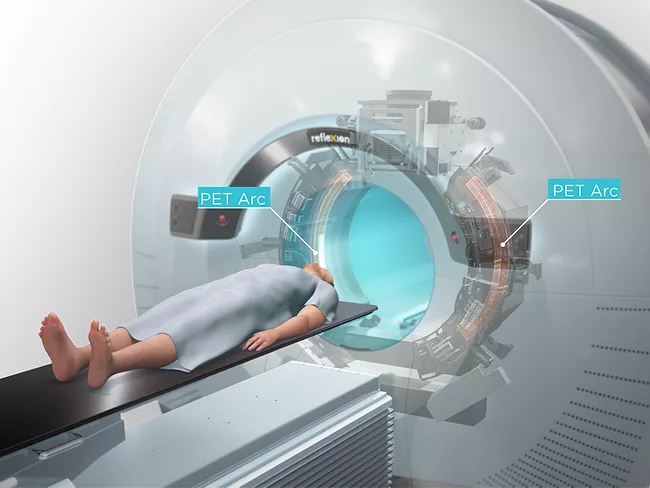
Reflexion Medical Inc. appears to be on a roll. A little more than a month after unveiling a tie up with Merck & Co. Inc., it now has reported a collaboration with Telix Pharmaceuticals Ltd., a radiopharmaceutical company developing molecularly targeted radiation products.
PARIS – Quantum Surgical SAS said it has achieved a world first at the Montpellier University Hospitals by successfully using its medical robot to perform surgery on three patients with liver cancer.
Chinese scientists at Peking University (PKU) in Beijing have developed a new in vitro patient-derived tumor-like cluster (PTC) model, which predicted the outcomes of neoadjuvant and conventional chemotherapies in colon, gastric and breast cancer patients, with a clinical consistency of >93%.
Thermo Fisher Scientific Inc. is working with Daiichi Sankyo Co. Ltd. to develop a companion diagnostic (CDx) to identify non-small-cell lung cancer (NSCLC) patients with human epidermal growth factor receptor 2 (HER2) mutations who could be eligible for the Tokyo-based company's cancer drug, Enhertu.
Invitae Corp. (NYSE:NVTA) saw its stock flying high June 22 on the news of its agreement to buy Archerdx Inc., with an eye toward enhancing cancer genetics and precision oncology. Investors appear to approve of the deal, with the company’s stock closing at $27.05, up $8.34 or 44.58%.
China-based precision oncology company Genetron Holdings Ltd. and prenatal molecular testing company Progenity Inc. each successfully priced an IPO. This is just the latest demonstration that molecular diagnostics is gaining real traction when it comes to investment.
 RSS
RSS