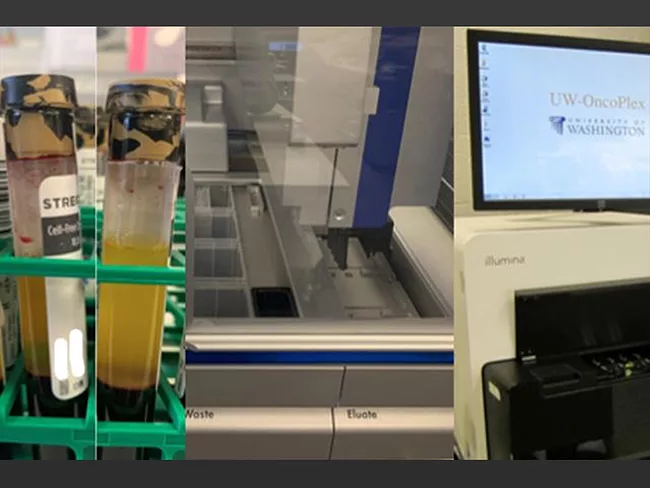
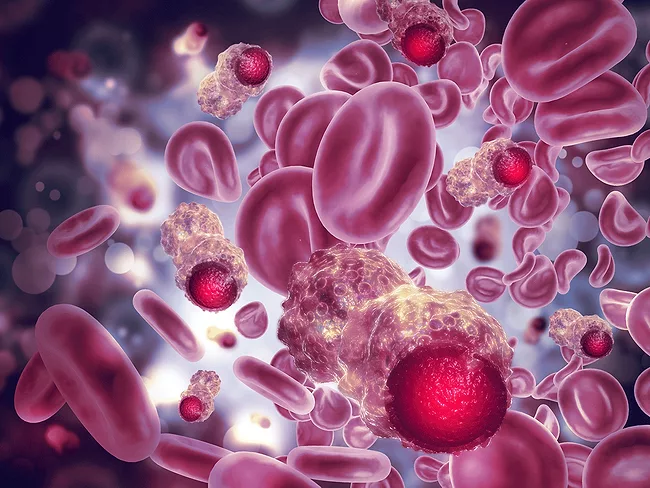
The use of liquid biopsies, tests that look for variants in cell-free DNA (cfDNA) shed by tumors into blood plasma, could lead to misdiagnosis and inappropriate treatment in many cancers, according to University of Washington researchers. The tests misidentified a noncancer mutation that is particularly common in older people as a mutation used as a biomarker for PARP inhibitors indicated for use in prostate cancer, a study published in JAMA Oncology found, but the problem likely extends to other malignancies.
By analyzing patients’ reactions to treatment, Oncohost Ltd.’s proteomics-based platform enables earlier prediction of paradoxical responses to immunotherapy that promote tumor growth in certain cancers. The artificial intelligence-powered host response profiling platform, called Prophet, could help identify the best combination of therapies and minimize adverse effects from treatments that are unlikely to be beneficial.
Nanobiotix SA ’s achieved promising early results in several clinical trials for its first-in-class radioenhancer. Despite the pandemic, trials in head and neck squamous cell cancer, hepatocellular carcinoma, pancreatic cancer, and rectal cancer remain on track, the Cambridge, Mass., and Paris-based company reported at ASTRO 2020.
Castle Biosciences Inc.'s Decisiondx Diffdx-Melanoma test is now commercially available to help dermatopathologists better characterize melanocytic lesions. About 15% of suspicious pigmented skin lesions cannot be definitively determined to be benign or malignant using common methods. The new gene expression profile test reduces the number of indeterminate results by more than 70%.
Under the right circumstances, a single mouse can be as good as a group of eight or 10 animals in predicting whether a tumor will respond to a drug, researchers reported at the 2020 EORTC-NCI-AACR (ENA) Molecular Targets meeting on Saturday. The single-animal approach “allows incorporation of more tumor models within the same resource constraints,” Peter Houghton told reporters at a press conference previewing ENA highlights.
Illumina Inc. crushed analysts’ estimates for the third quarter, posting revenue of $794 million vs. the Street consensus of $716 million. Driving results were sequencing consumables, which racked up $500 million in the period, with clinical sequencing hitting 96% of pre-COVID-19 levels, up from 84% in the second quarter.
Precision oncology company Genetron Holdings Ltd. has entered an exclusive licensing agreement for Seq-MRD, a diagnostic assay for detecting and monitoring minimal residual disease (MRD) in select hematologic cancers from med-tech startup Hangzhou Immuquad Biotechnologies Co. Ltd.
Shares of early cancer detection company Exact Sciences Corp. soared Tuesday morning on news it is acquiring two liquid biopsy screening companies, Thrive Earlier Detection Corp. and Base Genomics Ltd., for $2.56 billion and selling $869 million of common stock to institutional investors.
PARIS – Carthera SAS, of Paris, has obtained a $2.4 million grant and $12.5 million equity investment from the European Innovation Council (EIC) for the development of its ultrasound-based medical device for treating glioblastoma.
Bluestar Genomics Inc. identified DNA-based epigenomic changes that could be used as new biomarkers that can detect pancreatic cancer before the malignancy, one of the deadliest of all cancers, becomes untreatable. The study was published in Nature Communications.
 RSS
RSS