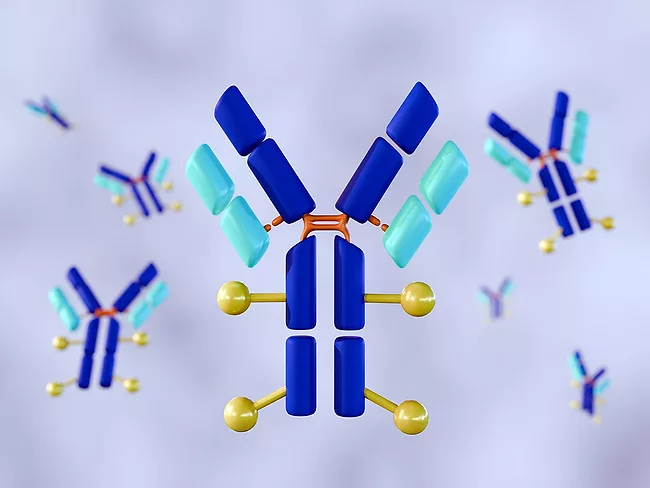
Antibody-drug conjugate (ADC) specialist Aimedbio Inc. announced Oct. 16 the signing of a potential $991 million deal with Boehringer Ingelheim GmbH to license out its novel preclinical ADC asset targeting solid tumors, including KRAS mutations, which is set to enter phase I study next year.
Radiopharm Theranostics Ltd. completed a AU$35 million (US$22.77 million) placement to advance six of its radiopharmaceutical candidates for both diagnostic and therapeutic uses. The funds raised will go toward clinical trials, drug manufacturing and working capital to extend Radiopharm’s funding runway into 2027.
Antibody-drug conjugates (ADCs) are a mature technology. The first ADC, Mylotarg, was initially approved in 2000, and there are now 14 approved agents in both leukemias and solid tumors. According to Clarivate’s Cortellis Drug Discovery & Intelligence, those drugs collectively accounted for $13.55 billion in sales in 2024 – a figure that Cortellis projects will rise to $16 billion in 2025.
Detailed Viktoria-1 results of Celcuity Inc.’s gedatolisib positions the pan-PI3K/mTORC1/2 inhibitor as a top contender for second-line treatment of HR+/HER2- PIK3CA wild-type advanced breast cancer – a multibillion-dollar indication in need of new treatments.
Samsung Bioepis Co. Ltd. announced Oct. 21 the signing of a license deal to codevelop, manufacture and commercialize two of Phrontline Biopharma Suzhou Co. Ltd.’s novel bispecific dual-payload antibody-drug conjugate (ADC) candidates.
Step Pharma is financed to move its pipeline-in-a-product strategy forward on a broad front, after raising a €38 million (US$44.2 million) series C. That will see three ongoing trials testing the company’s potentially first-in-class, orally available cytidine triphosphate synthase 1 inhibitor, dencatistat, through to phase II in T-cell and B-cell lymphoma, in an ovarian, endometrial and lung cancer study, and in essential thrombocythemia.
Alterome Therapeutics Inc. has identified new RAC-α serine/threonine-protein kinase (AKT1; PKB-α) E17K mutant)inhibitors reported to be useful for the treatment of cancer.
Onkure Therapeutics Inc. has disclosed new phosphatidylinositol 3-kinase (PI3K) inhibitors reported to be useful for the treatment of cancer, congenital lipomatous overgrowth, vascular malformations, epidermal naevi and skeletal abnormalities and scoliosis (CLOVES syndrome) and PIK3CA-related overgrowth spectrum.
Excessive signaling by platelet-derived growth factor receptor (PDGFR)-α, a transmembrane tyrosine kinase, helps drive the rapid angiogenesis that many types of tumor cells need in order to proliferate and metastasize.
Kivu Bioscience Inc. has released new preclinical efficacy and safety data on KIVU-107, a novel PTK7-targeting antibody-drug conjugate with a DAR4 exatecan payload. KIVU-107 is designed to be highly stable in circulation with negligible free payload release, maximizing on-tumor activity while minimizing off-target toxicity.
 RSS
RSS