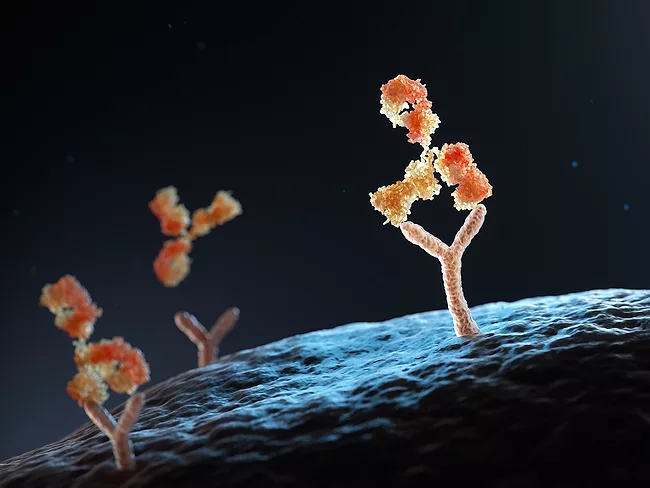
Human natural killer (NK) cells play an essential role in tumor surveillance and can attack malignant cells in an antigen-independent manner. Because of this, allogeneic NK cells can be engineered as off-the-shelf therapies and may be used to target different hematological malignancies or solid tumors.
Protein S-palmitoylation is a post-translational lipid modification that regulates the stability and cellular distribution of numerous cancer-related proteins. A family of 23 palmitoyl transferases, called zinc finger Asp-His-His-Cys-type (ZDHHC), mediates this lipid modification. However, the potential role of palmitoyl transferases in tumor progression and immunotherapy in pancreatic adenocarcinoma (PAAD) remains unexplored.
Around 73,000 women are diagnosed with triple-negative breast cancer (TNBC) every year in the U.S. and EU. TNBC grows and spreads faster than other types of breast cancer; moreover, it has less treatment options, and usually, a worse prognosis.
A method for parallel sequencing of single-cell extrachromosomal circular DNA (ecDNA) and full-length mRNA transcriptomes has enabled new insights into the roles of ecDNA in cancer progression, researchers from Charité hospital and the Max Delbrück Center for Molecular Medicine reported in Nature Genetics on May 8, 2023. Circular DNAs are present in at least a third of cancer cells, and their presence correlates with poor prognosis in many cases. They can carry driver genes that have separated themselves from their chromosome of origin, and some research suggests that they serve as “reserve copies” of driver genes. Boundless Bio Inc. is in phase I trials targeting ecDNAs.
Fibrogen Inc. and its co-development partners for roxadustat, Astrazeneca plc and Astellas Pharma Inc., were dealt a major blow May 5 as the oral hypoxia-inducible factor prolyl hydroxylase inhibitor failed to meet its primary efficacy endpoint in a phase III trial in patients with anemia caused by transfusion-dependent lower-risk myelodysplastic syndromes (MDS).
Stemline Therapeutics Inc. has identified proto-oncogene tyrosine-protein kinase receptor Ret (RET; CDHF12; PTC) (mutant) inhibitors reported to be useful for the treatment of cancer.
Philochem AG has disclosed conjugates comprising fibroblast activation protein α (FAP) ligands covalently linked to radiolabeled payloads through a linker. They are reported to be useful for the diagnosis of atherosclerosis, cancer, fibrosis, inflammation and keloids.
The B-raf kinase (BRAF oncogene) controls cell proliferation and survival through the mitogen-activated protein kinase (MAPK) pathway. By contrast, constitutively activated mutated BRAF causes uncontrolled tumorigenesis while small-molecule inhibition arrests growth to cause tumor regression.
T-cell exhaustion is a differentiation state of T cells associated with tumor progression in the context of cancer. One of the co-stimulatory molecules in the tumor microenvironment, 4-1BB, triggers a signaling cascade resulting in cytokine secretion and upregulation of antiapoptotic molecules.

 RSS
RSS