Otsuka Pharmaceutical Co. Ltd. reaped positive results from an open-label phase II study of repinatrabit (JNT-517) in adolescents with phenylketonuria (PKU), a rare disease marked by the inability to break down the amino acid phenylalanine.
China’s National Medical Products Administration (NMPA) has accepted for review Hightide Therapeutics Inc.’s NDA for HTD-1801 for type 2 diabetes, marking the Shenzhen-based company’s first NDA submission and a major step toward commercialization.
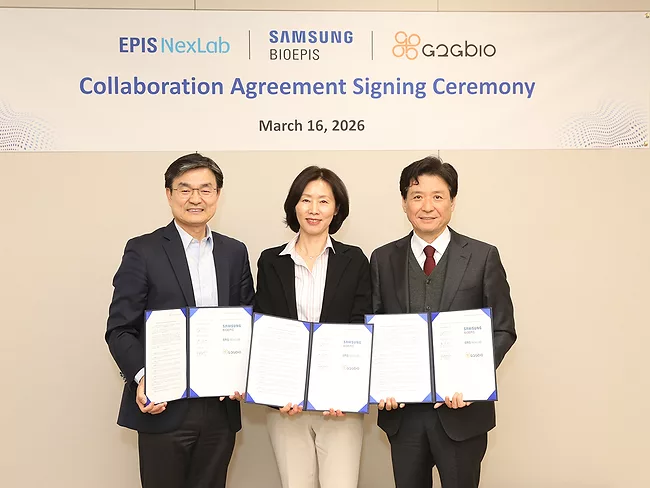
G2Gbio Inc. secured a ₩20 billion (US$13.35 million) investment from Samsung Epis Holdings Co. Ltd. and a joint research and license agreement for two assets, including a long-acting obesity treatment, with subsidiary Samsung Bioepis Co. Ltd. March 16.
Eli Lilly and Co. will invest $500 million to support South Korea’s biopharmaceutical industry over the next five years, following high-level talks March 9 between Prime Minister Kim Min-seok and Lilly Executive Vice President Patrik Jonsson.
Rapport Therapeutics Inc. added $20 million to its cash runway for its lead phase III oral seizure drug, RAP-219, through a potential $328 million license deal signed with Tenacia Biotechnology Co. Ltd.
China’s National Medical Products Administration has accepted for review Jiuyuan Genetic Biopharmaceutical Co. Ltd.’s drug application for Jikeqin, a biosimilar product to Novo Nordisk A/S’s Wegovy (semaglutide) for obesity.
Ascletis Pharma Inc. raised HK$843.53 million (US107.93 million) in a placement on the Hong Kong Stock Exchange to advance its lead program, ASC-30, a small-molecule glucagon-like peptide-1 (GLP-1) receptor agonist that can be dosed once monthly subcutaneously and once daily orally for treating obesity.
Continuing to build on the successful launch of Rezdiffra (resmetirom), Madrigal Pharmaceuticals Inc. is adding six preclinical-stage siRNA therapies to its metabolic dysfunction-associated steatohepatitis (MASH) pipeline in a deal with Ribo Life Science Co. Ltd. and its subsidiary, Ribocure Pharmaceuticals AB, that could be worth $4.4 billion if all milestones are achieved.
Sciwind Biosciences Co. Ltd. said Jan. 30 it won Chinese approval for self-developed glucagon-like peptide-1 (GLP-1) receptor agonist, ecnoglutide (Xianyida), to treat adults with type 2 diabetes.
 RSS
RSS