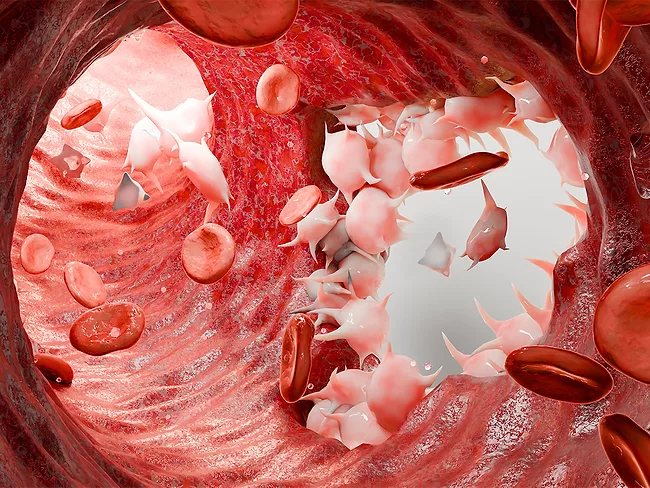
Sunshine Lake Pharma Co. Ltd. has divulged heterocyclic fused ring compounds acting as pyruvate kinase PKLR activators potentially useful for the treatment of anemia, abetalipoproteinemia, hemolysis, hereditary spherocytosis, sickle cell disease and thalassemia.
A University of Sydney patent details new cyclic peptides acting as coagulation factor XIa inhibitors reported to be useful for the treatment of thrombosis.
Linkcure Therapeutics has synthesized molecular glue degraders acting as zinc finger protein 803 (ZNF803; WIZ) degradation inducers reported to be useful for the treatment of sickle cell anemia and β-thalassemia.
The acquired von Willebrand syndrome (AVWS) is a rare bleeding disorder with laboratory findings similar to those of inherited von Willebrand disease. Researchers from the Nara Medical University and collaborating institutions presented a potential therapeutic approach for AVWS.
Gene therapy has had its commercial struggles in the past year. The cost to patients is in the millions and fewer are stepping forward for treatment than companies would like. While development continues in this game-changing field, some have struggled with regulatory authorities during development while others have just stepped away altogether.
Sickle cell disease (SCD) is an inherited hemoglobinopathy caused by a mutation in the gene encoding β-globin that results in hemoglobin S polymerization, red blood cell (RBC) sickling and hemolytic anemia, among others.
In a letter to the hemophilia community, Pfizer Inc. reported a death due to cerebellar infarction and subsequent cerebral hemorrhage in a long-term extension trial participant taking the New York-based company’s tissue factor pathway inhibitor antagonist Hympavzi (marstacimab).
Despite therapeutic advances, multiple myeloma (MM) remains incurable, with most patients relapsing and developing resistance, especially those refractory to proteasome inhibitors, immunomodulatory drugs and anti-CD38 antibodies. Limited options and poor prognosis highlight the need for new agents with distinct mechanisms and better safety.
Dexoligo Therapeutics has presented data for their liver-targeted siRNA DXO-1801 for the potential treatment of inflammation-driven anemia, a serious complication of chronic diseases such as chronic kidney disease, myelofibrosis or advanced solid tumors characterized by elevated pro-inflammatory cytokines where the availability for iron for erythropoiesis is limited due to increased hepcidin levels.
JAK2 inhibitors (JAK2i) are the standard treatment for myelofibrosis (MF), offering symptom relief and reducing spleen size. However, all FDA-approved JAK2i are type I inhibitors, which fail to eliminate the mutant MPN clone, leading many patients to treatment discontinuation.

 RSS
RSS