Targeted therapies and immunotherapies continue to show better results than chemotherapy in investigator-initiated and company-sponsored cancer trials, and newer options demonstrate improvements over older ones, supporting potential shifts in how patients are treated.
While several targeted therapies are approved for acute myeloid leukemia, a 2023 U.K. study found that median survival following diagnosis was only about seven months, highlighting the need not only for new therapies, but for a faster regulatory strategy. At the American Society of Hematology’s 67th annual meeting in Orlando Dec. 6, researcher Jesse Tettero presented data supporting the use of a measurable residual disease (MRD) surrogate endpoint in acute myeloid leukemia (AML) research.
Only a couple of years since the first sickle cell disease (SCD) gene therapies gained U.S. FDA approval, researchers are working to expand access for younger children, and to improve manufacturing and commercialization to reach patients faster.
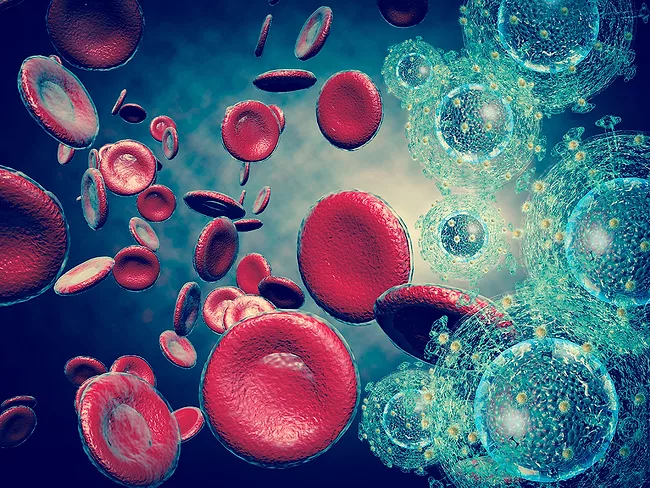
2025 has been the most challenging year in the efforts to fight HIV since at least the advent of antiretroviral therapy. In a report on “Overcoming disruption, transforming the AIDS response,” released last week ahead of World AIDS Day on Dec. 1, the Joint United Nations Program on HIV/AIDS (UNAIDS) described “a global system in shock” by sharply reduced funding from the U.S. and other wealthy nations. Scientifically, for now, progress is ongoing.
A 24‑week pregnant woman fears for her unborn baby, who is developing with a sacrococcygeal teratoma so large and vascularized that it nearly surpasses the size of the fetus itself. Faced with this threat, surgeons operate inside the uterus in an open procedure that partially exposes the baby to remove the tumor and give the baby a chance to survive until birth. According to scientists presenting at the American Society of Gene & Cell Therapy's special meeting on Breakthroughs in Targeted In Vivo Gene Editing, this could be avoided.
2025 has been the most challenging year in the efforts to fight HIV since at least the advent of antiretroviral therapy. In a report on “Overcoming disruption, transforming the AIDS response,” released last week ahead of World AIDS Day on Dec. 1, the Joint United Nations Program on HIV/AIDS (UNAIDS) described “a global system in shock” by sharply reduced funding from the U.S. and other wealthy nations. Scientifically, for now, progress is ongoing. To mark World AIDS Day, Nature published three independent studies on HIV.
The field of gene therapy is experiencing major advances driven by precise editing technologies, such as base and prime editing, and by the design of increasingly sophisticated vectors to deliver payloads that could reverse the effects of diseases. However, in the transition to in vivo applications many approaches still fail in their attempt to effectively reach target tissues or cells.
A 24‑week pregnant woman fears for her unborn baby, who is developing with a sacrococcygeal teratoma so large and vascularized that it nearly surpasses the size of the fetus itself. Faced with this threat, surgeons operate inside the uterus in an open procedure that partially exposes the baby to remove the tumor and give the baby a chance to survive until birth. According to scientists presenting at the American Society of Gene & Cell Therapy's special meeting on Breakthroughs in Targeted In Vivo Gene Editing, this could be avoided.
The U.S. FDA said postmarketing reports of neutralizing antibodies to ADAMTS13, including one reported patient death, have prompted an investigation into Takeda Pharmaceutical Ltd.’s Adzynma (apadamtase alfa), a recombinant protein product approved in 2023 for use in adults and pediatric patients with congenital thrombotic thrombocytopenic purpura.
The field of gene therapy is experiencing major advances driven by precise editing technologies, such as base and prime editing, and by the design of increasingly sophisticated vectors to deliver payloads that could reverse the effects of diseases. However, in the transition to in vivo applications many approaches still fail in their attempt to effectively reach target tissues or cells.
 RSS
RSS


.webp?height=488&t=1670008838&width=650 "Acute myeloid leukemia")